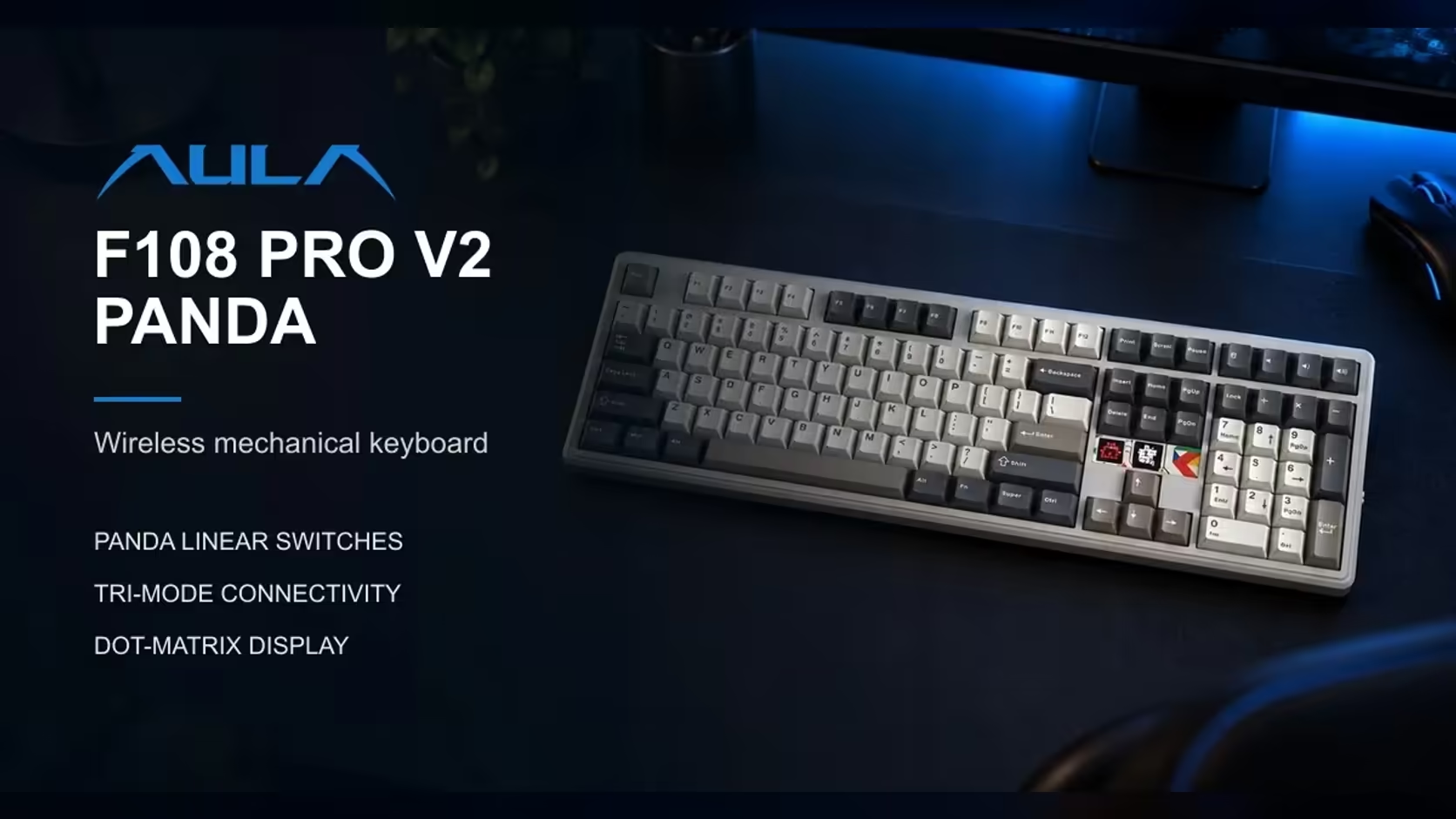
Switch spec sheets love abbreviations, and the three that turn up most in housing lists are PC, PA and POM. All three appear in the AULA F108 PRO V2's two switch options, each in a different arrangement. Once you know what the letters stand for, the switch housing materials on the spec sheet tell you a little about how each edition was put together, and why the two do not feel identical.
Quick Answer
Decoded, PC means polycarbonate, PA means polyamide (the nylon family), and POM means polyoxymethylene, usually sold as acetal. On the F108 PRO V2, which Evetech prices at R949 to R1,099 depending on colour, the LEOBOG Sea Dome switch pairs a PC top housing with a PA stem and a POM bottom housing. The LEOBOG Panda switch uses a PA top, a POM stem and a PA bottom. Same three plastics, two different recipes.
🔬 What each plastic is
PC: polycarbonate
Polycarbonate is a rigid, often transparent plastic. In mechanical switches it is popular for top housings because clear tops let under-key RGB shine through strongly. Keyboard hobbyists often describe PC tops as giving a slightly crisper, higher-pitched sound, though that impression depends on the rest of the switch and the board.
PA: polyamide, or nylon
Nylon is a tough, slightly softer engineering plastic. Switch makers use it for housings and sometimes stems. Enthusiasts commonly associate nylon housings with a deeper, more muted sound than polycarbonate, which is why it shows up in switches aimed at a softer acoustic profile.
POM: acetal
POM is known for being slippery. Its low friction makes it a favourite for parts that rub against each other, such as stems sliding inside a housing, where it can help the stroke feel smooth. It is also used for housings in some designs.
🔁 How the F108 PRO V2 combines them
- Sea Dome: polycarbonate top, nylon stem, acetal bottom.
- Panda: nylon top, acetal stem, nylon bottom.
The Sea Dome puts polycarbonate on top and a nylon stem inside, with acetal underneath. The Panda uses nylon for both halves of the housing and gives the moving stem the low-friction acetal.
🎚️ Materials are only part of the story
It is tempting to predict a switch's sound from its plastics alone, but materials are one factor among several. Spring weight, travel, lubrication, tolerances and the board itself all shape what you hear and feel. On the F108 PRO V2 the board plays a large part, since its gasket build wraps seven dampening layers around the plate and takes the edge off either switch.
Spring and stroke differ as well. A Sea Dome press starts at 32gf over a 3.7mm stroke; a Panda press starts at 38gf over 3.3mm. Their shared figures are a 45gf floor, a 1.8mm trigger depth and AULA's rating of roughly 60 million presses. Expect those numbers to colour your impression at least as much as the plastics do.
🧰 Experimenting on a hot-swap board
Hot-swap sockets mean the F108 never locks you into one recipe. If you own switches from both editions, or buy other compatible switches later, you can pull a few and try them side by side on the same board. That is the easiest way to hear what a PC top really does next to a nylon one, rather than relying on descriptions.
The dark grey and light grey edition ships with Sea Dome; the black, grey and white edition ships with Panda. Evetech covers each with a 1 Year Local Warranty. Compare them against other boards in the gaming keyboards category, or see the current favourites in the keyboard best sellers.
Frequently Asked Questions
What does POM stand for?
Polyoxymethylene, also called acetal. It is prized in switches for its low friction.
Is PA the same as nylon?
Yes. Polyamide is the chemical family name, and nylon is the common name.
Which F108 PRO V2 switch has a polycarbonate top?
The Sea Dome. The Panda uses a nylon top housing instead.
Do housing materials decide the sound on their own?
No. Springs, travel, tolerances and the board's mounting and dampening all play a part.
Can I test both recipes on one board?
If you have both switch types, yes. The sockets let switches come out and go back in, no soldering iron involved.
Curious how plastics change a keystroke?
Browse Evetech's hot-swap gaming keyboards and find a board that lets you experiment with switch recipes of your own.