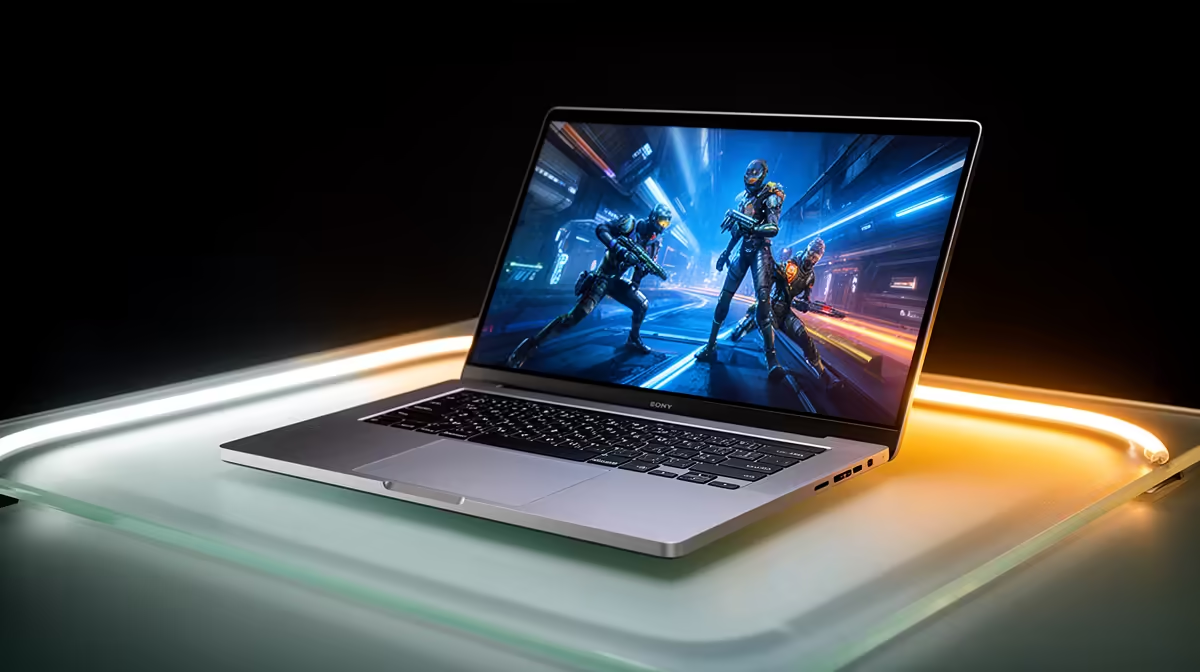
New and refurbished laptops can both get a student through a degree. New gives you unused hardware and a clearer starting condition. Refurbished can buy stronger business-grade hardware for the same budget, with more uncertainty around battery age and cosmetic wear.
Quick Answer
Choose new when predictable battery condition, full retail support and current platform features matter most. Choose refurbished when the seller can prove condition and the saving reaches a better processor, 16GB memory or stronger chassis that the course will use.
Use best-selling new laptops and current new-laptop offers as the comparison point. Ask the refurbished seller for an exact model, condition report and final price.
Compare Like With Like
Match processor model, RAM, SSD, screen, ports, operating system and warranty. A cheap refurbished Core i5 may be several generations old, while a new Core i3 can offer newer platform support. The full processor code settles the comparison.
The July 2026 price for the ASUS Vivobook Go 15 was R7,999. That named Core i3 unit included 256GB SSD capacity and 8GB RAM. Use it as a dated new reference, then judge whether the refurbished option saves enough to cover its older battery and shorter support.
Where Refurbished Can Win
Ex-corporate models often have sturdy keyboards, serviceable storage and useful ports. A verified 16GB unit can be better for coding or large spreadsheets than a new 8GB machine at the same spend.
Demand the battery's full-charge capacity, SSD health, charger details and written warranty. Test hinges, screen, webcam, Wi-Fi and every port. Confirm that company management and activation locks are removed.
Where New Can Win
You know the battery has not spent years in service. Newer processors can improve efficiency and Windows support. A longer, clearer warranty route matters when the student lives far from the seller.
New hardware still needs testing. Match the box model to the invoice, install course software and report faults within the written return process.
Price the Next Two Years
Estimate what the refurbished machine may need during the period you expect to use it. A battery, charger or SSD can be sensible maintenance when the starting price leaves room. Check part availability before assuming an upgrade will be easy.
For the new model, ask whether RAM or storage is soldered. A sealed entry configuration can have less room to grow than an older serviceable business laptop. Choose from the student's likely second-year workload, not only first-week notes.
Whichever route wins, keep a backup of coursework in two places. Hardware age changes risk, but it never removes the need for a recovery plan.
FAQ
Is refurbished always much cheaper?
No. Compare final prices for equivalent usable specifications. A small saving may not justify battery wear or shorter cover.
Which has better resale value?
Condition, age, battery and demand matter more than the label. Keep the invoice and care for the chassis.
Which suits a tight student budget?
The option that meets the course with a credible support route. Refurbished can stretch the specification, while new can reduce uncertainty.
Compare one named new laptop with one fully documented refurbished unit, then choose the better course fit and support route.