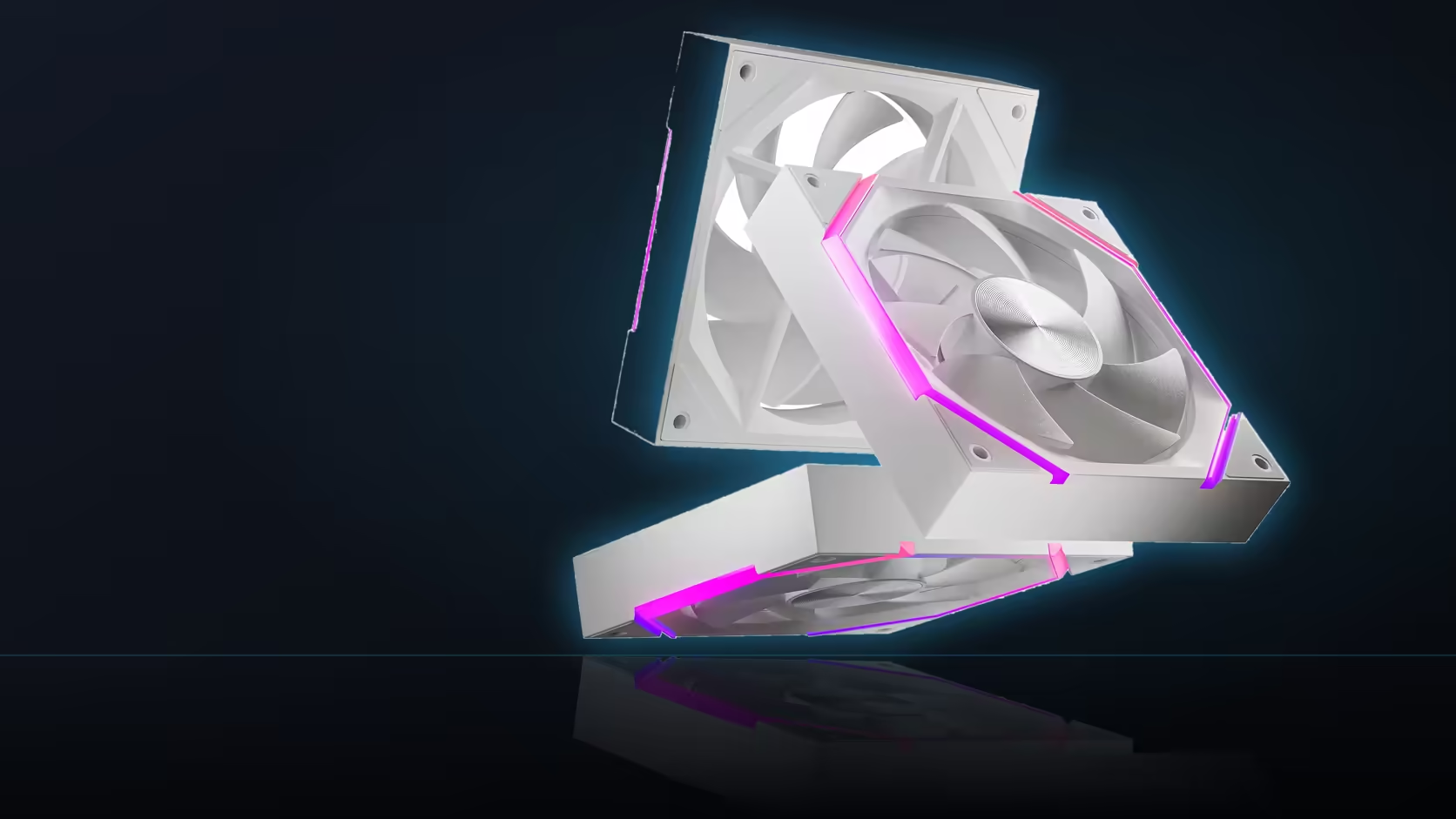
A build that ramps up under load doesn't have to look like it's reacting - the Nyota A12's lighting and speed run on completely separate wiring, which means a calm, unchanging colour can sit over fans doing real work underneath.
Quick Answer
Nyota A12 ring lighting and fan speed are controlled independently, over separate connections - a 5V 3-pin cable for the ARGB ring and a 4-pin PWM cable for speed. That means a row can hold one steady colour while the fans ramp up and down with temperature, since nothing links the two systems together. Every three-pack costs R499 and includes a 16-LED ring per fan.
🎨 Two systems, no relationship between them
The ARGB lighting chain and the PWM speed chain don't share any signal or logic - one is a 5V 3-pin addressable lighting connection, the other a 4-pin speed-control connection, and each runs back to a different type of header on the motherboard entirely. A fan can be ramping hard under a gaming session while its ring holds a single, unmoving colour the whole time, because there's genuinely nothing tying the two together.
Why keep the lighting calm
A steady colour reads as a deliberate part of the build's aesthetic - something chosen and left alone. An effect that visibly shifts or intensifies with load, by contrast, keeps drawing the eye back to the machine working, which isn't the impression everyone wants from a build sitting on a desk or under a monitor all day.
🔀 Can lighting be made to follow temperature anyway?
Some motherboard lighting software offers temperature-reactive effects as an option, but that's a deliberate software feature layered on top - not something the fan itself does automatically. If a build genuinely wants lighting that mirrors thermal load, that's a specific setting to configure in the board's own RGB application, separate entirely from the PWM curve controlling actual fan speed.
Is a steady colour wasting the addressable ring?
Not really - addressability is what allows fine, deliberate effects to be drawn around the ring, and choosing a single steady colour instead is simply a design decision rather than a limitation of the hardware. The option to do more is there; using it or not is entirely a preference call.
🔊 Noise still tells the real story
Even with lighting held perfectly steady, a fan ramping under load is still audible - which is exactly why the curve shape and sensor choice matter more for how "busy" a build feels than the lighting ever will. A calm ring paired with an abrupt, jumpy curve still reads as a machine working hard; it's the acoustic behaviour doing that signalling, not the light.
Consistency across the row
All three fans in a pack carry identical 16-LED rings and chain onto the same ARGB connection, so whatever lighting choice is made, the row displays it together as one coordinated set rather than three fans behaving independently.
Frequently Asked Questions
Are ring lighting and fan speed connected in any way?
No - the 5V 3-pin ARGB connection and the 4-pin PWM connection are entirely separate systems with no shared control.
Can lighting be set to react to temperature anyway?
Some board software offers that as a deliberate feature, but it's a software choice layered on top, not something the fan itself does.
Why might someone prefer a steady, unchanging colour?
It reads as a settled part of the build's look, where a reactive effect keeps drawing attention to the machine working under load.
Does choosing a steady colour waste the addressable ring's capability?
Not really - addressability enables fine effects, and choosing a calm colour instead is a design preference, not a limitation.
Will the fans still sound like they're working even with steady lighting?
Yes - speed changes remain audible regardless of lighting, which is why curve shape matters more than colour for that impression.
Is the lighting scheme consistent across all three chained fans?
Yes - all three carry identical 16-LED rings and follow the same chained ARGB connection as one coordinated group.
Can the ring lighting be switched off entirely?
Board software controls the ring, so whatever off or dimming options that software provides apply directly to these fans.
Ready to plan a build where the lighting and the cooling behave exactly how you want? Browse case fans and case accessories to finish off your setup.
Want lighting and cooling that behave on your own terms?
Explore Evetech's case fan range to build a row with exactly the look and curve you want.