A used graphics card can stretch a first-build budget and hand a new builder someone else's fault. The second-hand GPU question needs a proper stress test, history, condition check and comparison with warrantied new performance.
Quick Answer
A second-hand graphics card can stretch a first-build budget, but its value depends on condition, test access, included parts, and the terms of that sale. Previous mining or overclocking cannot be proven from appearance alone. A new card offers known condition and current written seller or manufacturer terms, which may suit a first builder who lacks spare parts for diagnosis.
Compare complete new systems in the gaming PC deals and best-selling PC range. Those baselines help you judge whether a used GPU plus the remaining components still produces a worthwhile full build.
Test the used card, not the story
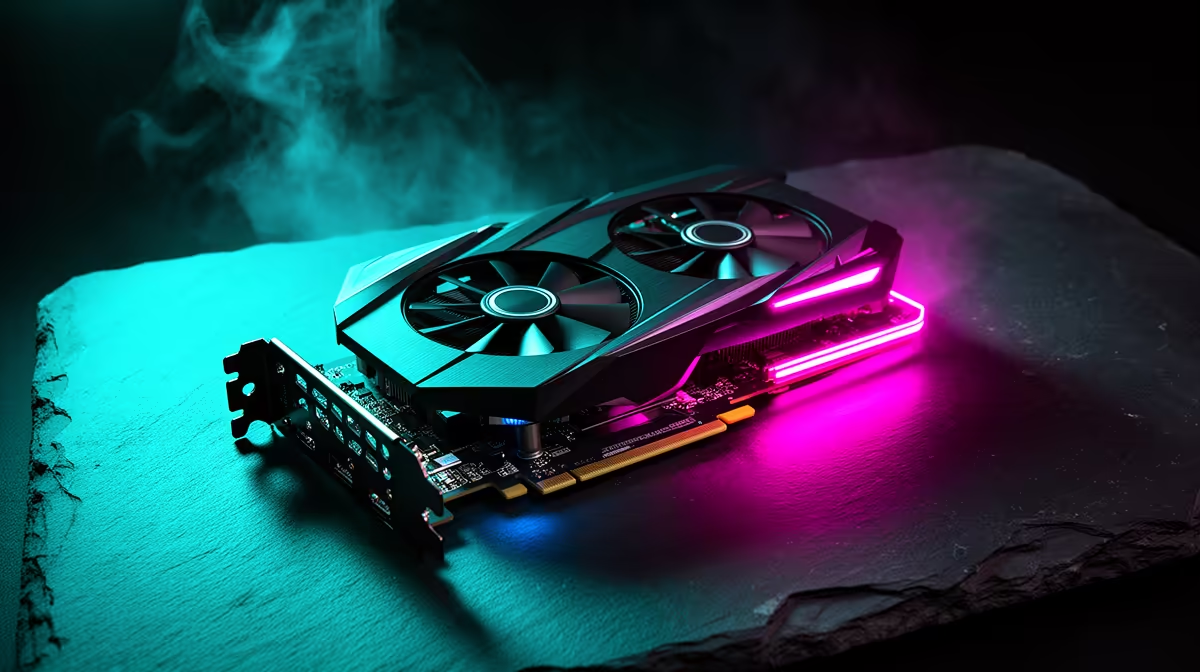
Verify the exact model, memory capacity, outputs, power connectors, length, thickness, and serial label. Inspect the cooler, fan blades, PCB edge, screws, connector, and display ports for damage or corrosion.
With permission, run it in a known compatible PC. Install a current supported driver, test every required output, and use a representative game or graphics load long enough for temperatures and fans to settle. Watch for artefacts, crashes, clock drops, unusual noise, or disconnections.
Compare performance with reliable results for that exact model and setup. A card can complete a short benchmark while failing after it warms up. One clean test reduces uncertainty; it does not reveal every hour of its history.
Price the complete risk
Add any missing power adapter, support bracket, cable, or cooler repair. Confirm the PSU has the required capacity and native supported connectors. Check case clearance and motherboard slot access.
Ask for proof of purchase and written details of what is included. Do not assume a manufacturer's warranty transfers or that a private transaction carries the same remedies as a retailer sale. Terms and legal rights depend on the parties and circumstances. Consult current NCC or CGSO guidance for South African consumer-law direction.
Choose the route you can support
Used makes more sense when the saving is meaningful, the card passes a proper warm test, and you can diagnose the rest of the PC. Keep a known-good display path or spare GPU route for setup if the processor has no integrated graphics.
New makes more sense when the used price sits close to a current supported alternative, the seller cannot demonstrate the card, or the first build must work without a second troubleshooting machine. Read the exact product and support terms rather than assuming every new GPU has identical cover.
FAQ
Does mining history make a used GPU bad?
The workload label alone does not determine condition. Cooling, voltage, environment, maintenance, and handling matter. Test the exact card under load and judge its current behaviour.
What should I test before buying?
Check all required outputs, sustained graphics load, temperatures, fan behaviour, clocks, artefacts, crashes, connectors, and physical condition in a compatible system.
Does a used graphics card have a warranty?
It depends on the original terms, transfer rules, seller, and nature of the transaction. Obtain written proof and consult current authoritative guidance when rights are unclear.
Compare the used GPU against a complete new-build baseline, then buy only after a warm load test and written terms make the risk clear.