Quick Answer
On a R20,000 gaming budget, 5G fixed wireless is a strong connectivity pick where fibre is not available. It delivers 100-300 Mbps with ping near 20-40ms to local servers, the router fits easily within budget, and it handles most online games well, though competitive shooters still prefer fibre's lower 5-15ms ping.
How 5G fixed wireless performs for gaming
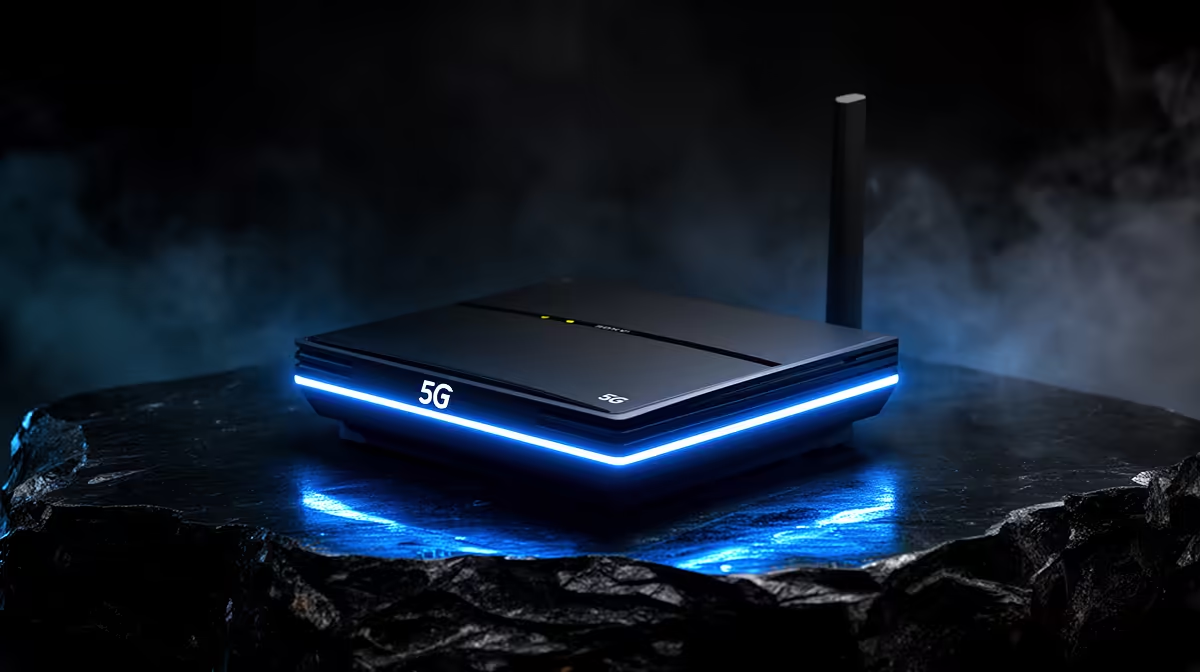
5G fixed wireless uses a home router on the mobile 5G network, giving fibre-like speeds without a trench to your house. In good-signal areas expect 100-300 Mbps and ping around 20-40ms to SA servers, which is comfortable for MMOs, co-op and most ranked play. Signal quality and tower distance matter, so placement of the router near a window facing the tower noticeably improves stability and latency.
How it stacks up against fibre and LTE
Against the alternatives, 5G fixed wireless beats LTE on consistency and Starlink on latency in covered urban and suburban areas, while costing less to set up than running new fibre. The router fits any gaming budget. For pure competitive shooters where every millisecond counts, fibre's 5-15ms ping is still the gold standard, so check fibre availability first and treat 5G as the strong fallback where it is not.
FAQ
Is 5G fixed wireless good for online gaming?
Yes in good-signal areas, with 100-300 Mbps and ping around 20-40ms to SA servers. That suits most online games; competitive shooters still benefit from fibre's lower 5-15ms latency.
How does 5G fixed wireless compare to fibre for gaming?
Fibre gives lower ping (5-15ms) and is the gold standard for competitive play. 5G fixed wireless is the strong fallback at 20-40ms where fibre is unavailable, with no trenching needed.
How can I improve 5G fixed wireless latency?
Place the router near a window facing the nearest tower, since signal quality and tower distance drive both speed and ping. A clear line of sight noticeably stabilises gaming latency.
Pro Tip
Check fibre availability first for the lowest ping; where it is not available, 5G fixed wireless at 20-40ms is a strong fallback, and a window-facing router placement improves stability.