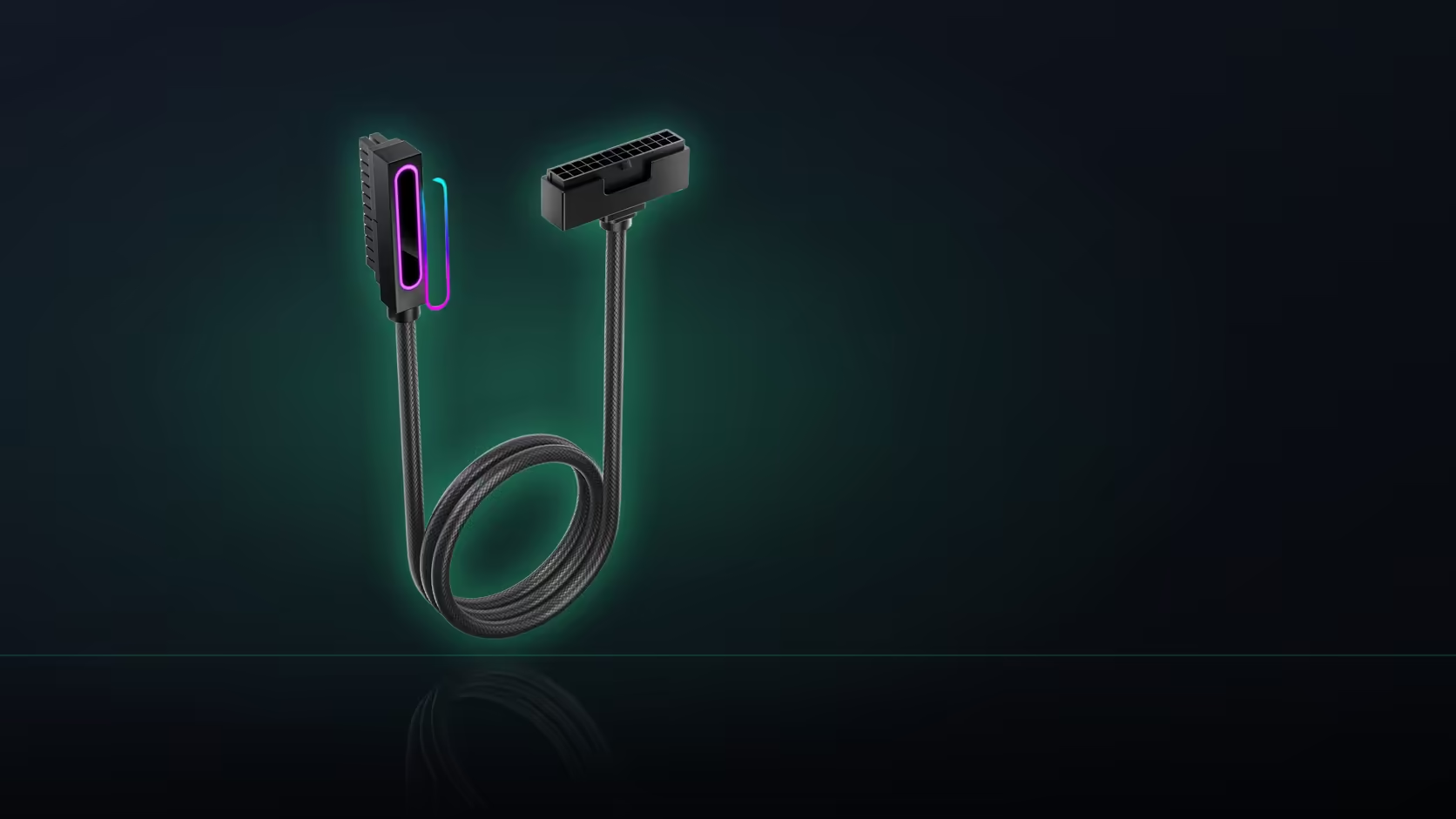
Nothing about a side-exit cable costs extra, which surprises builders expecting to pay a premium for a connector that solves a genuinely specific routing problem. The choice between straight-down and side-exit is entirely about which direction your case actually has room for, not about budget.
Quick Answer
Both side-exit ATX versions are R599, matching the straight-down head. The choice is about routing, not budget. They turn the cable left or right at the socket, which changes the grommet the run uses and the space it needs.
↩️ What side-exit actually changes about the cable
A side-exit head changes the direction the cable leaves the connector entirely - instead of dropping straight down from the socket toward the tray as the standard version does, it turns sideways, exiting either to the left or the right depending on which of the two variants you choose. Everything else about the piece, from the ARGB window to the conductor spec, stays identical to the straight-down version; only that initial exit angle differs.
💰 Confirming there is no price difference
Both the left-exit and right-exit versions sit at exactly R599 - the identical price as the standard straight-down ATX cable - so choosing a side-exit variant is purely a routing decision with zero budget consequence either way. There is no premium being charged for the more specialised geometry here.
🏠 Which builds actually benefit from a side exit
Tight, compact layouts where there is simply no physical room below the socket for a cable to drop straight down and curve away are exactly where a side-exit head earns its place, which is precisely why AsiaHorse points these specific variants at ITX builds - the case category most likely to run into exactly this kind of spatial constraint right at the main power socket.
🕳️ How this changes grommet usage and colour availability
Choosing a side-exit head usually means the cable now needs a different grommet than the straight-down version would use, since it is heading sideways toward a different opening in the tray rather than down toward whatever sits directly beneath the socket - worth mapping out before ordering rather than assuming the same cutout will serve both directions equally well. Colour choice narrows on the side-exit pair too: both left and right variants are offered in black only, so a build committed to a white cable theme would need to fall back on the straight-down version to keep that colour consistent, since no white side-exit option currently exists in the range. Lighting behaviour stays completely unaffected by exit direction regardless of which you choose - the ARGB window and the 5V 3-pin sync lead work identically whichever way the head physically turns, so nothing about the lighting experience changes between the three directional options. One genuine caveat worth taking seriously before ordering either side-exit variant: AsiaHorse states plainly that board compatibility is limited on these two pieces, so checking the actual clearance around your specific 24-pin socket is a required step, not an optional precaution, before committing to a purchase you cannot easily verify will fit. cable solutions rounds out the shelf these three directional heads come from, and a side-exit accent that grows into a bigger plan should get a look at NZXT case lighting.
Frequently Asked Questions
What does side-exit actually change?
The direction the cable leaves the connector. Instead of dropping straight down from the socket, it turns to the left or the right.
Is either direction more expensive?
No. Both the left and right versions are listed at R599, which is also what the straight-down ATX cable costs.
Which builds benefit from a side exit?
Tight layouts where there is no room below the socket for a cable to drop, which is why AsiaHorse points these at ITX builds.
Does it change which grommet I use?
Usually yes, since the cable now heads sideways towards a different opening rather than down to the one beneath the socket.
Are the side-exit versions offered in white?
The side-exit pair is listed in black only, so a white build would need the straight-down version to match the jacket.
Is the lighting identical?
Yes. The ARGB window and the 5V 3-pin sync lead work the same way whichever direction the head exits.
Should I buy one without measuring?
No. AsiaHorse notes board compatibility is limited on these, so the clearance around your 24-pin socket needs checking first.
Deciding between a straight-down and side-exit head?
Browse Evetech's power supply range and measure your socket's clearance before choosing a direction.