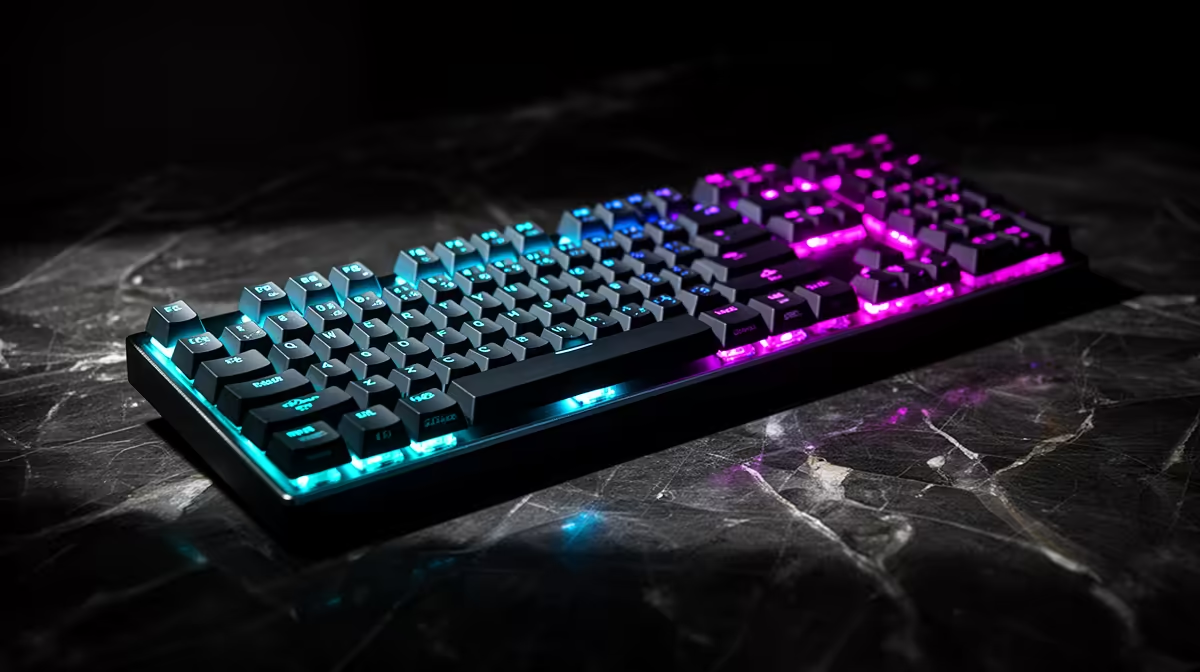
Sim racers in SA running iRacing, Assetto Corsa Competizione, or Le Mans Ultimate quickly learn that lap time comes from the wheelbase, pedals, and seating position, not the keyboard. The keyboard handles pit commands, app macros, and menus, so it deserves a sensible budget, not the lion's share.
Quick Answer
In a sim racing setup, a gaming keyboard matters for menu navigation, telemetry app shortcuts, and chat, but it is never a core input for driving. Spend your budget on the wheel, pedals, and a stiff mount first; a R500 to R900 keyboard is plenty until everything else is sorted.
When a gaming keyboard earns its place at the rig
A keyboard with programmable keys helps when you bind pit-limiter toggles, MoTeC or SimHub macros, and voice-chat push-to-talk to keys you can hit without looking. A compact tenkeyless board around R700 to R1,200 frees cockpit space and sits neatly on a keyboard tray. Mechanical switches help here only for reliable, confident presses mid-session, not for any speed advantage.
When the keyboard does not matter
If you are still driving with a R1,500 entry wheel and no load-cell brake, a premium R2,500 keyboard is the wrong upgrade. Pedals with a load-cell brake transform consistency far more than switch type. Put the next R3,000 into pedals or a rigid mount before touching the keyboard, because brake feel changes your lap time and a keyboard does not.
A sensible SA budget order for the rig
Prioritise wheelbase and wheel, then load-cell pedals, then a stable cockpit or wheel stand, then the seat, and only then peripherals like the keyboard and a button box. A reliable tenkeyless keyboard near R900 covers macros and menus indefinitely, leaving budget for the parts that actually find seconds on track.
FAQ
Does a gaming keyboard improve sim racing lap times?
No. Lap time comes from the wheel, load-cell pedals, and seating stability. A keyboard only handles menus, pit commands, and app macros, so a basic R700 board is enough.
Should I buy a keyboard or pedals first for sim racing?
Pedals, every time. A load-cell brake from around R3,500 improves braking consistency dramatically, while any working keyboard handles bindings. Upgrade the keyboard last.
Is a tenkeyless keyboard better for a racing cockpit?
Yes. A tenkeyless board near R900 to R1,200 saves cockpit space and fits a keyboard tray better than a full-size board, while still offering enough programmable keys for macros.
Bind your pit limiter, push-to-talk, and telemetry overlay to three easy-reach keys, then put the rest of your budget into load-cell pedals before any keyboard upgrade.