Deciding where to spend your next upgrade rand starts with the PC you already own, not a generic shopping order. The power supply governs trust and headroom; the chassis governs airflow, fit, and noise. Put your money where the current build is weakest.
Quick Answer
Spend first on the power supply if your current unit is old, low quality, missing 50-series connectors, or rated too close to your planned load. Choose the case first only when airflow is poor, parts barely fit, or fan noise dominates the room. When in doubt about electrical safety, the PSU wins.
When the Power Supply Comes First
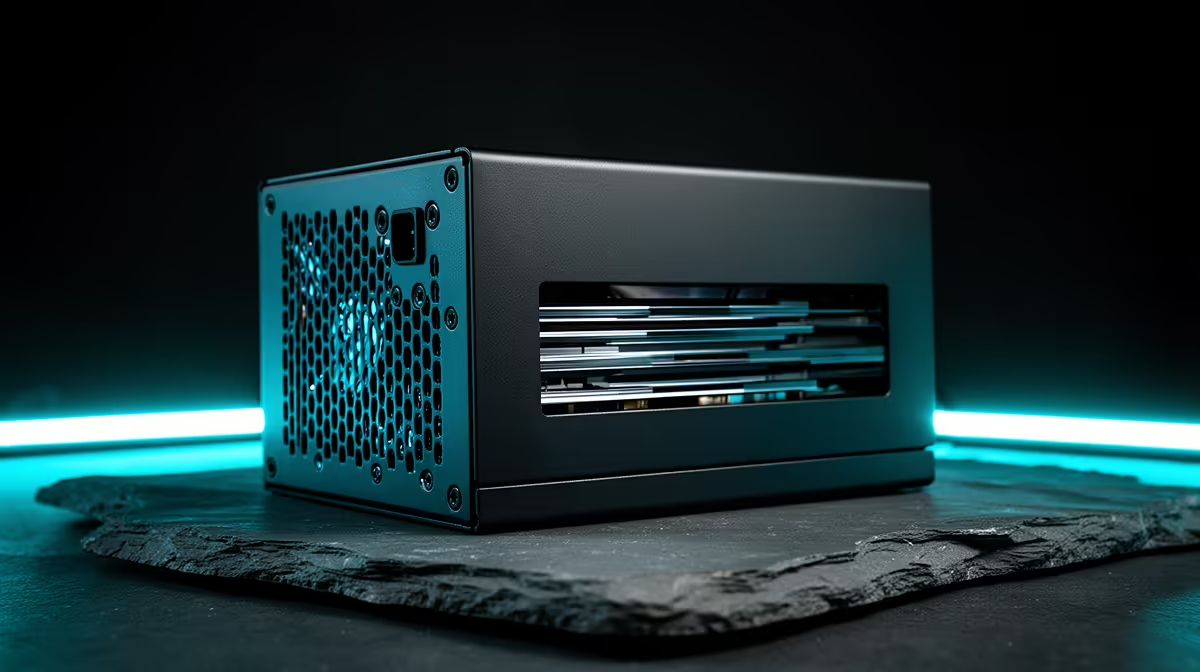
A quality PSU is the electrical foundation of the whole machine, so it earns priority when it is the weakest link. Check the wattage headroom, efficiency rating (aim for 80 Plus Gold), connector set including the 12V-2x6 cable for modern GPUs, and the warranty length. A mystery or ageing unit under a new RTX 5070 or 5080 invites random crashes and shutdowns that masquerade as other faults. A solid 850W ATX 3.1 unit in the R2,500 to R3,800 band buys years of trustworthy service.
When the Case Comes First
A weak chassis makes every future upgrade harder and louder. Poor intake forces fans to spin harder, tight cable routing chokes airflow, and limited clearance can rule out a longer GPU or a taller air cooler. A practical case does not need RGB or tempered glass; it needs strong mesh intake, room for 280mm or 360mm radiators, dust filters, and space to work without bent cables. If temperatures and noise are your real complaint, the case is the smarter rand.
Spending in the Right Order for SA Builds
Think one upgrade ahead so you buy each part once. A quality PSU and a good case both carry over into a future build, which makes them safer long-term spends than another mid-tier component you will replace. The correct order is the one that removes your biggest blocker: electrical risk points to the PSU, while heat and noise point to the case.
FAQ
Should I upgrade the PSU or the case first?
Upgrade the PSU first if it is old, underpowered, or lacks the right connectors for a 50-series GPU, since electrical safety comes before comfort. Upgrade the case first when heat and fan noise are your main complaints.
How many watts should my power supply be?
For a modern RTX 5070 build, an 850W ATX 3.1 unit gives comfortable headroom, while RTX 5080 and 5090 rigs are happiest on 1000W. Always leave at least 30 percent margin for Blackwell transient spikes.
Does a better case actually improve performance?
Indirectly, yes. Better airflow keeps the CPU and GPU cooler, which lets them sustain higher boost clocks and stay quieter, so you get steadier frame rates without throttling.
build's weakest area first: if the PC crashes or worries you under load, fix the PSU; if it runs hot and loud, fix the case. Then shop that category at Evetech and leave the other for later.