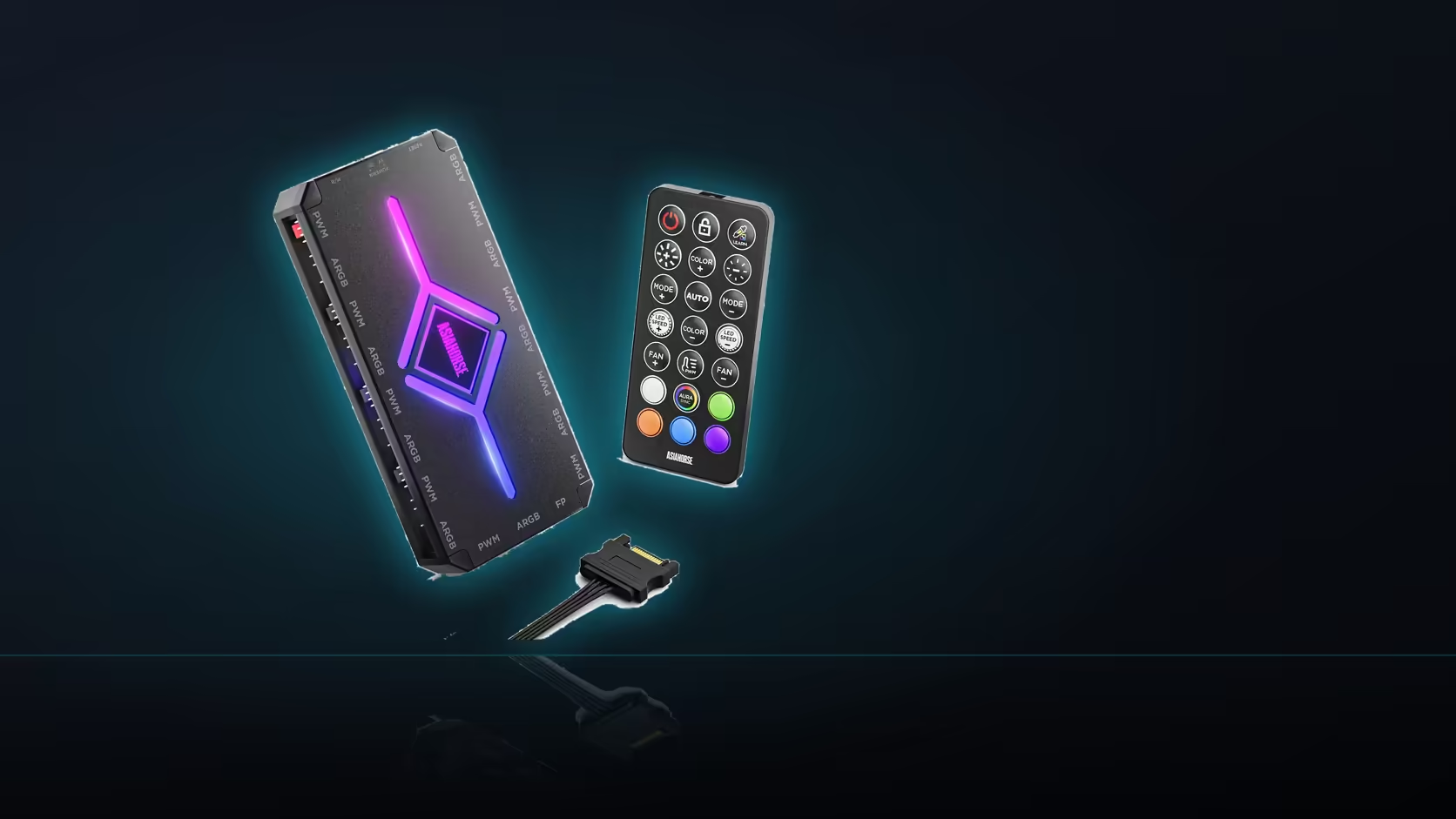
Spare capacity on a hub is not a shopping list, though it is easy to read it that way once the ASH-S1 is sitting there with several ports doing nothing. A build cools according to its layout and airflow path, not according to how many connectors happen to be free.
Quick Answer
Free ports on the ASH-S1 are expansion room for later, not a reason to add fans the build's airflow does not actually need. Fan count should follow the case's cooling requirements, and adding hardware purely to fill capacity typically adds noise and cost without improving anything. At R349 the hub's value comes from covering both banks in one unit, not from every port carrying a device.
🧭 Cooling follows layout, not port count
A case's temperatures are set by its intake and exhaust arrangement, the components generating heat, and how air actually moves through the interior - not by how many fan connections happen to be available on a hub. Buying a hub with nine ports does not create nine fans' worth of cooling need out of nothing; it simply removes the connection bottleneck if a build genuinely has that many fans planned already. Treating spare ports as a prompt to add hardware inverts the logic that should drive the decision.
🔇 What an unnecessary fan actually costs
Every fan added purely to use a spare port carries its own price, adds noise to the case, and needs another cable routed and secured - real costs for a device that may do nothing measurable for temperatures if the airflow path is already balanced. Past a certain point, additional fans deliver diminishing returns on cooling while the noise keeps climbing, which is why placement and airflow direction typically matter more than raw fan count once a case has three to five well-positioned fans.
📦 What spare capacity is actually good for
Where spare ports do earn their keep is future changes - a lit cable cover added later, an extra fan if the build genuinely changes direction, or a strip added during a refresh, all of which draw on the same nine-port banks and the shared 377-LED budget. That is a reason to buy the ASH-S1 for a build with real port and lighting needs today rather than four fans that never really used its capacity. Evetech's case fan range is worth checking against your case's actual layout before adding anything, and the NZXT fan controller is a sensible comparison for a build that genuinely needs fewer ports than this hub offers.
Frequently Asked Questions
Why not simply fill every available port?
Because fan count should follow the case layout and the cooling the build needs, not the number of connections available.
What does an unnecessary fan actually cost?
Its price, some noise, and another cable to route, without improving temperatures if the airflow path is already adequate.
Is spare hub capacity wasted if unused now?
No. It covers future additions such as a cable cover or an extra fan when the build genuinely changes.
How many fans does a typical case actually need?
That depends entirely on the case, though most mid-towers are well served by three to five well-placed fans.
Does adding more airflow always help temperatures?
Beyond a point the gains flatten while the noise does not, which is why placement matters more than quantity.
What else could reasonably use the spare ports later?
Lit cable covers, strips or a later fan row, all of which count towards the 377-LED total as well.
Working out how many fans your case actually needs?
Browse Evetech's case fan range and match the count to your airflow plan before buying a hub to match.