Gaming after a full work day means short, relaxed sessions, and AR glasses for that use have a clear minimum that is lower than the marketing suggests. The trick is finding the floor where the experience is comfortable without overpaying for specs you will not feel on the couch.
Quick Answer
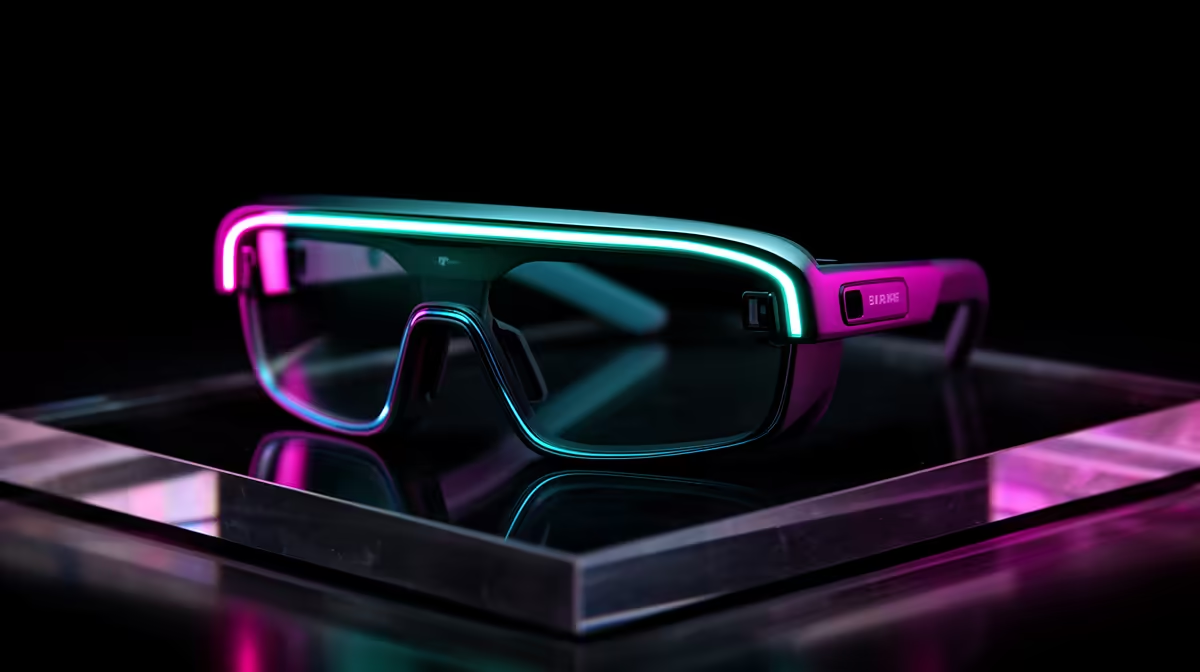
For casual after-work gaming, the practical floor is a 1080p-per-eye panel, around 90Hz refresh, a 46-degree field of view and frames under 80g. That lands around R6,500 to R9,500 in SA. Below 1080p per eye, text and HUDs get fuzzy enough to spoil relaxed play.
The Specs That Define The Floor
Resolution sets clarity, so 1080p per eye is the sensible base for readable HUDs. A 90Hz refresh keeps motion smooth in slower genres without demanding flagship pricing. Field of view around 46 degrees gives an immersive virtual screen while keeping weight and cost in check.
Comfort Is Part Of The Spec Floor
Weight matters as much as pixels for unwinding after work. Frames over 90g press on the nose within an hour, killing the relaxation. Look for adjustable nose pads and good weight balance so a two-hour session never becomes a chore.
FAQ
Is 60Hz enough for casual gaming on AR glasses?
For slow, story-driven games 60Hz is tolerable, but 90Hz feels noticeably smoother in anything with camera movement. Treat 90Hz as the comfortable floor for after-work play.
Do I need a powerful PC to drive AR glasses?
AR glasses mirror whatever device feeds them, so a mid-range gaming laptop or console handles the 1080p signal easily. The glasses themselves do not add a heavy GPU demand.
Will cheaper AR glasses strain my eyes?
Low-resolution or poorly balanced panels can cause eye fatigue over time. Staying at the 1080p, 90Hz floor with comfortable frames keeps strain low during relaxed sessions.
Match the glasses to a 90Hz signal source so smooth motion comes through, not just sharp text.