Quick Answer
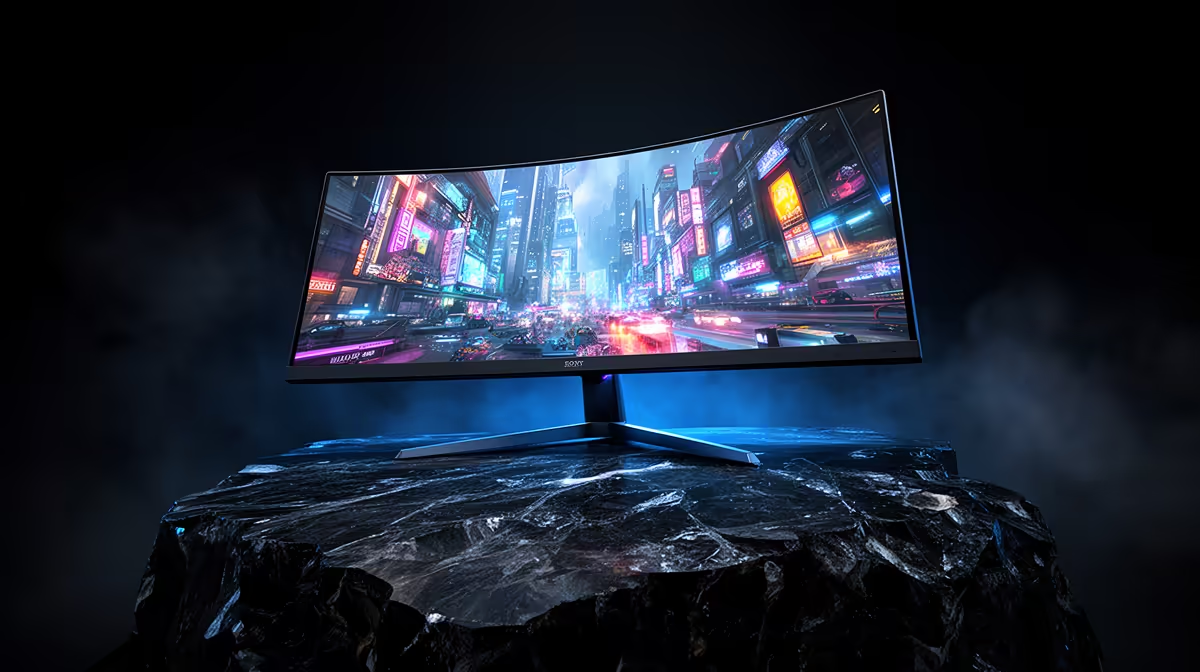
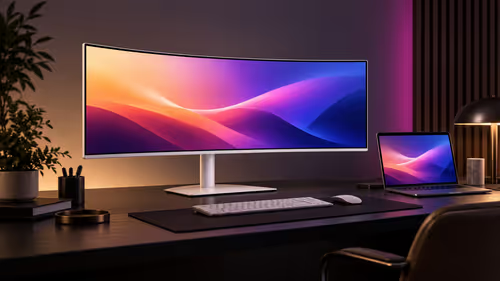
A monitor crash or low-FPS problem after a GPU driver update is usually a display-mode, cable, VRR, HDR, or DSC handshake issue. Set the screen to 60Hz, confirm the desktop is stable, then move back to 144Hz, 165Hz, 240Hz, or ultrawide resolution in controlled steps. Replacing a R6,000-R20,000 gaming monitor makes no sense until DisplayPort cable, driver rollback, and default GPU clocks have been tested.
Reset The Display Link
Use a certified DisplayPort cable for 1440p high refresh or 4K, bypass docks, and disable custom resolutions while testing. If the OLED or ultrawide panel works at 60Hz but fails at 240Hz, the problem is likely bandwidth, DSC, VRR, HDR, or driver timing. Keep the monitor firmware, GPU driver package, and Windows build number written down.
What To Record Before Buying Parts
Write down the driver package, Windows 11 build, motherboard model, CPU, GPU, RAM speed, PSU wattage, and the first error message. A Ryzen 7 9800X3D with 32GB DDR5-6000 and an RTX 5080 behaves very differently from an older 16GB DDR4 system. The cleaner the notes, the faster Evetech support or a technician can tell whether the next move is software cleanup, BIOS settings, cooling, or hardware replacement.
Safe Recovery Order
First test default clocks, default memory profile, and a single monitor. Then remove overlays, capture tools, RGB utilities, and unused audio or USB devices. After that, roll back the GPU driver, update chipset drivers, and check BIOS only if the fault points there. A 15-minute loop in one known game is more useful than random testing across five games.
FAQ
Should I replace the part immediately?
No. A crash that starts after an update is usually software, firmware, USB, display, or settings related. Replace hardware only after the same failure appears at default settings with clean drivers and a repeatable test.
When should I use DDU?
Use DDU when a normal clean driver install still leaves crashes, black screens, or broken display modes. Run it in Safe Mode, reinstall one known driver package, and avoid adding tuning tools until the PC is stable.
What information helps SA support teams most?
The exact error code, driver package, Windows build, part model, and crash timing matter most. Also include whether it happens at 60Hz, 144Hz, 240Hz, or only during a specific game.
Recovery tip
Prove stability at default settings first, then add back refresh rate, EXPO or XMP, overlays, and peripherals one item per test so the failing layer is obvious.