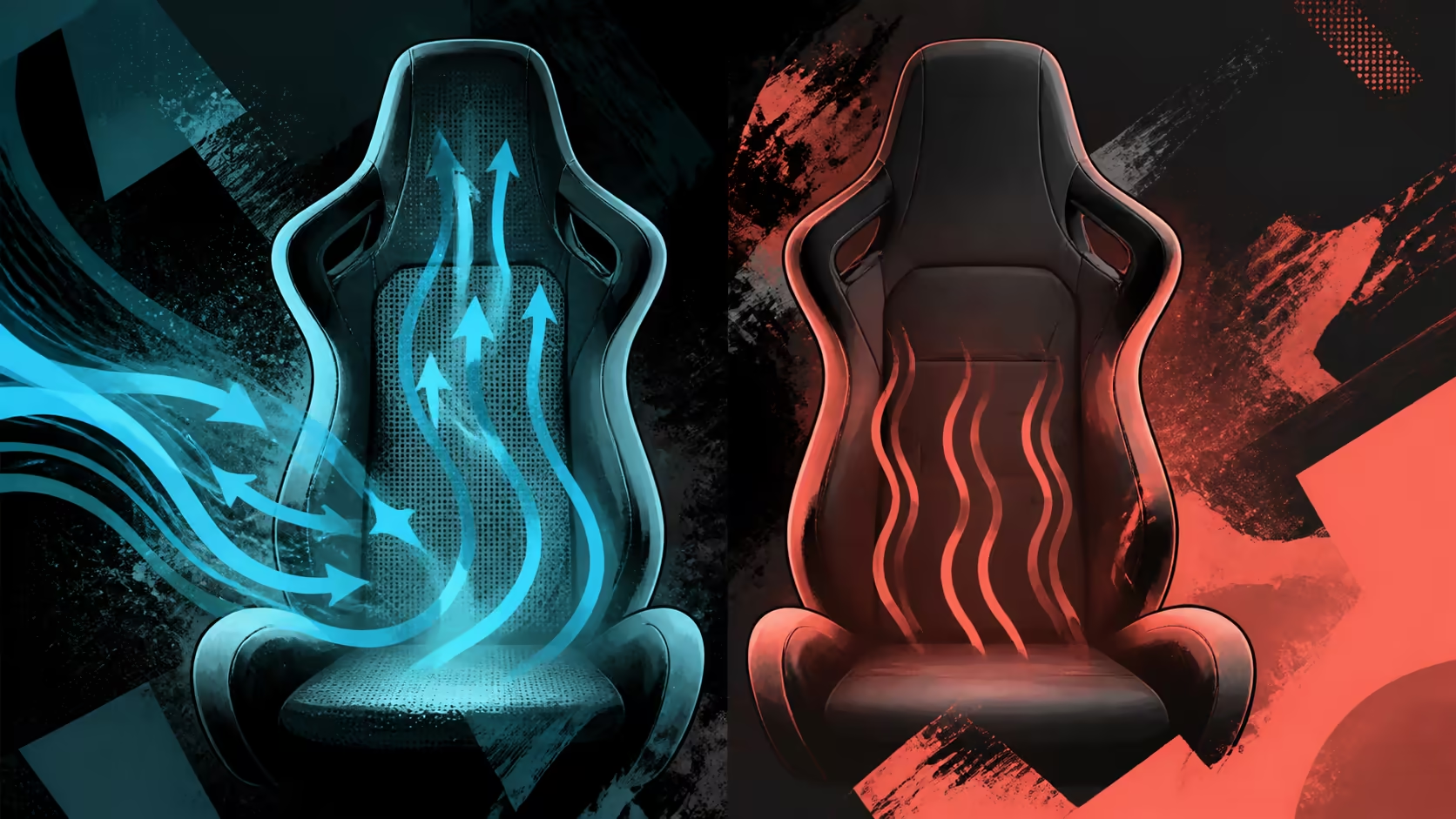
Active airflow is the central difference between a ventilated seat and an ordinary passive design. A ventilated vs standard gaming chair comparison should then consider support, adjustment and the R16,599 local package.
Quick Answer
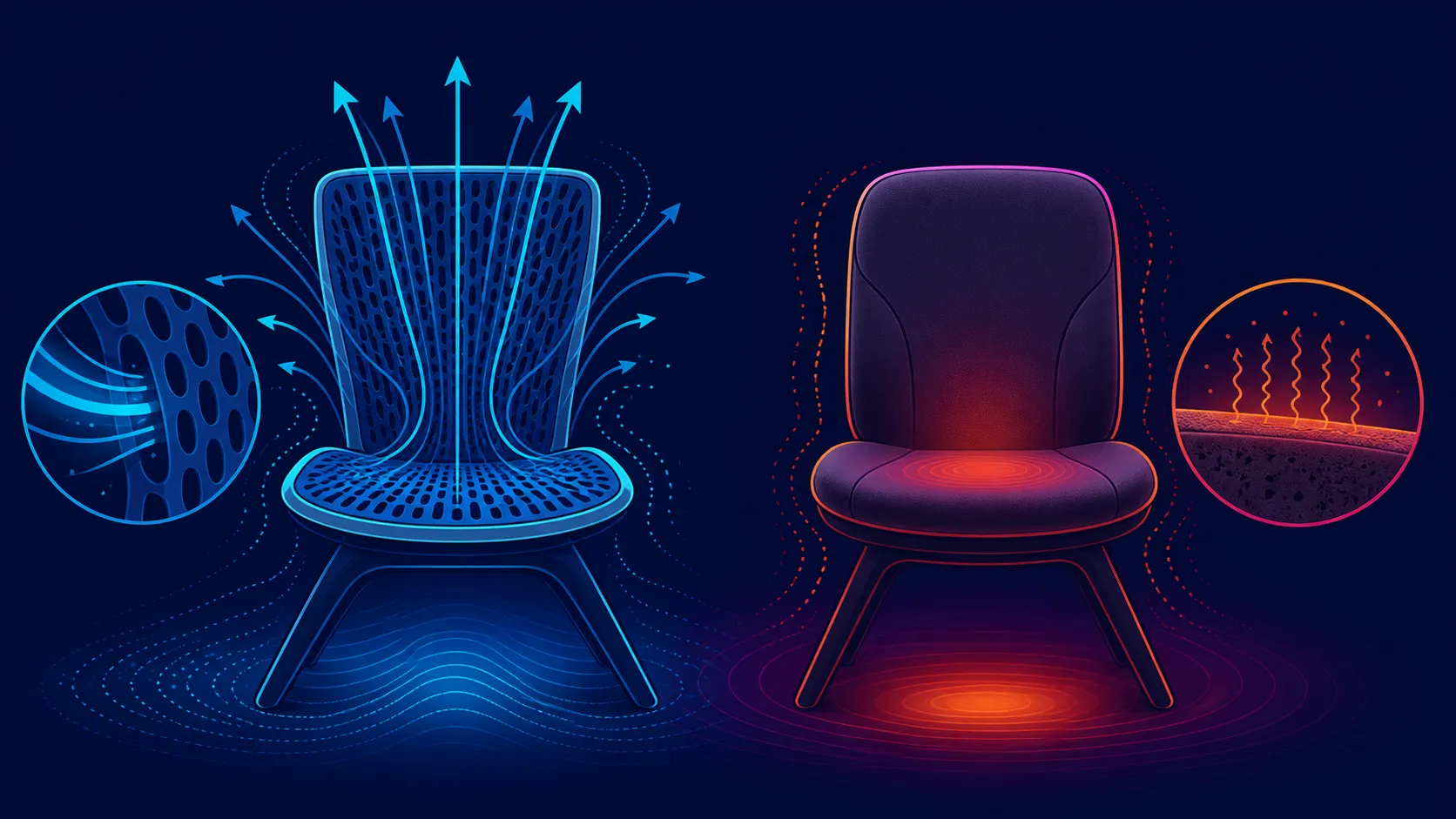
A ventilated chair actively manages seat airflow, while a standard chair depends on its passive construction and the room. The AutoFull M6 Pro+ 2.0 represents the active option and also offers heating, dynamic lumbar and 160-degree recline. Fan speed, noise, power and exact cooling results need individual checking.
🌬️ Separate active from passive
Ventilation introduces an operating seat function. A standard chair may still use a design that feels suitable, but it does not gain an active fan merely from breathable styling. Compare the exact mechanism rather than the visual appearance.
Ventilation gives the M6 Pro+ an active response to warm seat contact. First estimate how often that issue occurs, then review the wider Evetech AutoFull chair range.
🎛️ Check operation directly
Ask how ventilation starts, stops and changes level. Do not assign fan speeds, sound output, temperature reduction or a power connection from the feature name. Test operation according to the chair instructions.
Personal response also matters. Room heat, clothing and contact time can affect how a seat feels, so active ventilation cannot guarantee summer comfort for every user.
🪑 Include support features
Seat airflow is distinct from the M6 Pro+'s posture tools. Lower-back contact responds to movement, a 3D ErgoCloud pillow meets the neck, and folding arms offer broad positioning. Backrest travel ends at 160 degrees.
The intended desk should anchor comparisons within Evetech's gaming chairs available to South African buyers.
✅ Compare Rand value fairly
At R16,599, score the climate seat by expected frequency of use. Then score lumbar, arms, recline and neck support separately. A standard chair may remain suitable if active airflow solves no repeated need.
The M6 Pro+ also provides heating and carries up to 150kg. Neither fact proves seat dimensions, material, fit or medical benefit. Keep those questions distinct when choosing between active and passive designs.
Run the same warm-session scenario on both chair types where possible. Keep room conditions, clothing and task duration similar, then note personal response. This creates a fairer comparison than trying a ventilated chair on a hot day and a standard one in a cooler room.
Include operation effort in the active-seat score. A mode that is hard to reach or understand may contribute less daily value even if airflow is useful. The exact controls should be assessed without assuming automatic behaviour.
For a standard chair, identify the real passive construction rather than using standard as a material name. Upholstery and seat design can vary widely, so check the exact model before making airflow conclusions.
Revisit the support package after the climate test. Long sessions also involve lumbar contact, forearm positioning and movement. A standard seat with better personal fit can remain a strong candidate even without an active fan.
Keep the resulting notes practical: which mode was used, whether the chair fit, and which position changes worked. Do not convert a personal impression into a universal summer-performance claim.
Keep the result in a matched comparison table. Include room condition, task, session length, chair position and any operating effort for the active seat. On the standard-chair side, identify the actual construction instead of relying on the absence of controls. Repeating this comparison in another season can show whether the premium function serves a regular pattern or only one narrow circumstance.
Frequently Asked Questions
What separates ventilated and standard seats?
One uses an active airflow function, while the other relies on passive seat construction and room conditions.
Does the M6 Pro+ include heating too?
Yes. Its air-conditioned seat offers both ventilation and heating modes.
Which ventilation details need checking?
Do not attach numbers to either characteristic before reviewing this chair's controls and correct operation.
Can ventilation guarantee comfort in summer?
No. Personal response, room temperature, clothing and session length continue to affect comfort.
What support features sit beyond climate control?
Position changes are served by responsive lumbar contact, folding arms, neck support and backrest travel to 160 degrees.
How should Rand value be compared?
Use R16,599 as the AutoFull reference, then score every climate and support function by actual use.
Ready to compare active airflow with a simpler seat?
Browse Evetech's gaming chairs after identifying your warm-session pattern, support needs and local feature budget.