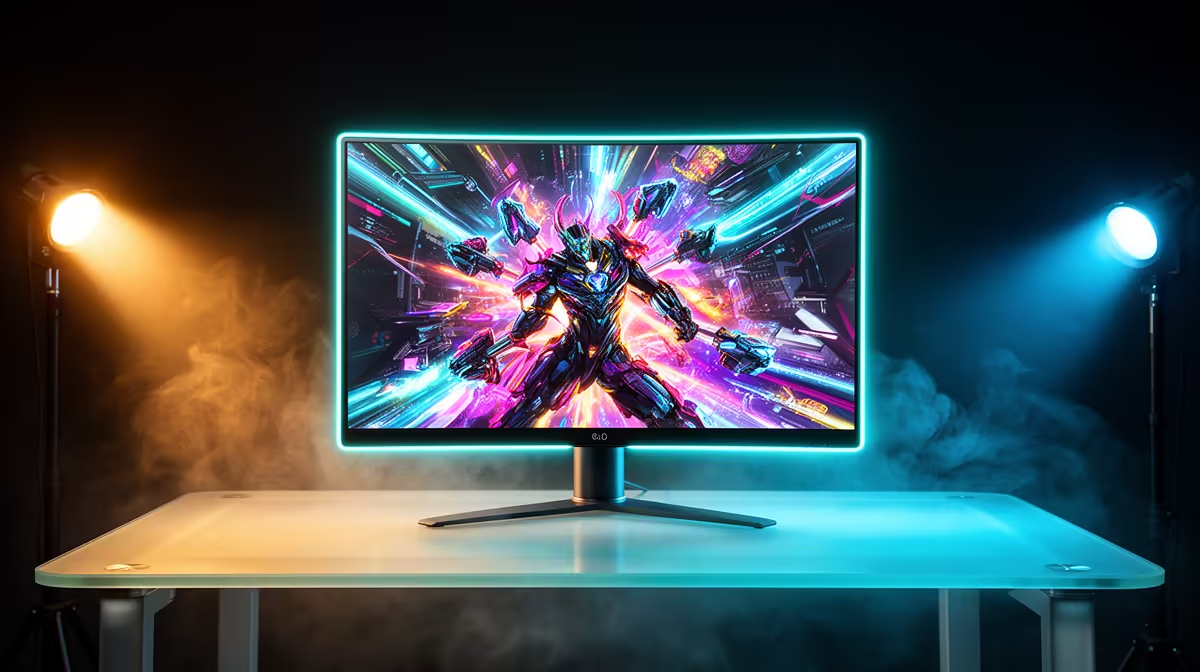
A birthday candle and a supermarket freezer aisle throw completely different colours of light, and that gap is exactly what separates warm from cool video lighting. On a compact led streaming light, that gap is measured in Kelvin, running from a soft amber near 700K up to a crisp blue-white near 6500K. Nudge the dial a few notches and the whole feel of a recording shifts before a single camera setting changes.
Quick Answer
Warm settings near 700K read cosy, orange and relaxed, which suits casual chats or evening vlogs. Cool settings near 6500K read crisp and blue-white, which suits gaming footage or daytime calls where alertness matters more than mood. The NearStream SL10B covers that entire bi-colour range for R629, so a single fixture handles both looks instead of two separate lights.
🕯 Why Warm Light Feels Cosy
Warm colour temperature mimics candlelight and old incandescent bulbs, both of which sit low on the Kelvin scale. Skin tones pick up a golden cast under warm light, which is why lifestyle vlogs, storytelling content and late-night streams often lean toward the amber end of a dial. It softens the edges of a shot and puts viewers at ease rather than on alert.
❄ Why Cool Light Reads Sharp
Cool colour temperature copies daylight and overcast sky, both high on the Kelvin scale. Detail reads more clearly under cool light because contrast increases slightly, which is one reason competitive gaming streams and product demos often sit closer to the 6500K end. The trade-off is that cool light can look clinical if pushed too far without any warmth to balance it.
🎚 Matching Temperature To The Room
A fixed-colour light forces a room to adapt to it. A bi-colour unit does the opposite, letting a streamer dial the output to match whatever ambient light already exists, whether that is a warm desk lamp or a cool ceiling fixture. The 700K to 6500K range on the SL10B exists specifically so a creator is not locked into one look regardless of the time of day or room setup.
🎥 Building A Habit Around Colour Choices
The fastest way to get consistent footage is to settle on a temperature per content type and stick with it. A gaming channel might default toward the cooler half of the dial, while a chatty podcast-style stream might default warmer. Testing this on the SL10B's own page before buying helps confirm the exact range fits a specific setup. Pairing the light with other gear from Evetech's accessories for gaming setups rounds out a desk built around consistent, repeatable lighting, and tidying the power and USB runs with cable solutions for tidy runs keeps the whole area looking deliberate rather than thrown together.
Frequently Asked Questions
Is warm or cool light better for skin tones?
Warm light generally flatters skin tones with a soft golden cast, though the right choice still depends on the room's other light sources.
Can one light do both warm and cool?
Yes, a bi-colour fixture like the SL10B tunes across its full 700K to 6500K range, so one unit replaces the need for separate warm and cool lights.
Does colour temperature affect video file size?
No, Kelvin settings change how a scene looks, not how the footage is encoded or stored.
Why does my footage look two different colours in one clip?
That usually happens when a light's temperature clashes with room lighting; matching the fixture to the ambient tone fixes it.
What Kelvin range suits gaming streams?
Many gaming streamers lean toward the cooler half of the range, closer to 6500K, for a sharper, more alert look.
Ready to see how warm and cool light change your footage?
Flicking the NearStream SL10B between its warmest and coolest settings shows the mood and clarity shift before you commit to one look. Evetech has the R629 unit listed under streaming lights.