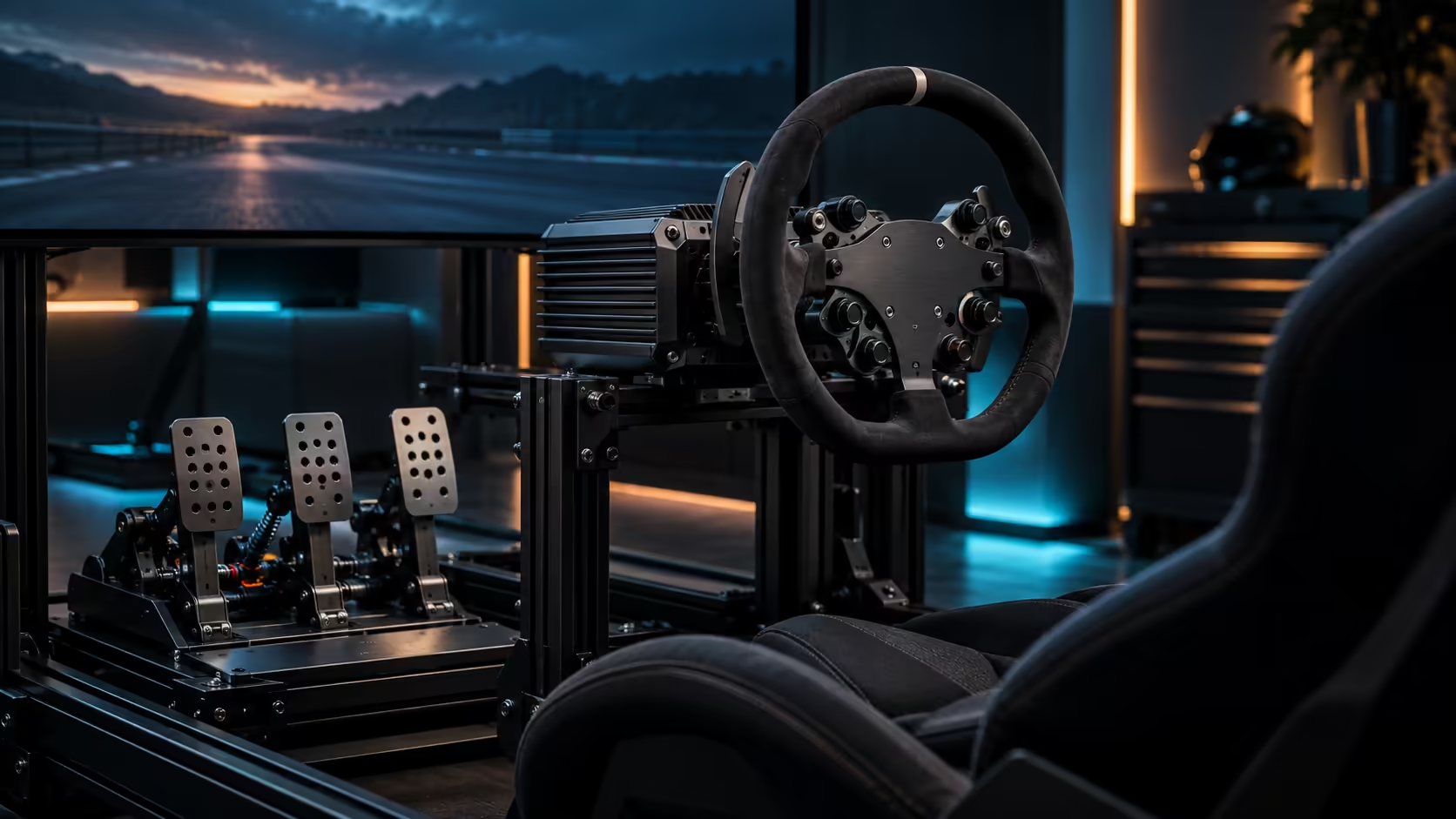
Ask what a number on a spec sheet actually feels like in your hands, and most descriptions fall back on comparisons that do not help. Here is one that does: at full output, 9Nm of direct drive torque pushes back on the rim about as hard as a 6kg weight held at arm's length on a one-metre lever, which is firm, manageable, and nowhere near as intimidating as the number alone suggests.
Quick Answer
At maximum output, a 9Nm base like the R14,999 bundle's Alpha EVO feels firm rather than overwhelming, roughly equivalent to a 6kg push at your hands depending on rim size, and most drivers run well below that ceiling for everyday driving. What actually surprises new owners is the speed of the forces rather than their raw strength, since kerb strikes and tyre slip arrive as sharp, distinct events rather than a gradual push.
💪 The weight comparison, and why it undersells the experience
Picture holding a 6kg weight at the end of your arm and you have a rough sense of how hard 9Nm pushes back at full strength on a typical GT-style rim. That is genuinely manageable for most adults, closer to carrying a bag of groceries than to fighting a car's actual steering. What the weight comparison misses entirely is timing: force feedback is not a constant push, it is a rapidly changing signal that spikes and releases within 1 to 2ms as the simulation updates.
That speed, not the peak strength, is what surprises people the first time they drive a genuinely capable direct drive base. A sudden kerb strike arrives as a sharp jolt rather than a smooth increase in resistance, and a tyre losing grip feels like the wheel briefly going light rather than heavy, both of which happen fast enough to catch an unprepared driver off guard on the first few laps.
🎯 Why most driving does not use anywhere near the ceiling
Everyday cornering and steady-state driving rarely demand anything close to 9Nm of resistance, and most drivers configure their base's output well below the maximum for exactly that reason: the ceiling exists to represent the sharpest, rarest events cleanly, not to be the resistance level you feel constantly. Running near maximum output all the time tends to fatigue wrists and forearms faster than the added strength is worth for the majority of a session.
The practical effect is that a 9Nm base feels closer to a well-controlled, responsive wheel most of the time, with occasional sharp spikes when something genuinely dramatic happens on track, rather than a constant fight against 9Nm of resistance lap after lap.
🛠️ What changes the feel from the number alone
Rim size changes what you feel too: hold the rim closer to its centre and the same 9Nm reads as noticeably heavier than it would on a rim with a larger diameter, purely because of leverage. Mounting rigidity matters just as much: the same base bolted to a flexing desk feels mushy and delayed compared with the same base through-bolted to something solid, since a flexing surface soaks up and delays part of the force before it ever reaches your hands. The sim racing shelf, the wider racing simulation range, and the simulation gear range all cover the mounting side of getting a torque figure to actually reach you as intended.
Frequently Asked Questions
Is 9Nm too strong for a first-time direct drive owner?
Not at a sensible starting output. Beginning at a lower setting, roughly a third of maximum, and increasing gradually gives new owners time to adjust before running near the ceiling.
Does rim size change how strong the wheel feels?
Yes. Holding the rim closer to the shaft's centre is simple leverage, so identical torque reads as noticeably stronger there than it would out at the edge of a bigger rim.
Why does mounting affect how the torque feels?
A surface that flexes under load absorbs some of the force before it reaches your hands, making the same base feel weaker or delayed compared to a rigid mount.
Ready to feel the difference for yourself?
Check the Racing Simulation shelf and start any new direct drive base at a low setting before working up.