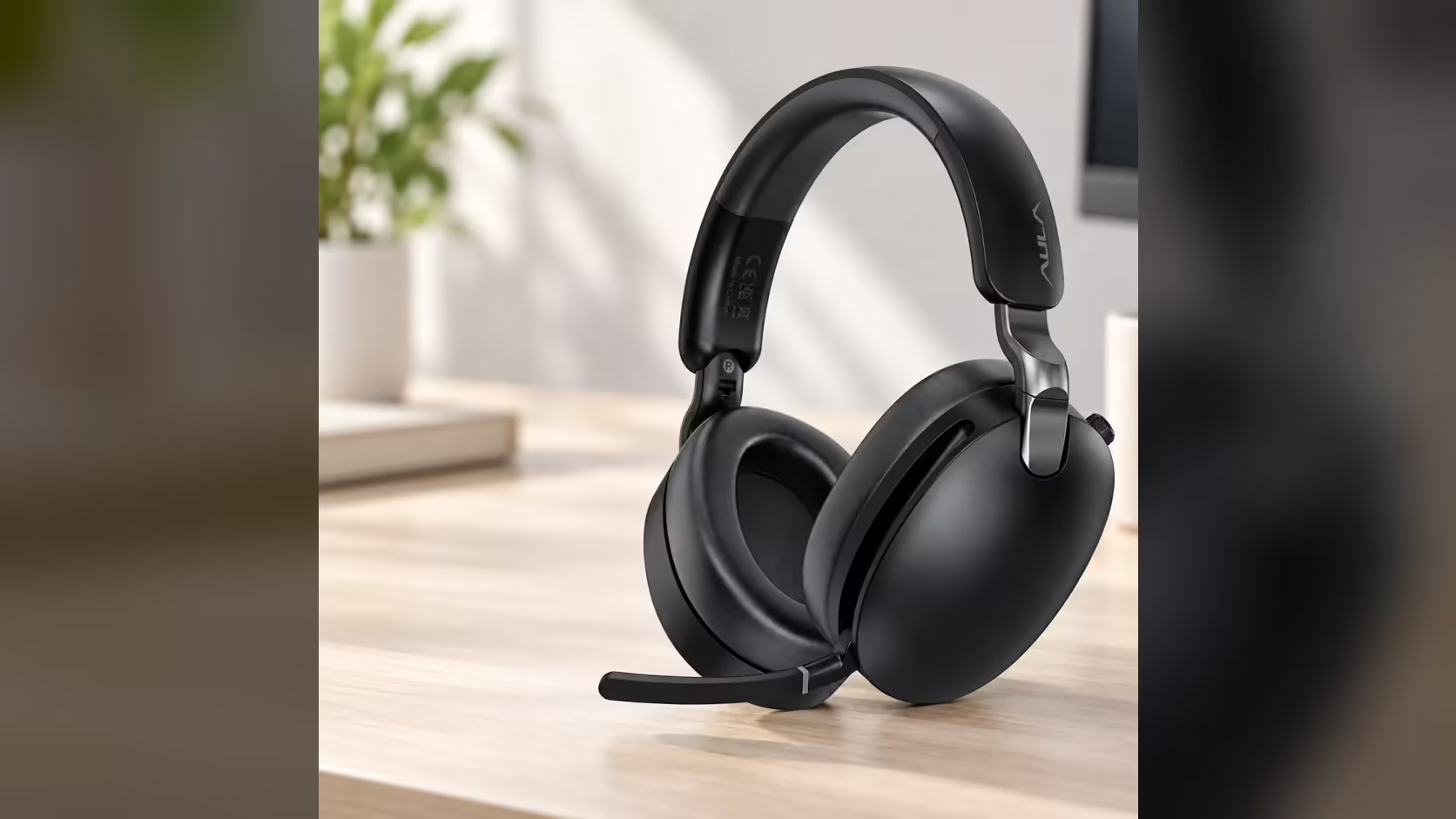
Noise-cancelling headsets love a decibel number on the box, and the AULA A500 carries one: up to 38dB. It sounds precise, but a single figure can hide a lot about how noise cancelling actually behaves on your head. Here is what the 38dB noise cancelling rating on the A500 measures, where it applies, and why "up to" is the most important part of the phrase.
Quick Answer
The 38dB figure is AULA's best-case rating for how much the A500's hybrid active noise cancelling reduces outside noise, working across a band from 50Hz to 2kHz. Real reduction varies with the type of sound, how well the ear cups seal and the shape of your head, so treat 38dB as a ceiling rather than a constant. Evetech sells the A500 for R639.
📉 What a decibel reduction means
Decibels measure sound level on a logarithmic scale, which is why the numbers behave strangely. A 10dB drop is commonly described as sounding roughly half as loud to most listeners. A reduction in the high 30s is therefore a very noticeable change for the kind of noise ANC is good at: steady hums and rumbles.
That does not mean the room goes silent. It means the specific sounds inside the ANC band are pushed well down, while other sounds are reduced less.
🎚️ Not the same at every pitch
The A500's ANC works across 50Hz to 2kHz. That band covers low, continuous sounds: air conditioner hum, traffic rumble, fans, engine drone. Active noise cancelling is strongest on sounds like these, because they are predictable enough for the headset's microphones and processing to cancel.
Sounds above that range, such as sharp voices, clatter or high-pitched beeps, fall outside the ANC band. The ear cups still block some of them physically, but the electronics are not working on them in the same way. That is why a best-case figure is quoted rather than a flat number.
Why "up to"
"Up to 38dB" is the peak reduction under favourable conditions. Your real result depends on:
- The noise itself. Steady low drones get the most benefit.
- The seal. Gaps around the cushions let sound leak in.
- Your fit. Head shape, hair and glasses all affect the seal.
🔄 What "hybrid" adds
AULA describes the A500's system as hybrid, or dual-feed. As the term is generally used, a hybrid design listens to noise from outside the ear cup and also checks what actually reaches your ear inside it. Combining both gives the system more information to cancel with than a design that listens in only one place.
🔋 What ANC costs
Cancelling noise uses power. Switch cancelling on and AULA's rating for the 1000mAh cell drops to around 60 hours, against about 100 hours with ANC off. So ANC shortens runtime, but 60 hours is still a lot of listening. A single ANC key steps through pass-through, cancelling and plain listening, so you can save cancelling for when it earns its keep.
The A500 connects over Bluetooth 5.4, a 2.4GHz USB receiver or a 3.5mm audio cable, and has a flip-to-mute boom mic. Evetech carries it in black; compare it with other headsets in the gaming headsets range or among cable-free models on the wireless headset page. Evetech sells it with a 1 Year Local Warranty.
Frequently Asked Questions
Is the 38dB reduction the same at every pitch?
No. It applies to the 50Hz to 2kHz band, where low, steady sounds sit. Higher sounds are reduced less.
Why does the box say "up to" instead of a fixed number?
Because reduction depends on the noise, the seal and your fit. 38dB is the best case.
How much quieter does 38dB feel?
Very noticeably quieter for steady drones, though the room does not go silent.
What does hybrid ANC mean on the A500?
AULA calls it dual-feed: the general idea is to sample noise both outside and inside the cup for more accurate cancelling.
Does the ear seal change the result?
Yes. Gaps around the cushions let low sound leak in and reduce the effect.
How much battery does ANC use?
About 60 hours with ANC on, versus about 100 hours with ANC off.
Want to turn down the world around you?
Browse Evetech's gaming headset range and compare noise-cancelling options, including the AULA A500.