Quick Answer
When buying a gaming keyboard, ignore marketing specs like extreme polling-rate claims, gimmicky media wheels and RGB density; they do not affect typing or gaming feel. Focus instead on switch type, build quality and a detachable USB-C cable. Power protection for the rig comes from a separate surge protector, not the keyboard, so do not pay for that on the board itself.
Specs you can safely ignore
A lot of keyboard marketing targets numbers you will never notice. An 8,000Hz polling rate over 1,000Hz is imperceptible in normal play, dense per-key RGB looks nice but adds nothing functional, and onboard macro processors matter only to a small minority. So-called gaming-grade plastics and aggressive branding rarely translate to a better feel. For a setup where you also care about power protection, note that no keyboard provides it; that job belongs to a surge protector or UPS guarding the whole PC.
What to focus on instead
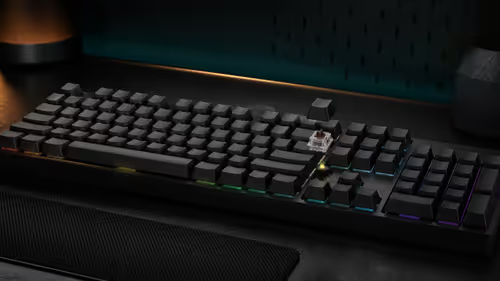
Switch type drives the experience: tactile, linear or clicky changes how the board feels far more than any RGB spec. Build quality, ideally a steel plate and a sturdy case, keeps the keyboard solid for years, and a detachable USB-C cable makes transport and replacement easy. PBT keycaps keep their legends. Spend there, then protect the rig with a R300-R800 surge-protected multiplug so spikes never reach the PC, monitor and keyboard plugged into it.
Buying it in South Africa
Evetech ships keyboards and surge gear nationwide, so you can pick a solid board and protect the setup together. Budget R800-R1,800 for a well-built mechanical keyboard with PBT keycaps, and add a surge-protected multiplug for the rig. Prioritise switch feel and build over headline numbers, and size the surge protector to cover the PC and peripherals at once.
FAQ
Is an 8,000Hz polling rate worth paying for?
No for almost everyone. The jump from 1,000Hz to 8,000Hz is imperceptible in normal play and can raise CPU usage. Spend on switch feel and build quality instead of chasing the headline number.
Does a gaming keyboard provide power protection?
No. A keyboard draws power from the PC and offers no surge protection. Guard the whole rig with a surge-protected multiplug or UPS, and the keyboard plugged into it is protected automatically.
What actually matters when buying a keyboard?
Switch type, build quality and a detachable USB-C cable, plus durable PBT keycaps. Those determine how the board feels and how long it lasts, far more than RGB density or extreme polling rates.
headline numbers and buy on switch feel and build. Then guard the rig with a surge protector, because the keyboard itself never provides power protection.