Getting a fibre line trenched to your property can mean weeks of waiting and digging that never happens in some areas at all. 5G fixed-wireless access, or FWA, skips the trench entirely: it delivers home internet over a 5G cellular connection to a SIM-based router, so the only setup is plugging the device in and finding a spot with good signal. In South Africa it has become the main alternative to fibre, with subscriptions climbing fast.
Quick Answer
5G FWA is home internet delivered over a 5G mobile connection to a SIM-based router (called a CPE), with no fibre line, cable, or trenching needed at the property. In South Africa it is offered by Rain, MTN, Vodacom, and Telkom, and FWA subscriptions reached around 1.26 million in 2026, up roughly 39 percent year on year.
How 5G FWA works
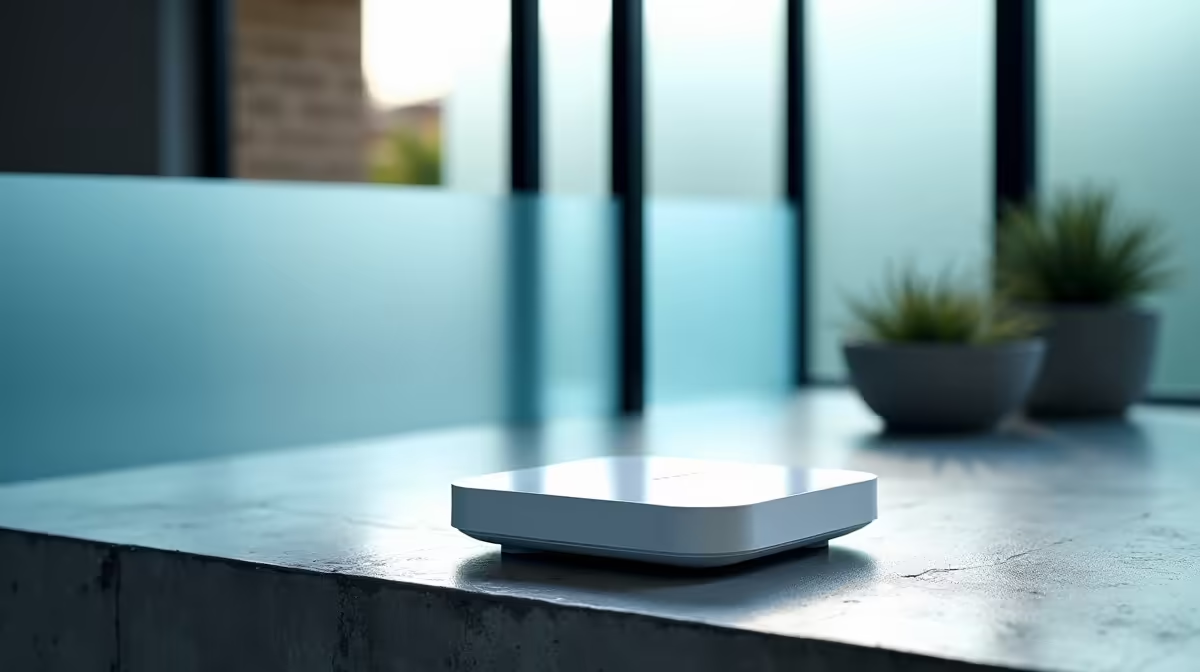
Instead of a physical cable running into your home, FWA uses the same 5G network your phone connects to. A router known as customer premises equipment, or CPE, holds a SIM card and receives the 5G signal, then shares it over Wi-Fi to your devices exactly like a fibre router would. Because there is no cable or trench involved, installation is usually as simple as the network sending you the router and you switching it on. That speed of setup is the headline advantage: no waiting for civil works, no reliance on whether fibre has reached your street.
Signal quality is the trade-off. Performance depends on how strong the 5G coverage is at your address, so where you place the router in the home can make a real difference. The closer and clearer the line to the network, the better the speed and stability.
A capable router and good in-home Wi-Fi coverage matter once the connection is up, and the networking range at Evetech covers the routers, mesh systems, and extenders that get the signal into every room.
Who offers it in South Africa
Four networks run 5G FWA locally. Rain was the pioneer, building its home offering around unlimited 5G Wi-Fi and delivering downstream speeds up to several hundred megabits per second over its licensed spectrum, with newer routers supporting the latest Wi-Fi standards for faster in-home performance. MTN, Vodacom, and Telkom all offer 5G FWA too, and as a category these services can deliver roughly 100 to 500 megabits per second and beyond, with lower setup cost and a far quicker install than fibre. All the home plans include a 5G router as part of the package, so you are not sourcing the CPE yourself.
The market is growing quickly. FWA subscriptions passed the million mark and continue to climb at a double-digit annual rate, as networks expand 5G coverage across Johannesburg, Pretoria, Cape Town, Durban, and other urban areas. For homes in covered areas, it has become a genuine first choice rather than a stopgap.
FWA versus fibre
The decision usually comes down to availability and how you use the connection. FWA wins on speed of getting connected and on reaching places fibre has not, with no trenching and a near-instant setup. Fibre still tends to offer the most consistent speeds and lowest latency once installed, because a wired line is not affected by network congestion or signal strength the way wireless is. If fibre is available at your address and you do latency-sensitive things like competitive gaming or heavy video calls, fibre is often the steadier pick. If fibre is not available, or you want to be online within days rather than weeks, 5G FWA is the strong alternative, and in many homes the difference in everyday use is small.
Frequently Asked Questions
Do I need a fibre line or any cabling for 5G FWA?
No. That is the defining feature. FWA delivers internet over the 5G mobile network to a SIM-based router, so there is no fibre line, no cable to the property, and no trenching. You receive a router, switch it on, and connect.
Which networks offer 5G FWA in South Africa?
Four networks: Rain, MTN, Vodacom, and Telkom. Rain was the first to market with a 5G home product, and the others have since rolled out their own FWA services across major urban areas.
Is 5G FWA as good as fibre?
It depends on your needs and your signal. Fibre generally offers steadier speeds and lower latency once installed, which suits competitive gaming and heavy calls. FWA installs far faster, reaches areas without fibre, and delivers ample speed for streaming, browsing, and most home use.
Why does router placement matter with FWA?
Because performance depends on 5G signal strength at your home, and that varies by location within the house. Placing the CPE near a window or higher up, where the signal to the network is clearest, often improves speed and stability noticeably.
Does the plan include the router?
Yes. South African 5G FWA home plans include the 5G router as part of the package, so you do not buy the CPE separately. You may still want additional Wi-Fi equipment to spread coverage across a larger home.