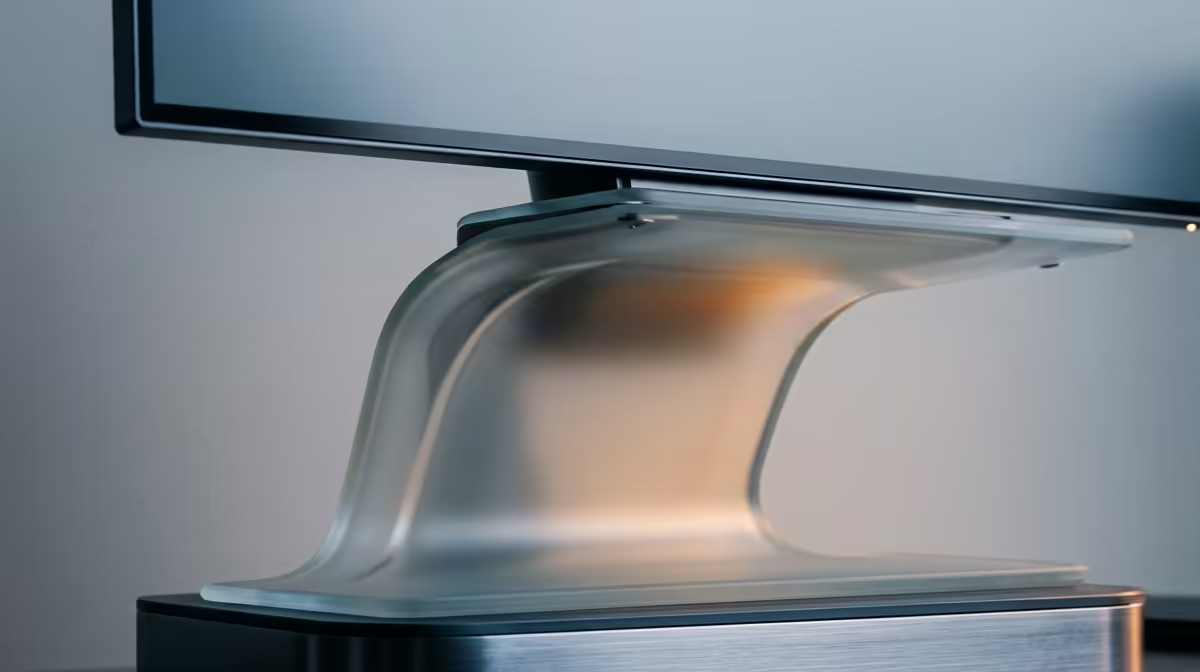
Two products promise to lift your screen and save your neck, yet they solve the problem in completely different ways. A monitor riser is a solid platform that raises a screen a fixed amount and usually hides a shelf for storage underneath. A monitor arm clamps to your desk and swings, tilts and lifts on demand. Knowing which one your desk and your spine actually need saves both money and a stiff neck.
Quick Answer
A monitor riser is a fixed-height platform that lifts a screen by a set amount, adds storage space beneath it, and works on any desk without clamping or drilling. A monitor arm offers full height, tilt, swivel and depth adjustment but costs more and needs a compatible desk edge. Choose a riser for simple, stable height; choose an arm for flexibility and a clear desk surface.
What a Monitor Riser Does
A riser is exactly what it sounds like: a sturdy platform you set your monitor on top of. It raises the screen so the top edge sits near eye level, which is the posture that keeps your neck neutral. Most risers add a useful bonus, the gap underneath, where a keyboard, notebook or charger can tuck away. Materials range from steel and tempered glass to bamboo and timber, so a riser can also smarten up a desk. The catch is that the height is fixed. Once it is on the desk, the screen sits where the platform puts it.
If you are kitting out a comfortable workspace, the ergonomic desk range at Evetech pairs naturally with a sensible screen height, since a well-proportioned surface sets the foundation for everything above it.
How a Monitor Arm Differs
A monitor arm mounts to your desk, usually by a clamp on the rear edge or a bolt through a grommet hole, and holds the screen on an adjustable bracket. From there it does what a riser cannot: raise and lower freely, tilt up or down, swivel left or right, and pull the screen closer or push it back. It also frees the desk surface entirely because nothing stands on the desk under the monitor. The trade-offs are price, a more involved setup, and the need for a desk that can take the clamp, plus a monitor that supports the standard VESA mount.
Choosing Between Them
The decision comes down to how much you need to move the screen and what your desk allows.
Pick a Riser If
You want a simple, rock-steady lift with zero fuss, you value the storage shelf underneath, your desk cannot take a clamp (glass tops and thin edges often cannot), or your monitor lacks VESA holes. A riser is also the budget-friendly route and the safest bet for a screen that lives in one position all day.
Pick an Arm If
You adjust your screen often, share a desk and swivel it between people, run multiple monitors, or want a completely clear desk surface for writing and clutter control. An arm rewards anyone whose posture, tasks or seating change through the day.
Whichever you choose, the goal is the same neutral posture. To see what other local buyers are adding to their setups, the best-selling desk accessories at Evetech round out the comfort side of the workspace.
Frequently Asked Questions
Is a monitor riser cheaper than a monitor arm?
Generally yes. A riser is a simpler product with no moving parts, so it usually costs less than an adjustable arm. The arm's premium buys flexibility and a clear desk, which a riser cannot match.
Can any monitor sit on a riser?
Almost any can, as long as the riser's surface is wide enough and rated for the screen's weight. Risers do not need VESA mounting holes, which makes them friendly to monitors that an arm cannot hold.
Does a riser actually help my posture?
It helps if it lifts the top of the screen to roughly eye level so you look slightly down at the centre. Because the height is fixed, measure first to be sure the platform raises the screen to the right spot for your chair.
What if my desk cannot take a clamp?
A riser is the answer. Glass tops, thin edges and built-in desks often cannot safely hold an arm clamp, whereas a riser simply rests on the surface and needs no mounting at all.
Sorting out screen height and desk comfort together? Browse the chairs and seating range at Evetech to get your posture right from the seat up, then match your monitor height to suit.