Every resin print starts and ends at one thin, see-through sheet at the bottom of the vat. FEP film is the part that lets UV light reach your resin and then lets each freshly cured layer let go cleanly so the print climbs upward without tearing. It is a consumable, not a permanent component, and it wears out quietly until prints start failing for reasons that look like everything except the film.
Quick Answer
FEP (fluorinated ethylene propylene) is the transparent sheet across the vat floor of an MSLA resin printer. It passes the screen's UV light into the resin and releases each cured layer with minimal peel force. nFEP is a textured, lower-stick variant that releases even more easily and tends to last longer. Replace either when it clouds, scratches, or loosens, usually every few months of regular printing.
What the film actually does
In a bottom-up resin printer, the LCD screen sits under the vat and shines a UV image upward. That light has to travel through the vat floor before it cures a layer of resin against the build plate. The film is that floor. It needs to be optically clear so the light pattern stays sharp, and it needs a slick surface so the cured layer separates from it rather than sticking and ripping off the plate.
Each layer therefore involves a small tug of war: the resin cures hard against both the plate and the film, then the plate lifts and the layer must peel away from the film. That separation force is called peel force, and the film's job is to keep it low and consistent. Resin printers as a category live or die on this peel step, and you can browse the current lineup of resin and FDM 3D printers at Evetech to see which models use which vat designs.
FEP versus nFEP
Standard FEP has a smooth surface and has been the default for years. It works well, but the flat surface creates a slightly larger suction area during peel, which raises peel force on big solid layers.
nFEP (sometimes written as non-FEP or nano-FEP, depending on the supplier) uses a different surface treatment that reduces how strongly resin clings during separation. The practical results are lower peel force, fewer suction-related failures on wide flat layers, and often a longer service life before clouding. If your printer shipped with FEP and you keep tearing supports off tall models, nFEP is a sensible upgrade. Keep spare film and a few basic tools in your kit, and the 3D printing accessories range covers the consumables that wear alongside it.
Knowing when to replace it
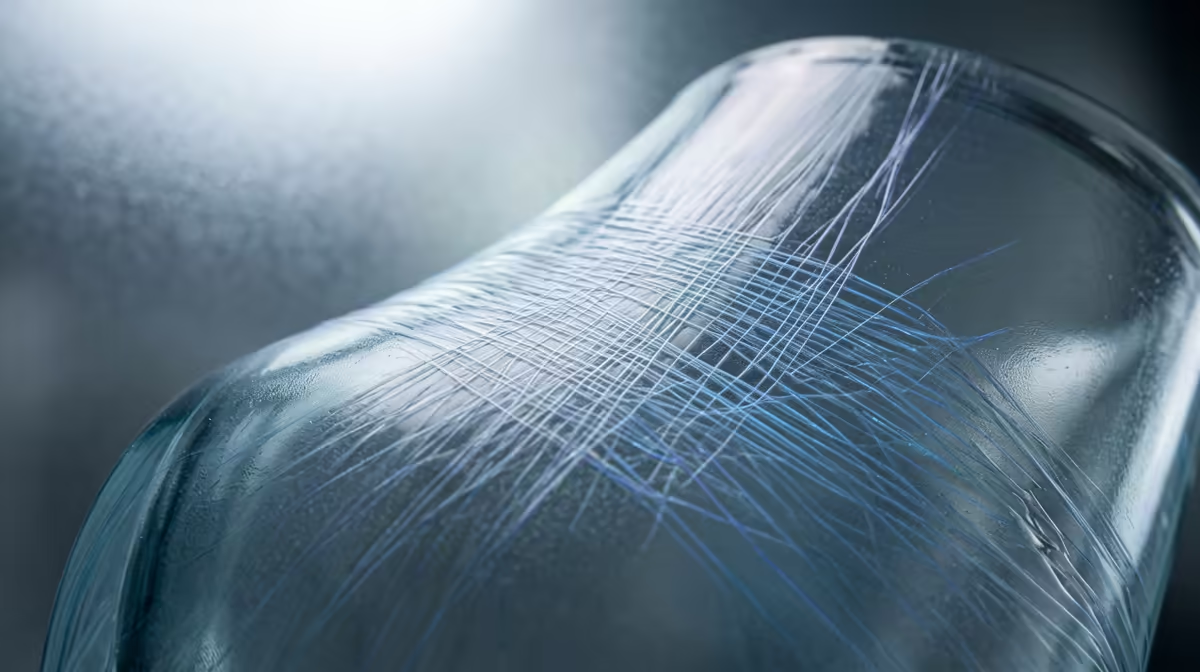
A clouded film scatters the UV light, so layers cure unevenly and detail goes soft. A scratched film leaves marks that print into the bottom of every model. A film that has gone slack from heat and stretching changes the gap between plate and screen, which throws off your first-layer exposure. If prints suddenly fail at the raft, or you find a cured skin stuck to the vat floor after a job, the film is usually the suspect before the resin or the settings.
Frequently Asked Questions
How long does FEP film last?
There is no fixed hour count because it depends on resin type, print volume, and how often you clean the vat. Many hobbyists replace it every two to four months of frequent printing, or as soon as clouding, scratches, or slackness appears.
Is nFEP always better than FEP?
For most users, nFEP releases more easily and lasts a bit longer, which makes it the safer default. The trade-off is usually a slightly higher price per sheet, so heavy printers benefit most.
Can I clean FEP instead of replacing it?
Light cleaning with isopropyl alcohol and a soft cloth removes cured resin specks and extends life. Cleaning will not fix clouding, deep scratches, or a stretched sheet, though, so those still mean replacement.
Does the film affect print quality directly?
Yes. A cloudy or scratched film softens fine detail and can cause failed bottom layers, because the light pattern reaching the resin is no longer clean and even.
Will any FEP sheet fit my printer?
Films come in different dimensions and thicknesses, so check your vat size and what the manufacturer recommends. Pre-cut sheets matched to your model save the hassle of trimming.
Treating FEP as the wear part it is keeps your resin prints sharp and your failure rate low. Stock up on spare film and the rest of your printing kit through the 3D printer range at Evetech and keep your next batch running clean.