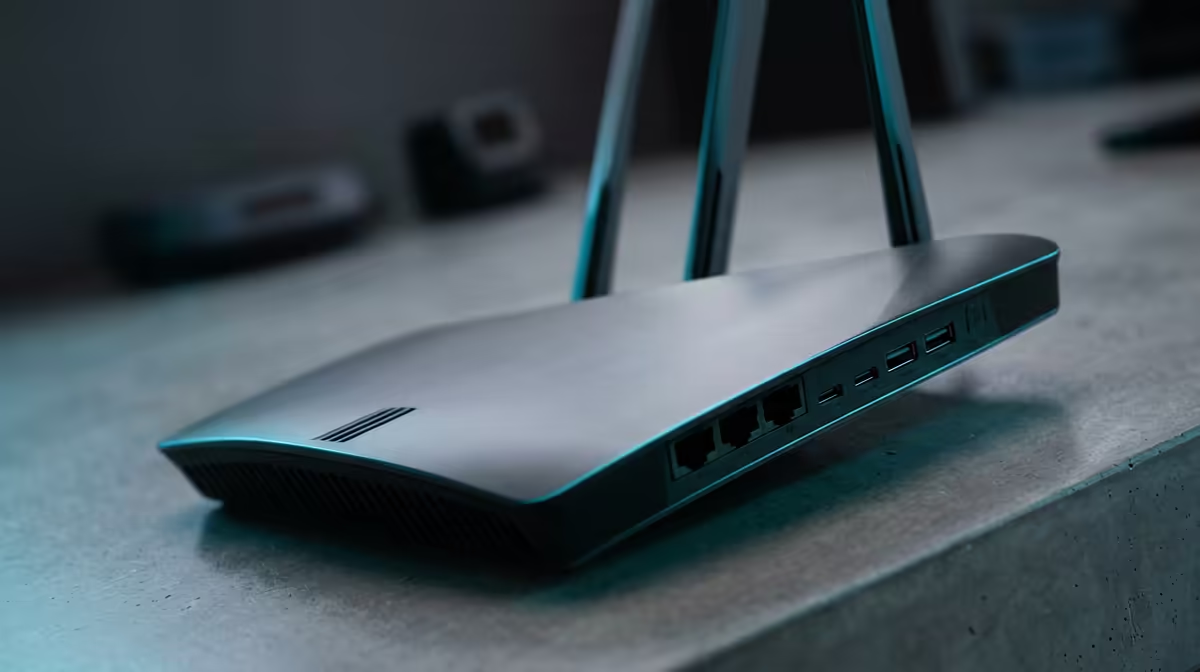
Every Wi-Fi generation so far chased one number: peak speed. Wi-Fi 8, the marketing name for the IEEE 802.11bn amendment, breaks that pattern. Its working title is literally Ultra High Reliability, and its goal is to make your connection steadier in the messy real world rather than to post a bigger headline throughput figure. Draft 1.0 was finalised in July 2025, and certified products are not expected until late 2027 at the earliest.
Quick Answer
Wi-Fi 8 is IEEE 802.11bn, the next Wi-Fi standard after Wi-Fi 7. It targets reliability, lower latency, fewer dropped packets, and smoother roaming instead of a higher top speed. Draft 1.0 landed in July 2025, Wi-Fi Alliance certification is planned to launch around December 2027, and full standard publication is targeted for 2028.
Why reliability, not speed, this time
Wi-Fi 7 already pushed theoretical speeds far beyond what most homes can use, so the bottleneck moved. The problems people actually feel are a call dropping when you walk between rooms, a game spiking in lag when the microwave runs, or throughput collapsing at the edge of coverage. 802.11bn attacks those directly: it works to raise throughput in poor signal-to-noise conditions, cut the worst-case latency (the slow 95th-percentile moments, not just the average), reduce packet loss, and lower power draw.
What "Ultra High Reliability" means in practice
The IEEE task group's name for 802.11bn is Ultra High Reliability, and that phrase is the whole story. The standard is designed to perform across the full range of scenarios, especially the worst-case ones where current Wi-Fi struggles. In everyday terms that points to steadier video calls as you move around, more consistent latency for cloud gaming and live streaming, and a connection that degrades gracefully at range instead of falling off a cliff. Seamless roaming between access points is also a stated focus, which matters for mesh setups where a phone should hand off cleanly without you noticing.
Where it sits on the Wi-Fi timeline
It helps to see the recent run of generations:
- Wi-Fi 5 (802.11ac): mainstream 5GHz speed.
- Wi-Fi 6 / 6E (802.11ax): efficiency in crowded networks, plus the 6GHz band.
- Wi-Fi 7 (802.11be): very high peak speeds and multi-link operation.
- Wi-Fi 8 (802.11bn): reliability, latency, and roaming take priority.
So Wi-Fi 8 is best read as a refinement of the gains Wi-Fi 7 unlocked rather than a fresh speed leap.
What this means for buying today
Nothing about Wi-Fi 8 should change a purchase you are making now. Certification is not expected until roughly December 2027, with the standard itself due to be published in 2028, so first-wave hardware is years out and early gear will carry the usual new-standard premium. Wi-Fi 6E and Wi-Fi 7 are the sensible choices for a current upgrade, and the networking range at Evetech covers routers and mesh kit on those proven standards. If you are filling out a setup with adapters or cabling, scanning the popular accessories list is a quick way to catch the bits a new router needs.
Frequently Asked Questions
Is Wi-Fi 8 faster than Wi-Fi 7?
Not meaningfully on peak speed. Wi-Fi 8 keeps speeds in the same ballpark as Wi-Fi 7 and instead focuses on reliability, lower latency, and fewer dropped packets in difficult conditions.
When can I actually buy Wi-Fi 8 devices?
Wi-Fi Alliance certification is planned to launch around December 2027, with the standard published in 2028. Expect mainstream consumer products to follow after that.
What does the "802.11bn" name mean?
802.11bn is the IEEE technical name for the amendment that the Wi-Fi Alliance markets as Wi-Fi 8. The IEEE task group also calls its goal Ultra High Reliability.
Should I wait for Wi-Fi 8 before upgrading?
No. It is too far out, and Wi-Fi 6E and Wi-Fi 7 already deliver the speed almost every home can use. Buy what fits your needs now.
Upgrading your home network today? Explore the routers and mesh systems in the networking range at Evetech on current Wi-Fi 6E and Wi-Fi 7 standards.