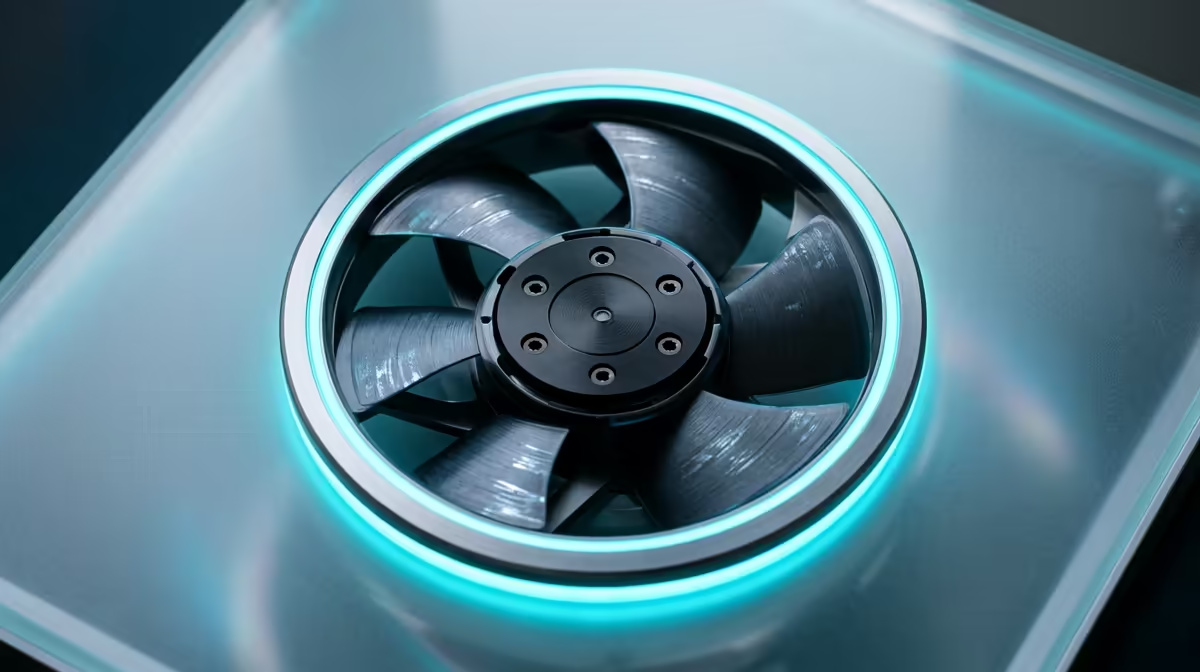
For data science coursework, case fans matter because model training and large data processing load the CPU and GPU for long stretches, so steady cooling keeps those jobs fast. Airflow that holds temps down protects training and processing speed.
Quick Answer
For data science coursework, prioritise airflow fans that hold the CPU and GPU under 80C during long training runs: 120mm fans pushing 60 to 75 CFM at under 25dBA, around R200 apiece at Evetech and drawing about 2W each, keep clocks steady. Training is sustained, so consistent airflow matters more than peak cooling. Stable temps stop throttling that lengthens a model training run or a big data job.
Why training loads need steady cooling
Training models and processing large datasets pin the CPU, and GPU-accelerated work pushes the graphics card hard for long stretches. If temperatures pass 80C the parts throttle, slowing every epoch and job. Airflow fans pushing 60 to 75 CFM in a two-intake, one-exhaust layout hold temps in a safe range through sustained work. At around R200 per PWM fan, that keeps a coursework rig training at full speed rather than crawling through a thermally throttled run.
Cool the GPU for accelerated work
Much data science work leans on the GPU for training, so case airflow that keeps the card under 80C protects throughput. Front intake fans feeding cool air to the GPU matter most here. Keep dust filters clean so airflow holds up across long overnight runs. Static-pressure fans only help on an AIO radiator; otherwise airflow fans on open intake and exhaust are right. Steady cooling lets a student rig finish training jobs on schedule for deadlines.
FAQ
What case fans suit data science coursework?
Airflow fans that hold the CPU and GPU under 80C during long training runs. 120mm fans pushing 60 to 75 CFM at under 25dBA, around R200 each, keep clocks steady through sustained processing.
Does heat slow model training?
Yes. If the CPU or GPU passes 80C during a training run it throttles, lengthening every epoch. Good airflow that keeps temps below that limit protects training speed.
Which component matters most to cool for data science?
The GPU, since much training is GPU-accelerated, and the CPU for data processing. Front intake fans feeding cool air to the card, plus clean filters, keep accelerated work fast across long runs.
science coursework, run front intake airflow fans around R200 each feeding cool air to the GPU and keep filters clean; holding the card under 80C stops throttling that lengthens a training run.