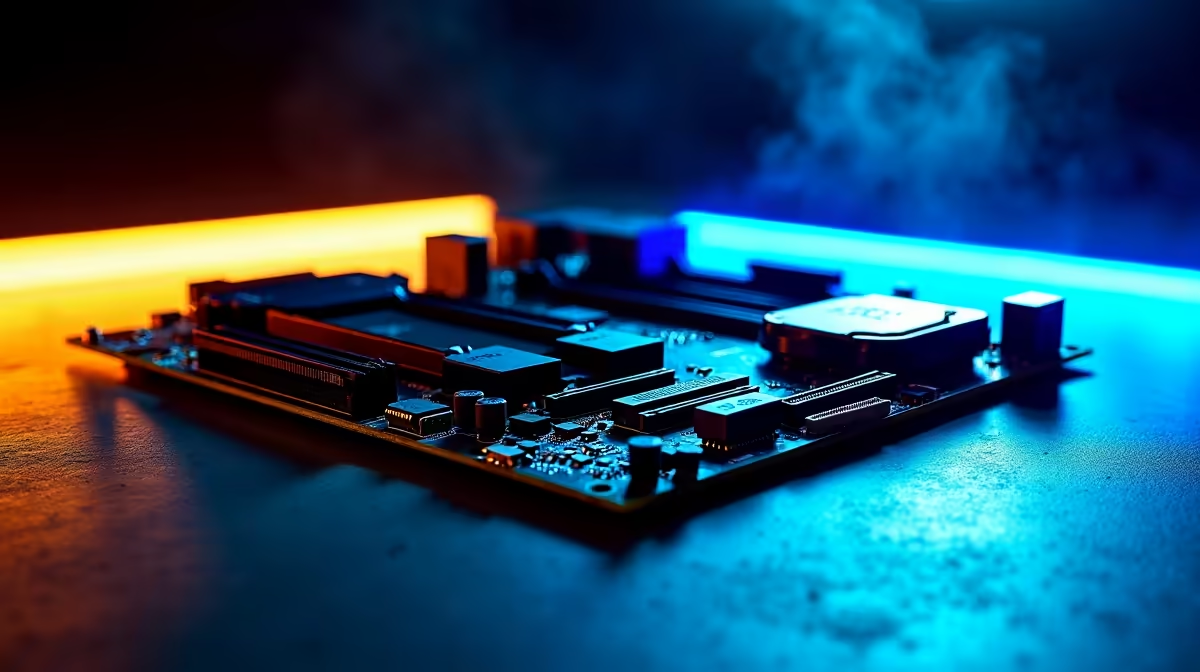
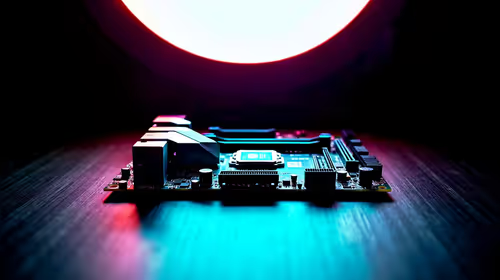
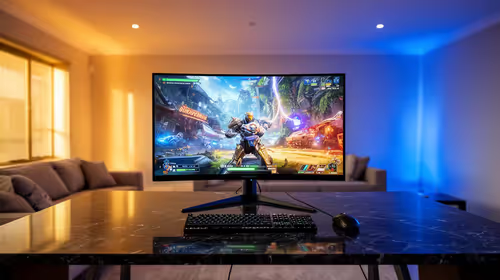
For home theatre gaming, the motherboard's job is to fit a small media-centre case, run quiet and cool, and output cleanly to a TV. Raw overclocking headroom matters far less than form factor, connectivity, and the right video and audio outputs for a living-room setup.
Quick Answer
For home theatre gaming, prioritise a Mini-ITX or Micro-ATX board with HDMI 2.1, built-in Wi-Fi, and good rear USB. A B650 or B760 board around R2,500 to R4,000 (an ASUS Prime or MSI Pro class board) fits a compact HTPC case and drives 4K 120Hz over HDMI 2.1. Skip the R6,000+ overclocking boards; a living-room rig values quiet and small over extreme clocks.
What matters most in a living room
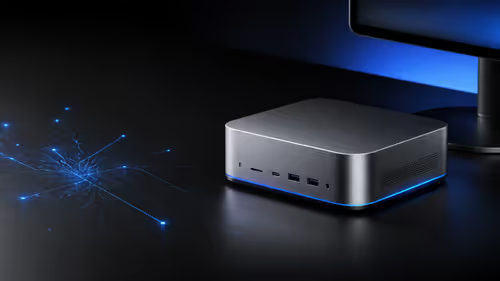
The form factor comes first: a Mini-ITX board fits the slim HTPC cases that sit in a TV unit, while Micro-ATX gives a little more expansion. HDMI 2.1 output (or a GPU that provides it) is essential for 4K 120Hz on a modern TV. Built-in Wi-Fi 6 saves running Ethernet across the lounge. Look for enough rear USB for controllers and a wireless dongle, and decent onboard audio if you pass sound through the TV or a soundbar. A B650 (AM5) or B760 (Intel) chipset covers all of this without paying for X670E or Z790 overclocking features you will not use.
Picking the chipset and features
A B650 board pairs with a Ryzen 7000/8000 chip; a B760 board pairs with 12th-14th gen Intel. Both give PCIe 4.0, an M.2 slot or two for fast game loading, and stable power for a mid GPU like an RTX 4060 hitting 60-100fps at 1440p or 4K with upscaling. Confirm the board physically fits your HTPC case and that the rear I/O has the outputs your TV and audio need. Quiet operation matters in a lounge, so a board with good fan control is worth choosing.
FAQ
What motherboard size is best for a home theatre PC?
Mini-ITX for the slimmest TV-unit cases, or Micro-ATX if you want a bit more expansion. Both fit common HTPC chassis, where a full ATX board is usually too large for a living-room form factor.
Do I need HDMI 2.1 on the motherboard?
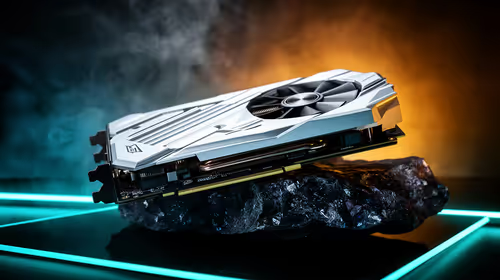
You need HDMI 2.1 somewhere in the chain for 4K 120Hz on a modern TV. Many gaming rigs get it from the GPU, but a board with HDMI 2.1 helps if you run integrated graphics for lighter living-room games.
Is built-in Wi-Fi worth it for an HTPC?
Yes. A board with Wi-Fi 6 saves running an Ethernet cable across the lounge and keeps the living-room setup tidy. It is one of the most useful features to look for in a home-theatre motherboard.
HTPC case's motherboard support before buying, and confirm the rear I O has HDMI 2.1 plus enough USB for controllers and a wireless dongle. Fit and outputs matter more than overclocking here.
Choose a compact B650 or B760 board with Wi-Fi 6 and HDMI 2.1 around R3,000 for your home theatre rig, and skip the overclocking boards that add cost a living-room setup never uses.