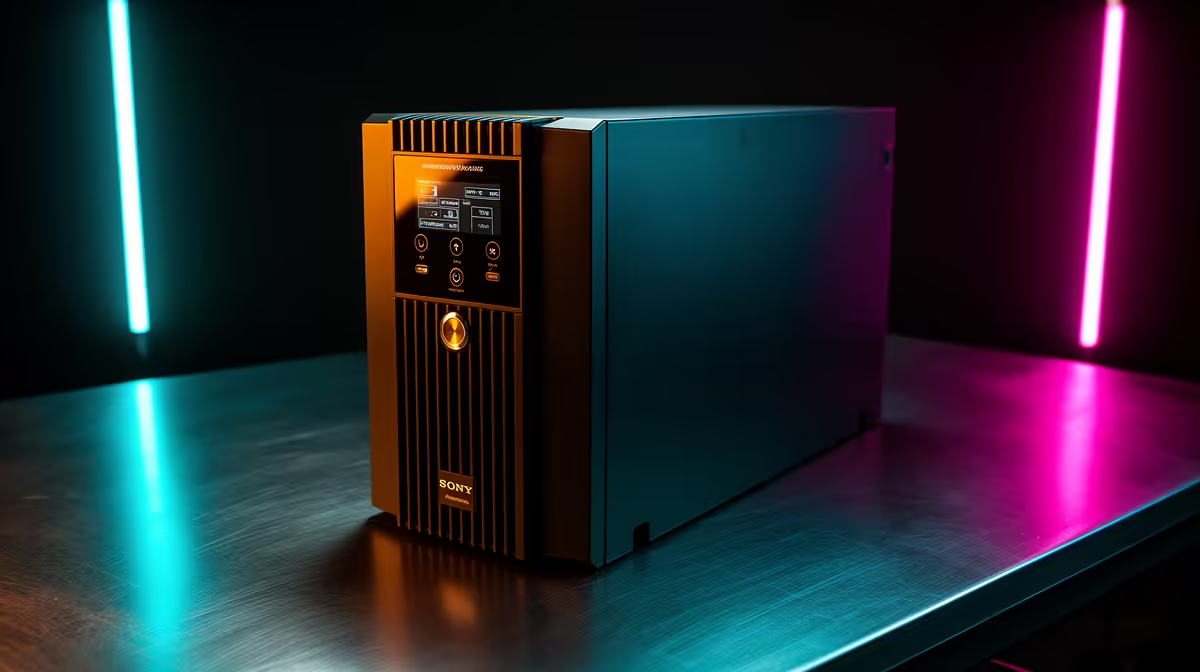
What matters most in a UPS is a short, honest list of specs — not the marketing on the box. Here is what SA buyers should weigh first and what is safe to ignore. The use case here is a digs or shared flat where four or five housemates stream and play together.
Quick Answer
Weigh the core specs first and ignore the rest. For a digs or shared flat where four or five housemates stream and play together, the spec that matters is VA/Watt rating matched to your load plus enough battery runtime to shut down or pause cleanly — pure sine wave is the upgrade that protects active PSUs. A line-interactive 850VA unit (around R1,400-R2,200) covers a typical desktop and monitor for several minutes.
Sizing the UPS to your real load
Add up what must stay on: a gaming PC plus monitor draws roughly 300-500W under load, so an 850VA/480W unit gives a few minutes of runtime — enough to save and shut down safely, not to keep gaming. For a bigger rig or longer hold, step to a 1500VA/900W unit around R2,800-R4,500. Buying far more VA than you need wastes money and bench space.
Pure sine wave versus simulated
Active PFC power supplies — what every modern gaming PC and many AV receivers use — can stutter or shut down on a cheap simulated-sine UPS. A pure sine wave unit (the R300-R800 premium) delivers a clean waveform that keeps a PC, NAS or amp stable on battery. For sensitive electronics it is the single upgrade worth paying for.
SA buying checks
Confirm the VA/Watt rating covers your real load with headroom, that the unit is pure sine wave if you run a modern PC, the socket type and count, and the battery replacement path. A UPS is only useful while its battery holds charge, so factor a R400-R900 replacement cell into the 3-4 year cost.
FAQ
What size UPS do I need for a gaming PC?
A gaming PC plus monitor draws roughly 300-500W under load, so an 850VA/480W unit gives a few minutes to save and shut down. For a high-end rig or longer hold, a 1500VA/900W unit is the safer pick.
Do I need a pure sine wave UPS?
If your PC uses an active-PFC power supply — almost all modern units do — yes. Simulated-sine output can cause stutters or shutdowns on battery. The R300-R800 premium is worth it for any sensitive electronics.
How long does a UPS battery last?
Typically 3-4 years, less in a warm room. The battery is the first part to fail, so budget a R400-R900 replacement cell over the unit's life rather than replacing the whole UPS.
UPS to your measured load, not the biggest VA number — an 850VA pure sine wave unit protects most SA desktops, and a fresh battery every 3-4 years keeps that protection real.