A side panel that only closes if you press firmly on the glass is not a fit that worked out. It is a panel telling you, as clearly as it can, that something inside is too thick for the space it has been given.
Quick Answer
If the side panel only closes by pushing the graphics card inward, the available depth is insufficient for that card in its vertical position. Measure the card's full thickness against the actual space behind the panel rather than forcing the fit, which risks the card, its cooler and the panel itself.
📏 What actually needs measuring
The number that matters is the card's total thickness including its cooler, taken at its widest point, compared against the depth available between the mounting position and the closed side panel. This is not the card's slot width or its length; it is specifically how far the whole assembly, shroud and all, projects outward from where it is bolted in place.
Measuring the card alone, without its cooler attached in the way it will actually sit in the case, understates the real figure considerably. Modern coolers on many cards add substantially more depth than the bare circuit board, and that difference is exactly where a fit that looked fine on paper goes wrong in practice.
⚠️ Why forcing the panel is worth avoiding
Pressure applied to a graphics card and its cooler assembly is not something to accept as a normal part of fitting a case. A cooler shroud pressed against by a closing panel can flex in ways it was never designed for, and a panel that visibly bows under the pressure needed to latch is telling you the arrangement does not genuinely fit, regardless of whether it technically clicks shut.
🔍 What usually causes this
The most common cause is a physically thick card, often a higher-end model with a substantial triple-fan cooler, installed in a case whose vertical mounting position was designed with a slimmer card in mind. The riser cable and bracket both function correctly in this situation; the depth mismatch sits entirely between the card and the case, independent of the cable connecting them.
Can the bracket be adjusted for more depth?
Some brackets allow a small amount of depth adjustment, shifting the card's final position slightly closer to or further from the board. Where the shortfall is small, this kind of adjustment can be exactly enough to solve the problem without needing to change any other part of the build.
🎗️ Does the ribbon cable add to the depth problem?
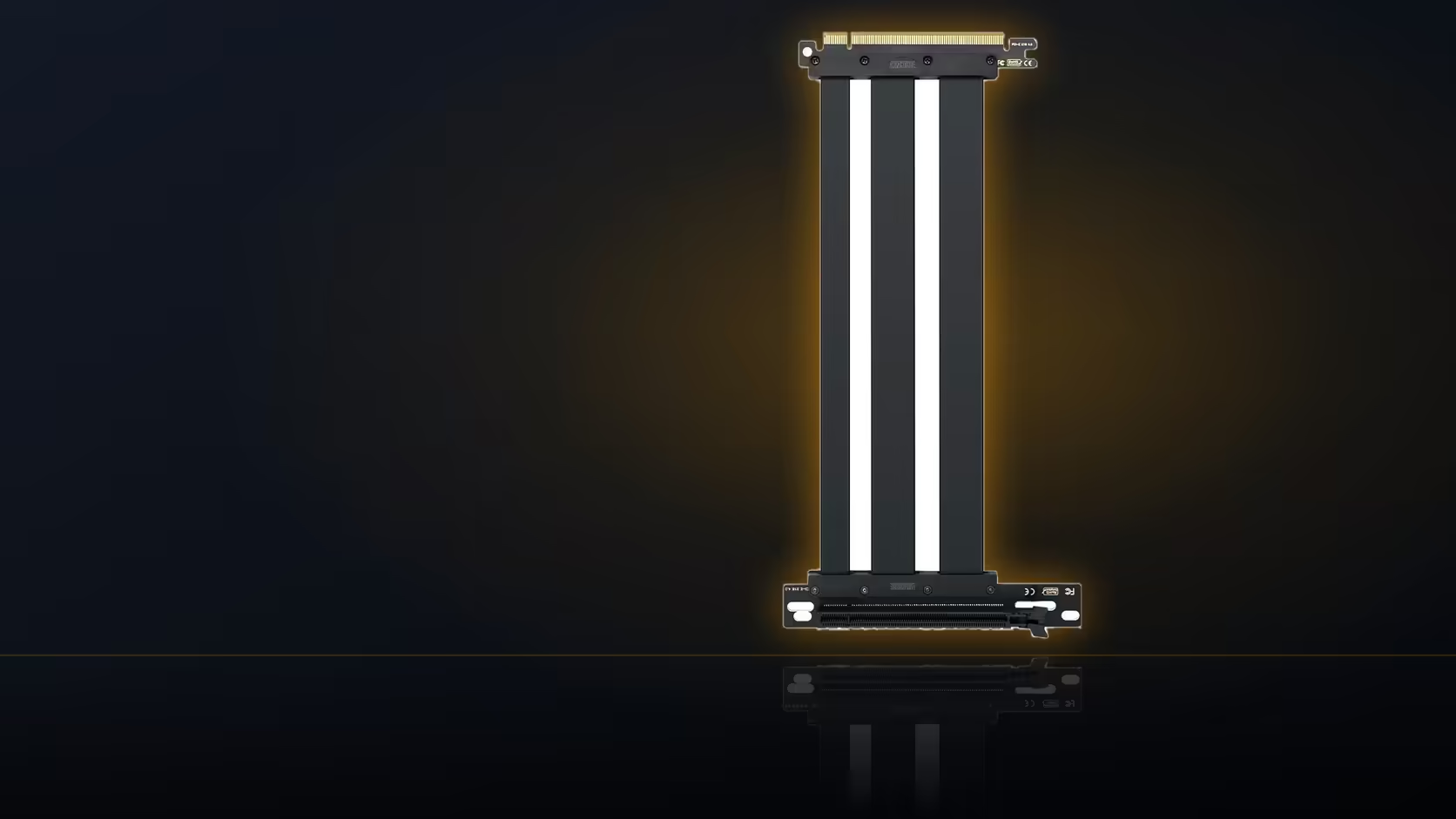
It can, depending on the route chosen. If the riser's ribbon is routed behind the card rather than beneath it, that ribbon adds its own small amount to whatever depth the card already needs, on top of the card's own thickness. Switching to a beneath-card route, where the case allows it, can free up a little extra room in a tight fit.
🌡️ Is this also a thermal issue, not just a physical one?
Yes, and it is worth understanding the connection. A card sitting close to the panel draws its intake air from a narrower gap than it would with proper clearance, and a card pressed hard enough to bow the panel is drawing from an even more restricted space than that. A tight fit is therefore both a physical fitting problem and a thermal one, since the same lack of room that stresses the panel also limits how well the card can cool itself under load.
If a bracket adjustment or a different mounting position looks like the fix for a depth shortfall like this, graphics card accessories is worth checking first, and case accessories rounds things out for whatever the bracket side can offer.
What if nothing gains enough room?
If measuring confirms the depth genuinely cannot accommodate the card, even with a bracket adjustment tried, returning the card to the standard horizontal board slot is the sound answer. The case simply cannot accommodate that particular card vertically, and continuing to force the panel shut is not a workaround worth pursuing.
Frequently Asked Questions
What exactly should be measured?
The card's total thickness including its cooler, compared against the depth available between the mount and the closed panel.
Why does forcing the panel shut matter?
Because pressure on a card and its cooler risks flexing them, and a bowed panel is a clear sign the fit is not genuine.
What usually causes this problem?
A physically thick card, often with a large cooler, in a vertical position designed with a thinner card in mind.
Can the bracket be adjusted to gain depth?
Some allow a small adjustment, which can be enough where the shortfall from the measurement is relatively small.
Does the ribbon cable itself add to the depth issue?
It can if routed behind the card, adding to whatever depth the card already needs in that space.
What if the depth simply cannot be made to work?
Returning the card to the standard board slot is the sound answer, rather than continuing to force a panel that will not close properly.
Checking whether your card fits a vertical mount?
Browse Evetech's graphics card range to compare cooler thickness before committing to a vertical build.