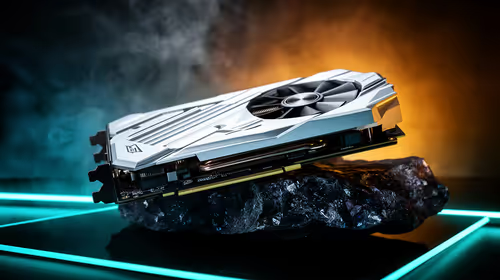
The best buying checklist is short enough to use and strict enough to reject a poor fit. Start with software and project requirements, then evaluate the workstation graphics card as a complete system. Memory, compute resources and architecture belong on the page, but so do physical compatibility, support expectations and the evidence behind the budget.
Quick Answer
The RTX A1000 answers six major buying checks directly: low-profile single-slot fit, 50W power, 8GB GDDR6, 192GB/sec bandwidth, four 5K-capable outputs and professional Ampere compute.
Check application support, practical VRAM, relevant compute, architecture, physical fit and price before buying. PNY's A1000 is R12,099. It offers 8GB GDDR6 capacity and 2304 CUDA cores, with Ampere as the design generation and 128-bit as the memory-interface width. Test required software separately.
🧭 Write pass-or-fail requirements
List every application and version that matters. Add the largest normal file, final output and any feature that must use GPU acceleration. These conditions should be specific enough that a card either clears them or leaves a question for testing.
Physical fit, power and connectors also need attention. Measure the workstation and check exact A1000 dimensions and connection requirements before installation. This prevents a strong paper specification from becoming an unusable component.
🧭 Read the memory and compute lines correctly
The card's 8GB GDDR6 is its graphics-memory capacity. A 128-bit figure describes the interface, not another capacity value. Its 2304 CUDA cores are compute resources that supported applications may use, and Ampere names the GPU architecture.
Keep those values together while scanning the workstation graphics card selection. A candidate should not survive the shortlist because it wins one row while failing the workload that prompted the purchase.
🧭 Attach price to a solved problem
R12,099 is useful only when the A1000 removes or avoids a defined constraint. Estimate the cost of the delayed render, unstable viewport or manual workaround over the intended use period. Then test whether the GPU is actually responsible before assigning the whole benefit to a replacement.
Review the PNY RTX A1000 at Evetech alongside the application vendor's current compatibility guidance. Avoid buying for a hypothetical future workload when current CPU, RAM or storage limitations remain unresolved.
🧭 Decide whether a component or platform is needed
Some professional tools now add AI-assisted tasks to an existing graphics pipeline. Check model support, memory requirements and where inference runs. If several system components need attention, compare AI-capable PCs rather than assuming a graphics card alone completes the upgrade.
Finish the checklist with a representative trial and a rollback plan. Record the baseline, run the same file after the change and retain the original settings. A defensible purchase produces an observable improvement in the required work.
Add a rejection column to the checklist
A shortlist is easier to manage when every removed card has one written reason. Use entries such as unsupported required feature, insufficient project capacity, unresolved physical fit or budget above the approved ceiling. Avoid broad notes like "not powerful enough", which cannot guide the next search.
Treat an unresolved condition as a question, not an automatic rejection. Confirm the missing physical or software detail before deciding; a card should leave the shortlist only for a requirement it actually fails.
Before sign-off, ask another user of the workstation to review the largest project and required output. A second perspective often catches an application stage or connector need that the first checklist missed.
Print the final checklist or save it with the project. A buying rule that disappears after the meeting cannot help with later installation, testing or warranty discussions.
Those display outputs are four Mini DisplayPort 1.4a connectors, and the host link is PCI Express 4.0 x8. On the processing side, buyers get 2,304 CUDA cores plus 18 RT and 72 Tensor cores. Put those exact attributes beside the required CAD, design, engineering or content-creation tools. The remaining decision is whether that complete package matches the application's support and the project's scale.
Frequently Asked Questions
What comes first on the workstation GPU checklist?
Application support and the largest regular project come first. They establish the capacity and acceleration questions that the hardware must answer.
Which memory figures should buyers distinguish?
Separate the 8GB GDDR6 capacity from the 128-bit interface. They describe different properties and should not be combined into one score.
How should 2304 CUDA cores affect the shortlist?
Keep the A1000 on the list when supported operations can use CUDA compute, but require a task test before assigning a benefit.
Can one specification confirm the right purchase?
No. The complete card, application, project, workstation platform and price must align before the choice is defensible.
Ready to turn a feature list into a pass-or-fail buying check?
Browse Evetech's workstation GPU category and keep only candidates that clear your documented software and project requirements.