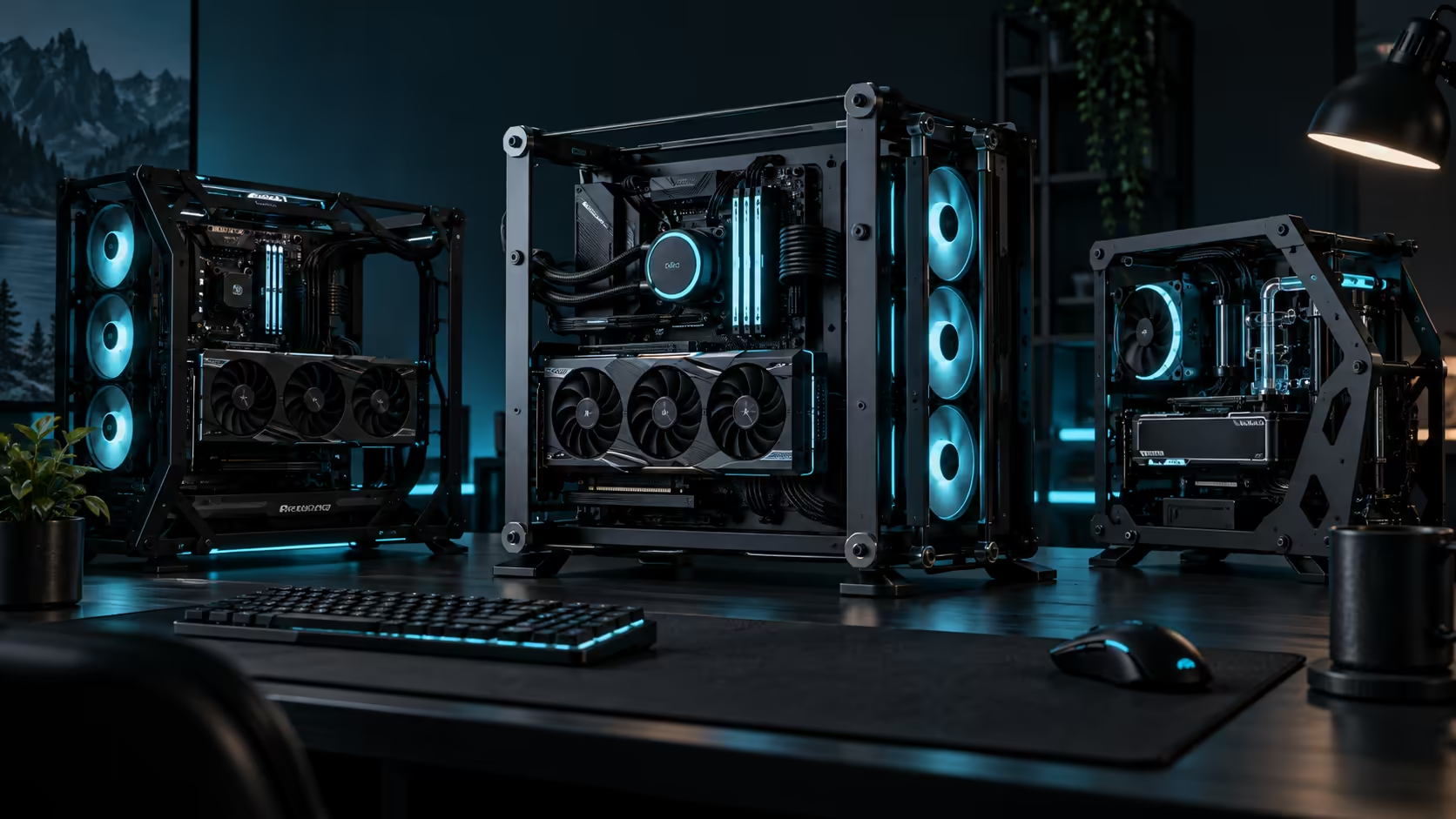
Buying an open-frame gaming PC case off a photo is how people end up with a frame that looks right and fits nothing they own. Six things on the spec sheet decide whether the chassis works for your specific parts, and none of them are the finish or the RGB.
Quick Answer
Check card clearance, radiator or fan mounting size, board size support, frame material and thickness, the number of placement modes offered, and how the frame is cleaned, in that order. Those six decide whether the case still fits your next upgrade rather than needing a replacement in a year. The ROG GR20 Edition 20 answers all six in a 4mm aluminium-alloy frame at R15,999.
📏 Card clearance first, always
Graphics cards vary in length by a wide margin, and a chassis that quotes clearance in general terms rather than a specific millimetre figure is one to be cautious of. Measure your card with its power connector attached, not the number printed on the retail box, and check that figure against the case's stated limit rather than assuming a mid-tower automatically has room. The GR20 clears cards up to 368mm, which covers essentially every card sold today with margin left over.
❄️ Radiator and fan mounting size
The same mounting position that takes a liquid cooler radiator usually also takes a row of fans, so check both numbers even if you only plan to use one. The GR20's cooling bay flexes between a full 360mm loop and three separate 120mm fans, which gives you the option to switch cooling methods later without buying a new case.
🔩 Board size support
An open frame that only takes ATX and smaller will not accept a 305mm-wide EATX board later if you upgrade, and the reverse problem exists too: a frame built around EATX can feel oversized for a compact Mini-ITX build closer to 170mm square. Confirm the full range a frame supports, not just the size of the board you own right now.
🏗️ Frame material and thickness
An open frame has no side panels bracing it square, so the frame itself has to be rigid on its own. A thin section under 2mm in any material will flex under the weight of a full build; a genuinely thick section, closer to 4mm in aluminium or steel, will not. Ask for the actual thickness figure rather than trusting a description like "heavy-duty," which means nothing on its own.
🔄 Placement modes
Not every open frame stands more than one way. If you might want to display the build at a lean of 15 to 20 degrees or lie it flat later, buy a frame that already supports those stances rather than one built for a single fixed orientation.
🧹 Cleaning access
With no dust filter to remove and clean, an open frame's maintenance routine is a straightforward wipe-down and a can of compressed air, and that is worth confirming before you buy rather than discovering afterwards. Case accessories such as microfibre cloths and cleaning brushes, in the case accessories range, earn a small line in the same order as the frame, since there is no built-in filtration doing that job for you.
If you are comparing several open frames rather than just this one, the computer case range and the wider mid-tower selection both list clearance and radiator support figures side by side, which is the fastest way to compare six specs across several cases at once.
Frequently Asked Questions
Which spec on this list matters most?
Graphics card clearance, because it is the one figure that cannot be worked around after the case arrives if your card is too long.
Do all open frames support multiple placement modes?
No. Some are built for one fixed stance only, so confirm this specifically if flexibility matters to your build.
Does frame thickness actually matter that much?
Yes, more than in a closed case, because there are no side panels adding rigidity. A thin frame can flex visibly under a full build's weight.
Is cleaning an open frame more work than a closed case?
It is more frequent but simpler: a quick wipe and a can of compressed air, rather than removing and washing a filter.
Ready to check a frame against your actual parts before you buy it?
Measure your card and cooler first, then match those numbers against the spec sheet.