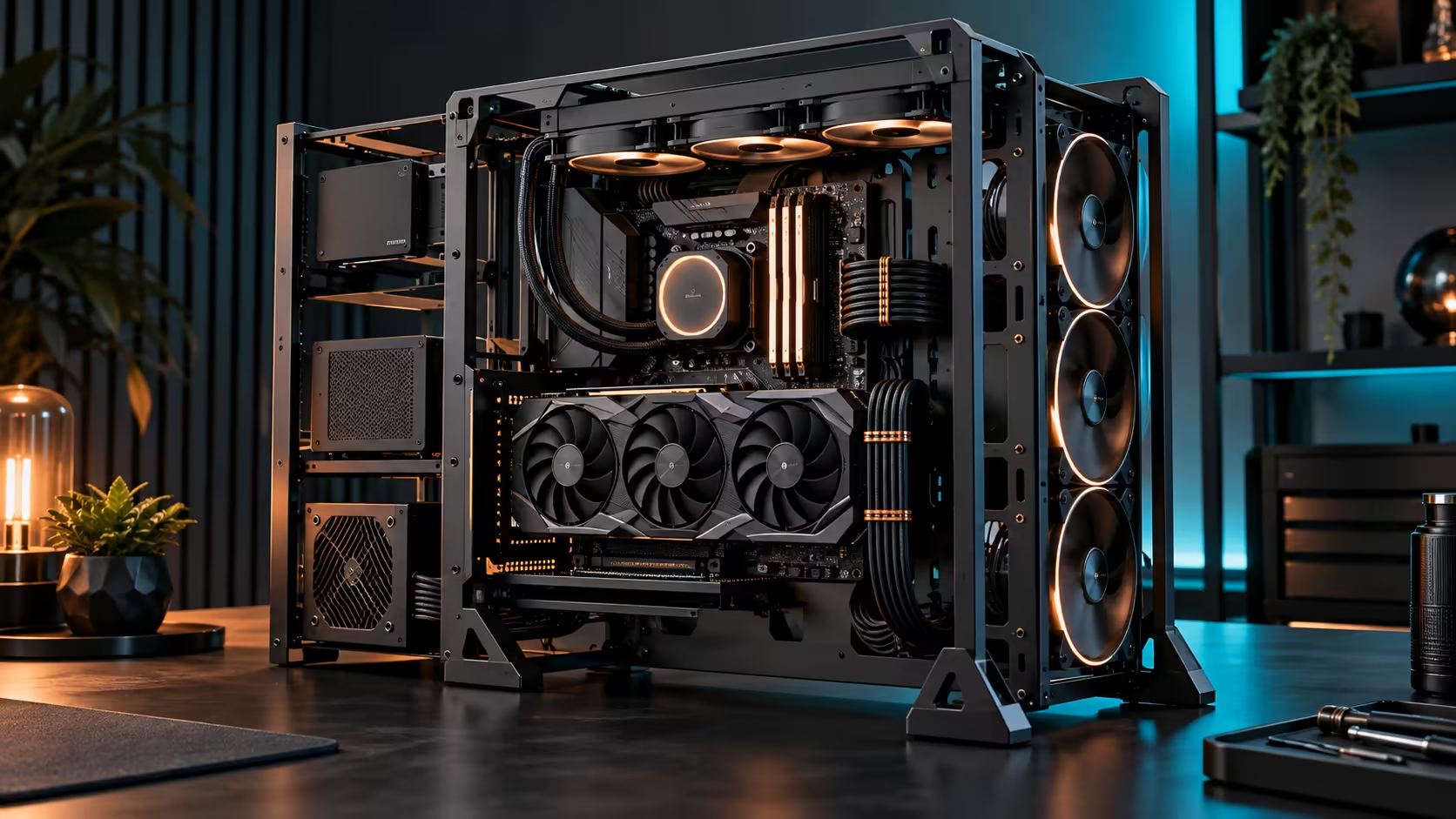
Three checks matter more for an open-frame case bought in South Africa than the spec sheet itself covers, and none of them show up in a review written somewhere with a different climate and a different courier network.
Quick Answer
Check the local warranty path before anything else, since a chassis or an all-in-one cooler bought locally turns a fault into a courier collection rather than an international dispute. Then weigh dust, since an open frame has no filter and inland South African air, dry stretches on the Highveld especially, settles grit onto components faster than a filtered case allows. Then check your actual desk against the case's footprint before assuming any stance will fit. The R15,999 ROG GR20 Edition 20 handles the last two well; the first is true of buying any case locally rather than importing one.
🛡️ Warranty path first
Ask one question before you place any order: if this arrives faulty, who am I dealing with to fix it? A local retailer answers that with a name, a phone number and a courier already set up to collect, often inside 7 days. An overseas seller answers it with a support ticket, a language and time-zone gap, and freight both ways that you are usually paying for regardless of who was at fault.
An open frame raises the stakes on this specific question, because the item in play, an EATX chassis weighing somewhere around 10kg to 15kg boxed, is exactly the kind of thing that is cumbersome and costly to send anywhere twice.
🧹 Dust, honestly assessed
An open frame has no panel to filter dust at, so whatever settles in the room lands directly on heatsinks and fan blades. A dry, windy Highveld season pushes fine grit into a build faster than most first-time buyers expect, and the fix is a routine, not a one-time purchase: compressed air and a soft brush every few weeks, not months.
Be honest with yourself about whether a routine every 14 to 28 days will actually happen. A filtered conventional case that gets dusted out once a season will likely outlast an open frame nobody ever gets around to cleaning.
🪑 Your actual desk, not a photo of one
An open frame from the mid-tower range has three placement modes that look flexible in a product photo, but each one needs real desk depth, width or floor clearance that varies by stance, with a lying-flat build alone often costing an extra 150mm of surface a vertical stance never needs. Measure your specific desk before assuming vertical, angled or horizontal will fit, rather than assuming the case's flexibility solves a space problem your desk does not actually have room for.
Shortlisting more than one model before you buy is worth the extra ten minutes, and the case best-sellers page shows which frames South African buyers are already choosing, a decent shortcut to spotting the ones that tend to suit a typical local desk without a nasty surprise on delivery day.
Frequently Asked Questions
Why does the local warranty path matter more for a case than most components?
A large chassis is expensive and awkward to ship internationally, so a fault on an imported one costs far more in time and money to resolve than the same fault on a locally bought unit.
How much worse is dust on an open frame really?
Meaningfully worse, since there is no filter stage at all. A routine every few weeks, rather than months, is what keeps it manageable.
What is the most commonly skipped check before buying?
Measuring the actual desk against each placement mode's real footprint, rather than assuming the case's flexibility automatically solves a space constraint.
Ready to buy an open frame that actually suits your home, not just the photos?
Check the warranty path, your dust tolerance and your real desk before you order.