Quick Answer
Socket becomes the bottleneck when the best available CPU for that board no longer meets the GPU, refresh-rate or workload target. If the board cannot move beyond older 6-core or DDR4 limits, a R6,000-R10,000 platform refresh may be cleaner.
Match cores to the job
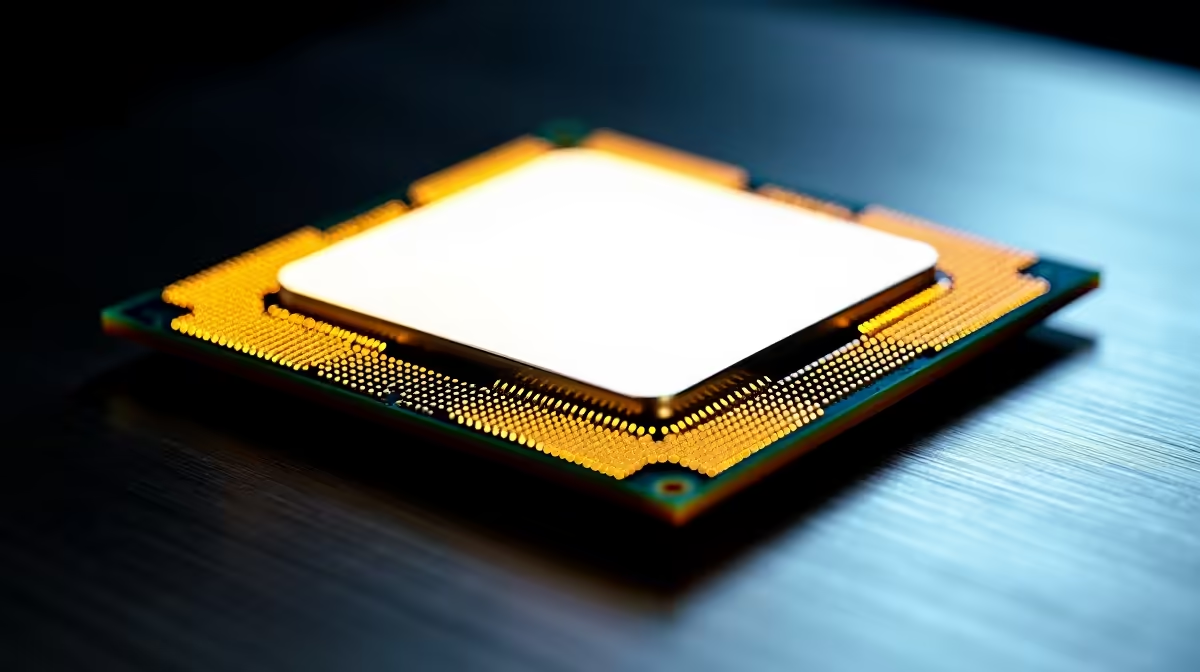
For CPUs, the useful test is whether the part removes daily friction. Use the right socket, enough cores and a board/RAM path that will not trap the next upgrade as the minimum, then check it against the rest of the build. Named options worth comparing include Ryzen 5 7600, Ryzen 7 7800X3D, Core i5-14600K and Core i7-14700F. The SA price band is R3,000-R4,500 strong 6-core, R6,000-R8,500 gaming-focused, R9,000+ creator tier, so a small jump is sensible when it prevents a second purchase.
Platform costs
Spend more when the upgrade gives a number you will notice: 6 cores for mainstream gaming, 8 cores for streaming comfort, DDR5 support and 120 Hz-240 Hz targets. That can mean smoother 60-120 fps gaming, faster 4K project transfers, cleaner 4K60 display output or fewer stability problems. Spend less when the premium feature is unused, such as spare ports, oversized wattage or speed the software cannot use.
SA buying check
Before checkout, confirm warranty handling, cable or port fit, and whether the current PC has the slot, connector or space required. Also check noise, desk space and plug layout. If the upgrade changes the case, monitor, router or board requirement, include that extra cost.
FAQ
Is this upgrade worth it for CPUs?
Yes, if it fixes the real limit in CPUs. If the current setup already meets the target, put the money into capacity, warranty quality or the next visible bottleneck instead.
What should SA buyers budget?
Use R3,000-R4,500 strong 6-core, R6,000-R8,500 gaming-focused, R9,000+ creator tier as the working band. The cheapest option is fine for light use, but balanced models from Ryzen 5 7600 or similar ranges are safer for daily work and gaming.
Which spec matters most?
Prioritise the right socket, enough cores and a board/RAM path that will not trap the next upgrade. After that, check 6 cores for mainstream gaming, 8 cores for streaming comfort, DDR5 support and 120 Hz-240 Hz targets and avoid paying for extras that do not change your screen, workload or room setup.