Quick Answer
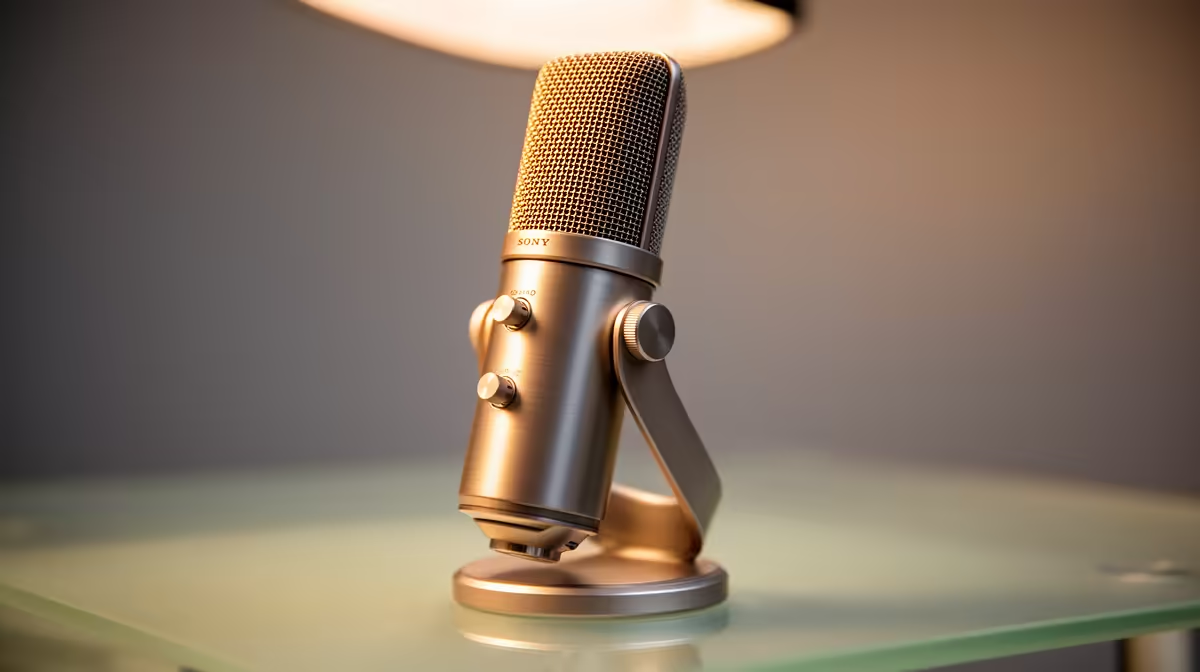
Cheap streaming mics get expensive for engineering work when a no-monitoring unit forces re-records of lab explainers and project demos. Step up to a USB cardioid condenser with gain control and a headphone jack, around R1,200 to R2,000; it captures clear technical narration at 48kHz/24-bit and saves you from buying twice.
The Hidden Cost For Engineering Content
Engineering students record demos, simulations and explainer videos where every word must be clear. A bargain mic without level control means you discover muddy or clipped audio only after the take, then re-record. Over a semester that wasted time, plus an eventual replacement, costs more than buying a capable mic once. A cardioid pattern also cuts the reflections from a hard-surfaced lab or res desk.
Spending At The Right Tier
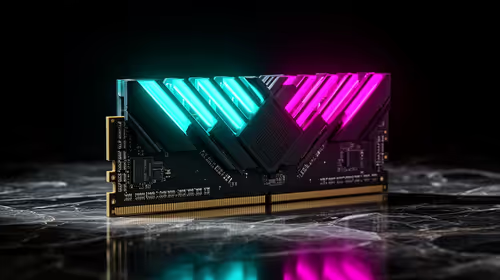
A mid USB condenser with onboard gain and monitoring lets you set levels precisely and hear issues live. That is the right tier for engineering narration: clear, controllable and durable enough to last the degree. Put the rest of your budget toward a faster CPU or more RAM that speeds simulations, which matters more to your actual coursework than a studio mic chain.
FAQ
Why not buy the cheapest mic for demos?
The cheapest mics lack gain and monitoring, so you cannot set levels and end up re-recording. A mid mic with those controls saves time and avoids a second purchase.
Does a cardioid pattern help in a lab or res room?
Yes. Cardioid rejects off-axis room reflections, which a bare lab or res desk produces. It keeps technical narration clear without acoustic treatment.
Should I spend more on the mic or the PC?
For engineering, the PC. A capable mid mic is enough for narration; extra budget is better on a faster CPU and RAM that speed simulations and rendering.
Choose a USB condenser with gain control and monitoring for clear engineering demos, then put spare budget into a faster CPU for your simulations.