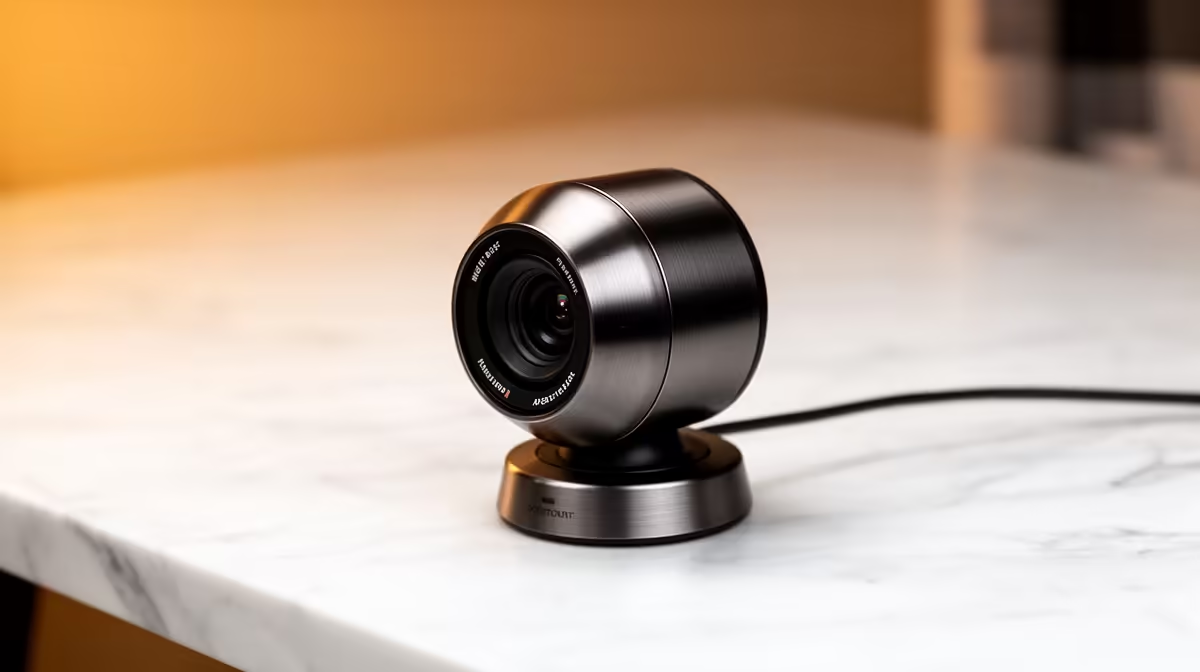
A cheap webcam looks like a bargain until a commuting student adds the accessories it forces on you. Poor low-light sensors, no built-in mic and shaky mounts pile on hidden costs that a slightly better camera avoids from day one. Knowing where the cheap option turns expensive saves money over a degree.
Quick Answer
Cheap webcams turn expensive when you must buy a separate mic, a light and a tripod to fix their weaknesses. A solid 1080p webcam around R800 to R1,500 with a decent sensor and built-in mic usually costs less than a R350 camera plus those add-ons.
Where The Bargain Falls Apart
The first hidden cost is light. Budget webcams use tiny sensors that turn grainy below good lighting, so res-room evening calls look murky and you end up buying a R300 ring light. The second is sound: many cheap cameras have weak or no microphones, pushing you toward a separate USB mic.
The third is mounting. Flimsy clips slip on thin laptop lids, so you add a tripod or stand to keep the framing steady on the move.
What A Commuting Student Actually Needs
Prioritise a 1080p 30fps sensor that handles dim residence lighting, a usable built-in mic for quick tutorials, and a clip that grips a laptop lid firmly. Autofocus helps when you move between a desk and a lap. These traits matter far more than 4K marketing, which most platforms downscale anyway.
A Smarter Spend
A R900 to R1,500 webcam with a 1/2.7-inch sensor and onboard mic covers online lectures, group projects and the occasional interview without bolt-on gear. That single buy travels light, which matters when your study spot changes daily.
FAQ
Why is a R350 webcam often more expensive in the end?
Because its weak sensor, poor mic and flimsy clip push you to buy a light, a separate microphone and a stand. Those add-ons frequently cost more than a R900 webcam that handles all three jobs alone.
Is 4K worth it for student video calls?
No. Most lecture and meeting platforms cap or downscale to 1080p, so a sharp 1080p sensor with good low-light handling looks better in practice than a cheap 4K camera.
What matters most for commuting students?
Portability and low-light performance. A firm laptop clip and a sensor that copes with dim rooms beat resolution figures when your study location changes day to day.
webcam in a dim room before committing. If you need to add a light to look acceptable, you have not actually saved money.