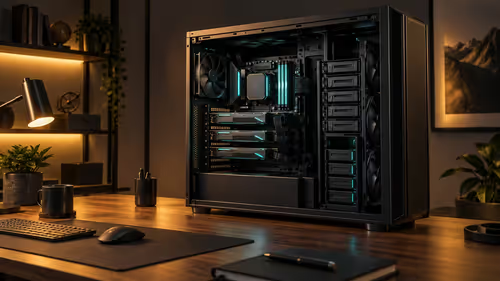
Fitting an AsiaHorse extension raises an obvious question the first time you do it: what happens to the cable that was already there? Nothing gets cut, nothing gets removed, and understanding where the original lead actually goes makes the whole install far less intimidating.
Quick Answer
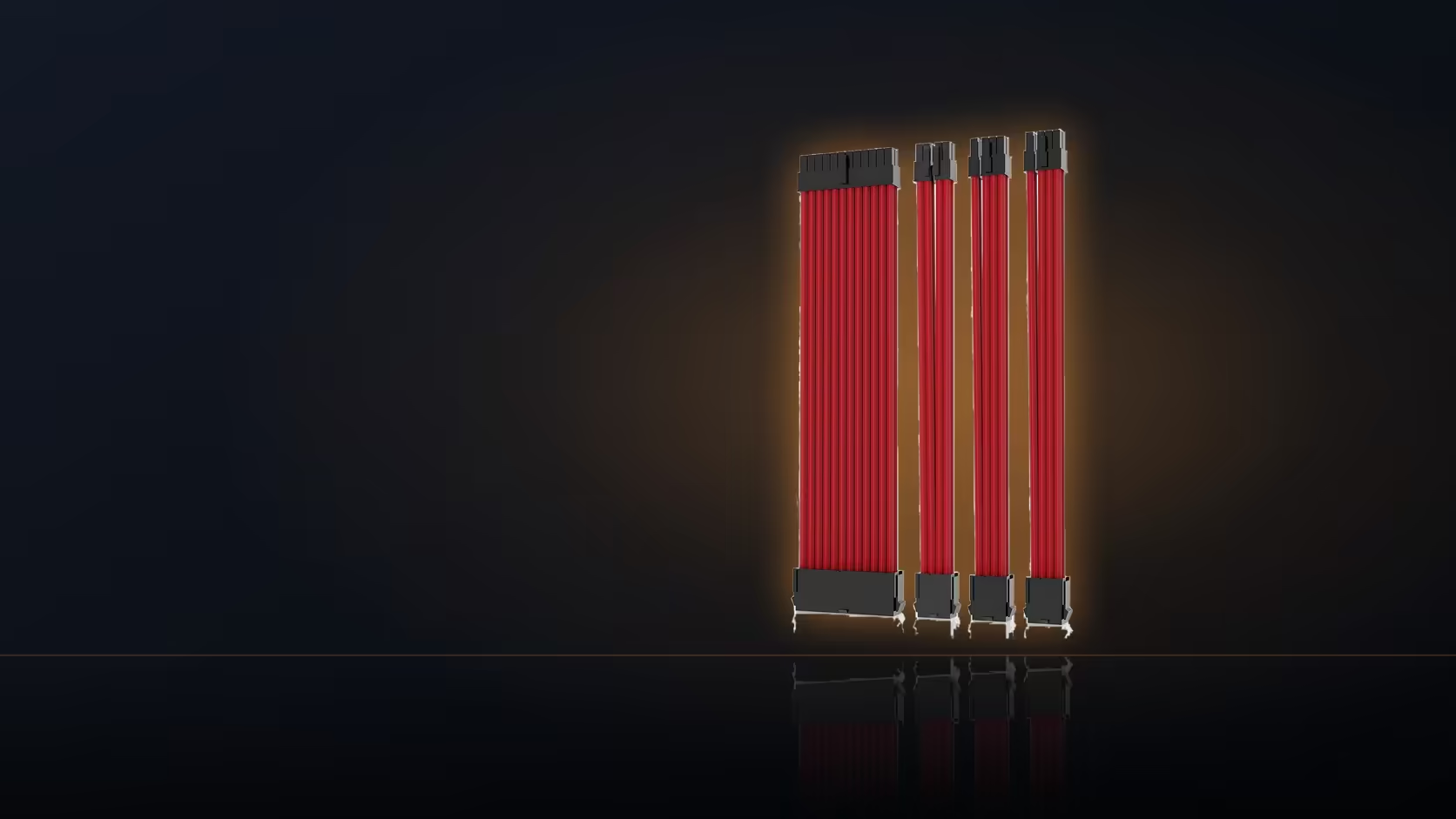
The original lead stays in the supply, and its far end now meets the extension instead of the socket. Nothing is removed. The AsiaHorse piece is male-to-female, so the factory cable is pushed out of sight and the sleeved 30cm section takes the visible run.
🔌 Nothing gets disconnected at the source
The factory cable stays exactly where it always was, seated in the power supply. All that changes is what its far end plugs into: instead of meeting the motherboard or card socket directly, it now meets the extension's female end, and the extension's male end continues on to the actual socket. The original cable is not shortened, cut or bypassed in any way - it simply has a new partner at the point where it used to connect straight to the board.
🫥 Where the surplus length actually goes
Once the extension is in place, the factory lead's full original length still has to live somewhere. Most builders route that surplus behind the motherboard tray, in the gap between the tray and the side panel where cable channels and tie points are usually already provided. It is a space question rather than a heat one - idle cable sitting behind a tray generates no meaningful thermal concern, though a slim case with a shallow tray gap will feel the extra bulk more than a roomy mid-tower will.
🔁 Reversibility and the mechanics of the join
Because the extension is a simple male-to-female pass-through, removing it later is just as easy as fitting it: unplug the extension, and the original lead goes straight back to serving its socket directly, with no parts left over and no trace of the change. A properly seated join clicks and holds firm, so push each connector until you feel it stop moving before closing the side panel - a half-seated join is the one real risk worth checking for, not the joint working loose over time on its own. For the shelf this piece comes from, cable solutions is worth a scroll, while individually sleeved premium cables shows what a permanent, join-free replacement costs by comparison.
Frequently Asked Questions
Is the factory cable removed during the job?
Not at all. It stays seated in the supply, and only its far end changes partner, meeting the extension rather than the board or card socket.
Where do most builders hide that surplus length?
Behind the motherboard tray, in the gap between the tray and the side panel, where the cable channels and tie points already sit.
Does the extra cable cause heat problems?
Idle cable behind a tray is not a thermal concern. It is a space question, which matters more in slim cases than in a roomy mid-tower.
What does male-to-female mean in practice?
One end accepts the plug from your existing lead and the other end presents the same plug to the socket, so the connection passes straight through.
Can I keep the original cable visible on purpose?
You can, though it defeats the point. The sleeved section is what shows if the join is pushed behind the tray and the extension carries the exposed run.
Does the join ever work loose over time?
A properly seated connector clicks and holds. Give each one a firm push until it stops moving before closing the panel.
Will I need the factory cable again later?
Keep it in place. Removing the extension simply returns the original lead to its socket, so the build reverts with no parts missing.
Working through your first sleeved-cable install?
Have a look at Evetech's power supply range for extensions sized to match what your build already has fitted.