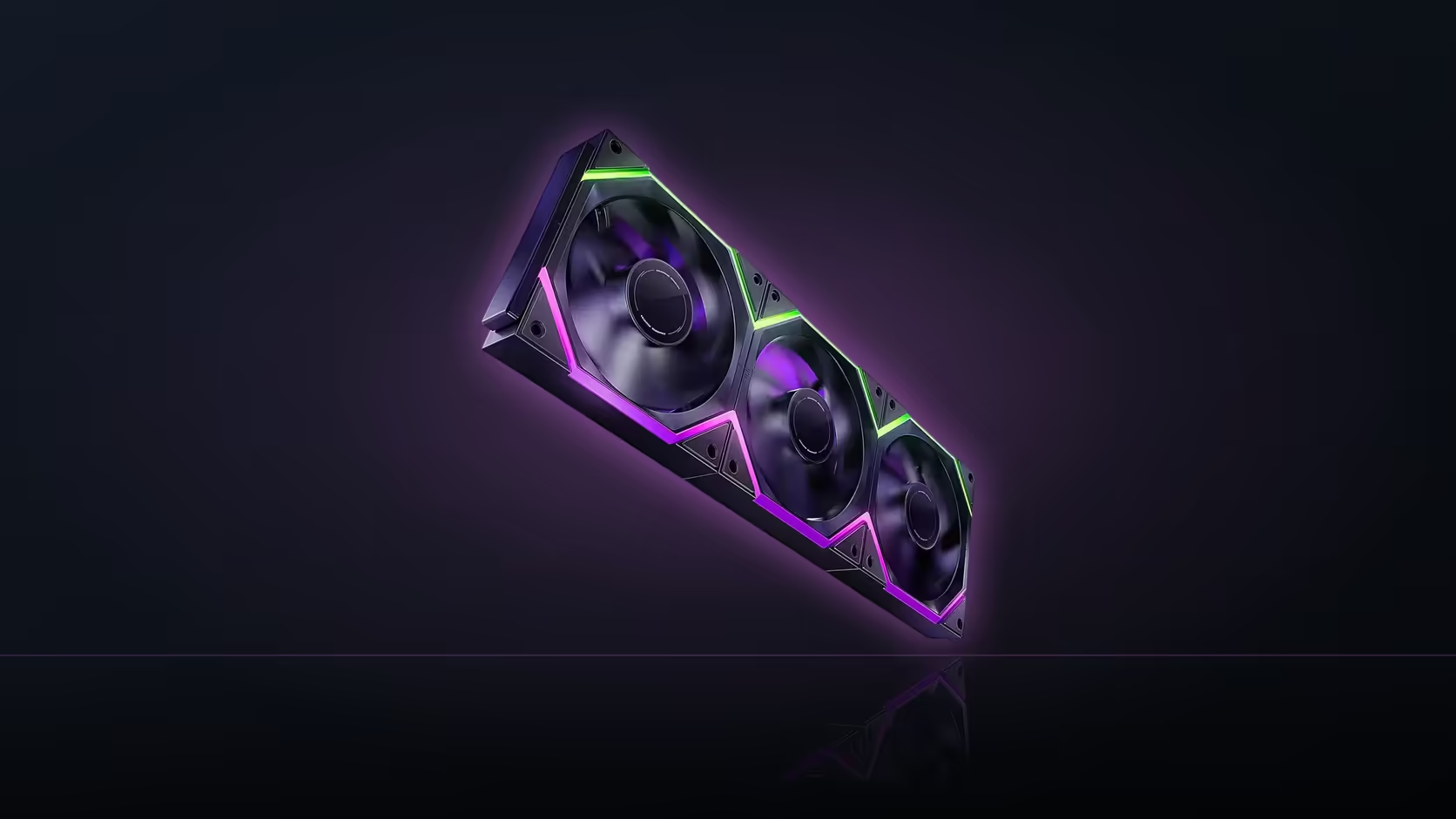
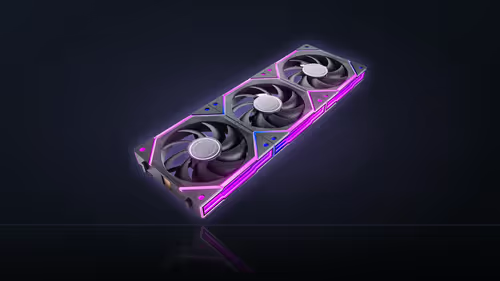
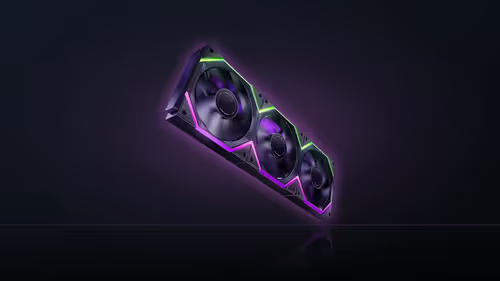
A row of fans that leaves only one cable trailing out of it is not doing that by accident. The Nyota Pro achieves its single-cable-run install through a modular interlock, a physical connection between fan frames rather than a lead running from unit to unit, and that mechanical choice is what shapes the whole install and service story for this fan.
Quick Answer
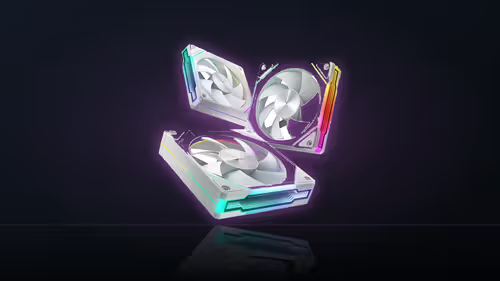
The Nyota Pro's three fans join through a modular interlock, a physical link between the fan frames themselves, which is what produces the pack's single cable run rather than three separate leads. This differs from designs where fans stay physically separate and are simply connected by cables. At R599 (VAT included) for the black or white three-pack, this interlock comes as standard, built into how the row goes together.
🔗 How the interlock differs from a cable chain
A cable chain keeps each fan as a distinct unit, linked to its neighbours by short leads that carry power and signal between them. The interlock instead joins the physical frames, so the fans become one continuous assembly rather than three separate items connected by wire. The signal and power still need to travel between them, but the mechanical joint is doing work a cable chain leaves to the leads alone.
📏 What that buys in the finished install
A single cable leaving the row is the direct result: instead of three leads converging on a header, there is one run to manage, tie down, and route out of sight. For a case with visible fan positions, that reads noticeably tidier than three individual cables bunched at one end of the row.
🧱 Does it suit every case?
It suits a standard row where the fan positions sit directly adjacent to each other, which is how most case fan mounts are arranged. It suits less well a case that splits its fan bays apart, since the interlock assumes the fans sit against one another in sequence; a split layout would need the interlock broken or bypassed to work at all.
🔄 Changing the order once assembled
Because the row is built in sequence, swapping which fan sits where means taking the interlock apart rather than simply re-routing a cable. That is worth factoring in before final assembly, since correcting fan order later is more involved than it would be with a cabled design.
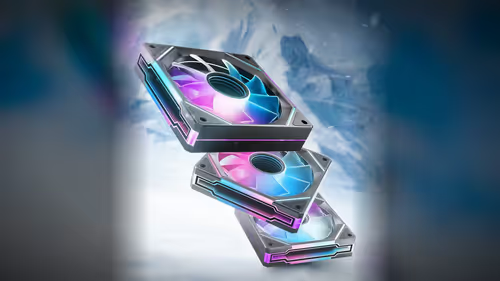
For comparison, the Nyota A12 links its trio through paired PWM and ARGB connectors rather than a physical interlock, keeping the fans as separate units. For either approach, Evetech's case fan range is the place to compare install styles, and fan controller hardware covers hub-based lighting control as a separate topic.
Frequently Asked Questions
How is the interlock different from a cable chain?
It joins the fan frames physically, making the connection part of the assembly rather than a separate lead between units.
What does that achieve for the finished install?
A single cable run leaving the row, tidier than three separate leads converging on one header.
Does it fix the spacing between the fans?
Yes, interlocked fans sit directly against each other, producing a continuous row rather than fans spaced across mounting points.
Does that suit every case design?
It suits standard adjacent fan bays and less so a case that separates its fan positions apart.
Can the fan order be changed after assembly?
Only by taking the interlock apart, since the row is joined in the sequence it was assembled.
How does the A12 handle chaining instead?
Through linked PWM and ARGB connectors between separate fans, rather than a physical interlock joining the frames.
Want a tidy single-cable fan row?
See Evetech's case fan range for more interlocking and linked-cable options.