Several headline specs on AR glasses are overrated for this use and inflate the price for nothing. Here is what SA buyers can skip and what genuinely matters. The use case here is rendering boards and 3D walkthroughs for an architecture portfolio.
Quick Answer
Skip the overrated specs and pay for the ones that matter. For rendering boards and 3D walkthroughs for an architecture portfolio, AR glasses are mostly a large portable display, so the specs that matter are panel resolution, field of view and comfort for long wear — not flashy spatial features you will never use. Decent AR display glasses run roughly R6,000-R12,000; a real workstation behind them matters more than the glasses themselves.
What AR glasses actually do for this work
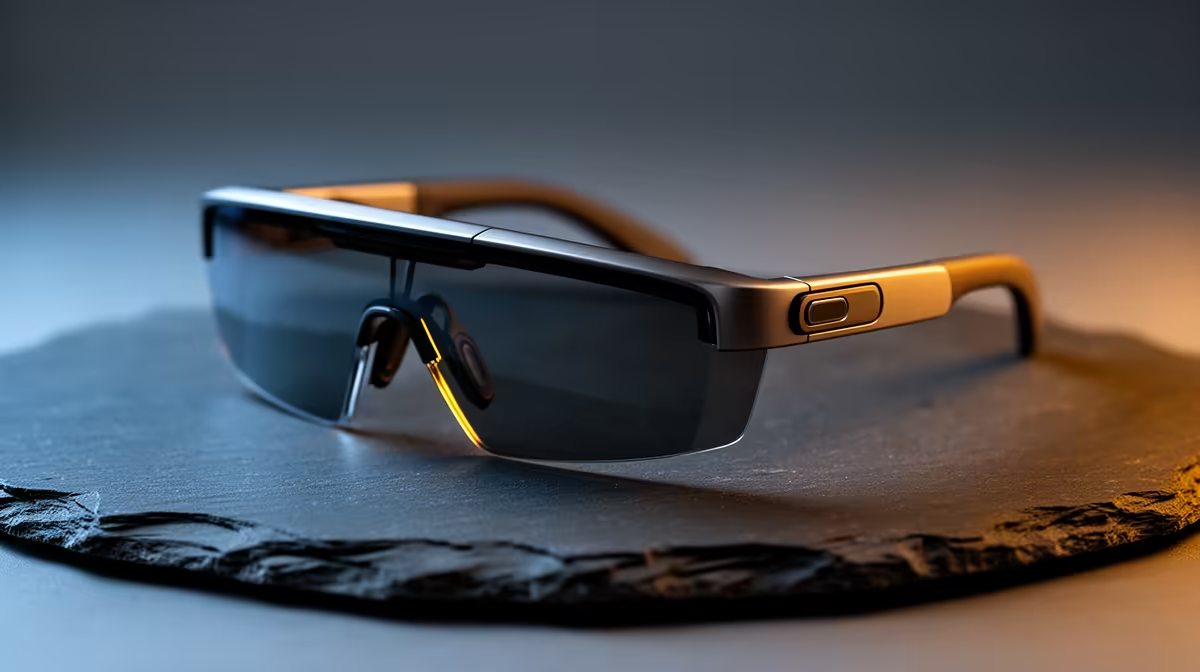
Most current AR glasses are a wearable monitor — they mirror or extend your screen into a 1080p-class virtual display. For CAD, study or portfolio work, that means the glasses ease neck strain and add screen space, but the real modelling and rendering still happen on the PC behind them. Judge them as a display, not a magic compute device.
The specs worth paying for
Panel resolution (1080p per eye is the usable floor), field of view, weight and nose-bridge comfort for hour-long sessions, and a clear focus distance that does not tire your eyes. Connectivity matters too — USB-C DisplayPort-out from your laptop or mini PC is the simplest path. Battery and onboard processing barely matter when they tether to a real machine.
Specs that are overrated here
Spatial tracking, hand gestures and onboard apps sound impressive but add little to screen-mirroring work and inflate the price. Ultra-wide field of view past what your content uses is wasted. For this use, prioritise a sharp 1080p panel and comfort over headline AR features you will switch off on day one.
FAQ
Are AR glasses powerful enough on their own?
No — most AR glasses are a wearable display, not a computer. The modelling, rendering or study work runs on the PC or laptop they connect to. Judge the glasses as a monitor and put the real budget into the machine.
How much should I spend on AR glasses in SA?
A usable pair runs roughly R6,000-R12,000. Below that, build quality and panel sharpness suffer; above it, you are usually paying for spatial features that screen-mirroring work never uses.
What spec matters most for desk and study work?
A sharp 1080p-per-eye panel and all-day comfort. Field of view and weight matter more than fancy AR tracking, because for this work the glasses are simply a portable second screen.
glasses as a portable display and put the bigger budget into the PC behind them. Confirm USB-C DisplayPort-out works with your machine before you buy, or the glasses will not show your screen at all.