Quick Answer
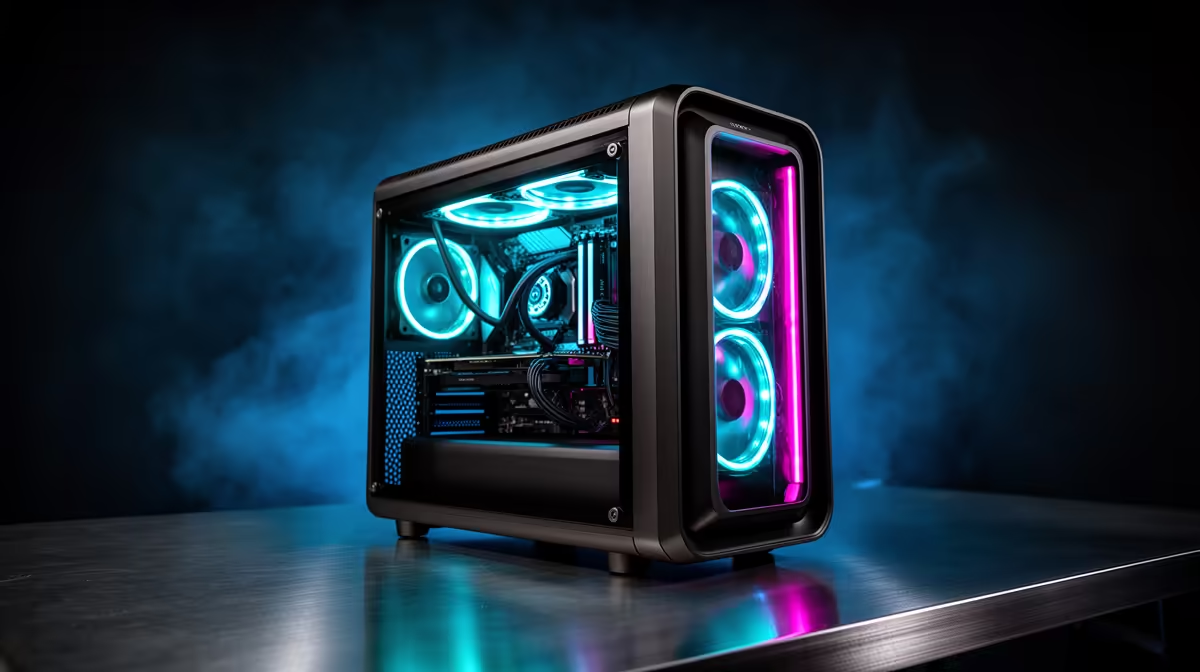
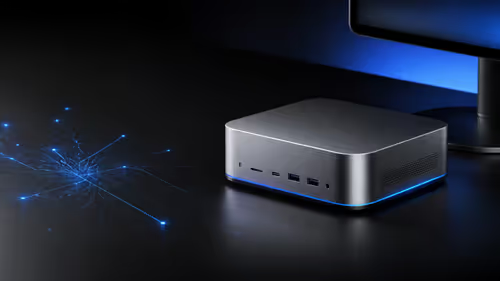
ITX builds are gaining popularity across SA gaming setups because cases and components have matured to make small powerful PCs practical — modern ITX cases fit full-length GPUs and 240mm AIOs, so you can pack a Ryzen 7 7800X3D and a strong graphics card into a console-sized box. The trade-off is a higher board price (quality ITX from around R4,000) and tighter building.
Why small builds took off
Better ITX cases, flexible SFX power supplies, and compact-friendly coolers now let a tiny build hit near-full-tower performance. Gamers want rigs that fit a desk, a TV unit, or travel to a friend's place, and ITX delivers that without giving up a proper GPU. As component clearances improved, the old compromises — weak cooling, no room for a big card — largely disappeared, driving the popularity surge.
What to plan for an ITX build
ITX needs careful planning: confirm GPU length and cooler height against your specific case, budget for a quality ITX board (around R4,000) and often an SFX PSU, and accept two DIMM slots and one or two M.2 slots. Cooling matters most in a small volume, so plan airflow or a 240mm AIO. Done right, an ITX rig runs current games every bit as fast as a tower in a far smaller footprint.
FAQ
Can an ITX build match a full tower for gaming?
Yes. Modern ITX cases fit full GPUs and 240mm AIOs, so an ITX rig with a 7800X3D and a strong card games as fast as a tower in a smaller box.
Why are ITX builds more popular now?
Better cases, SFX power supplies and compact coolers removed the old compromises, letting small builds hit near-full-tower performance.
What is the downside of ITX?
Higher board cost (quality ITX from around R4,000), tighter building, and fewer RAM and M.2 slots. Plan cooling and clearances carefully.
Before you buy
Before an ITX build, check GPU length and cooler height against your exact case — clearance is the make-or-break detail.