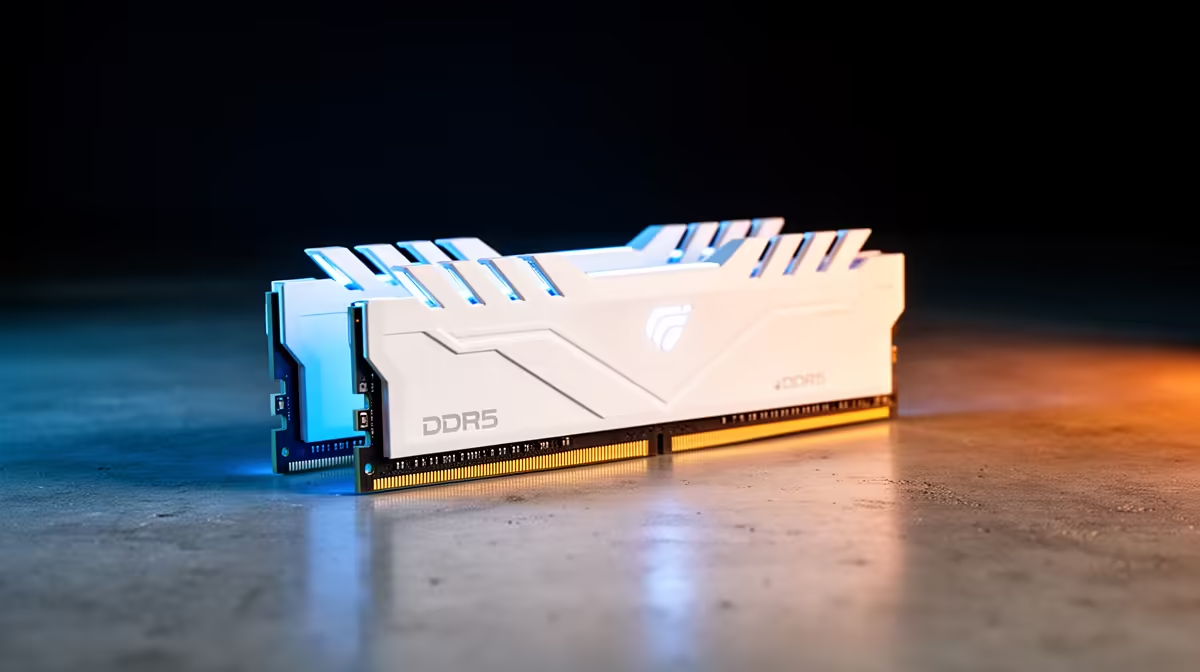
DDR5-6400 looks faster than DDR5-6000 on paper, but for SA gamers on AM5 the real-world gain is marginal because the platform runs sweetest around 6000. Match the memory to your platform.
Quick Answer
For AM5 gaming, DDR5-6400 gains a frame or two at best and risks dropping the controller off its efficient 1:1 ratio. A DDR5-6000 CL30 kit at R1,400 to R2,400 is the smarter SA buy, with the saving better spent on the GPU.
Why 6000 Is The Sweet Spot
On AM5, DDR5-6000 keeps memory and controller at a 1:1 ratio with low latency, which is where games respond best. Pushing to 6400 risks dropping that ratio, which can cancel the speed gain.
The Real-World Gap
In actual games the difference between 6000 and 6400 is usually a frame or two, well inside the margin of error. The headline bandwidth number does not translate into a felt improvement for most players.
Where To Spend Instead
The small premium for 6400 buys little; a tighter-timing 6000 CL30 kit or extra GPU budget does more. SA gamers get better value sticking with proven 6000 kits.
Stability On AM5
DDR5-6000 kits are widely validated on AM5 boards and just work, while 6400 may need extra BIOS tuning to stay stable. For a hassle-free build, 6000 is the safer pick.
Timings Versus Speed
Latency often matters more than raw speed for AM5 gaming, so a CL30 kit at 6000 can beat a looser kit at 6400. Read the timings, not just the speed rating, before you buy.
FAQ
Is DDR5-6400 worth it over DDR5-6000 for gaming?
Barely. The real-world gain is a frame or two, and on AM5 the higher speed can drop the controller out of its efficient 1:1 mode, erasing the benefit. A 6000 CL30 kit is the better value.
Why is DDR5-6000 the AM5 sweet spot?
Because it keeps memory and controller at a 1:1 ratio with low latency, which is where AM5 games run best. Going faster risks a ratio change that adds latency and cancels the gain.
Is DDR5-6400 stable on AM5 boards?
It may need extra BIOS tuning to stay stable, whereas 6000 kits are broadly validated and run out of the box. For a hassle-free build, 6000 is the safer choice.
Buyer Tip
Confirm your platform's supported memory speed in the motherboard manual, then buy a kit on the QVL so it runs at rated speed without tweaking.