Quick Answer
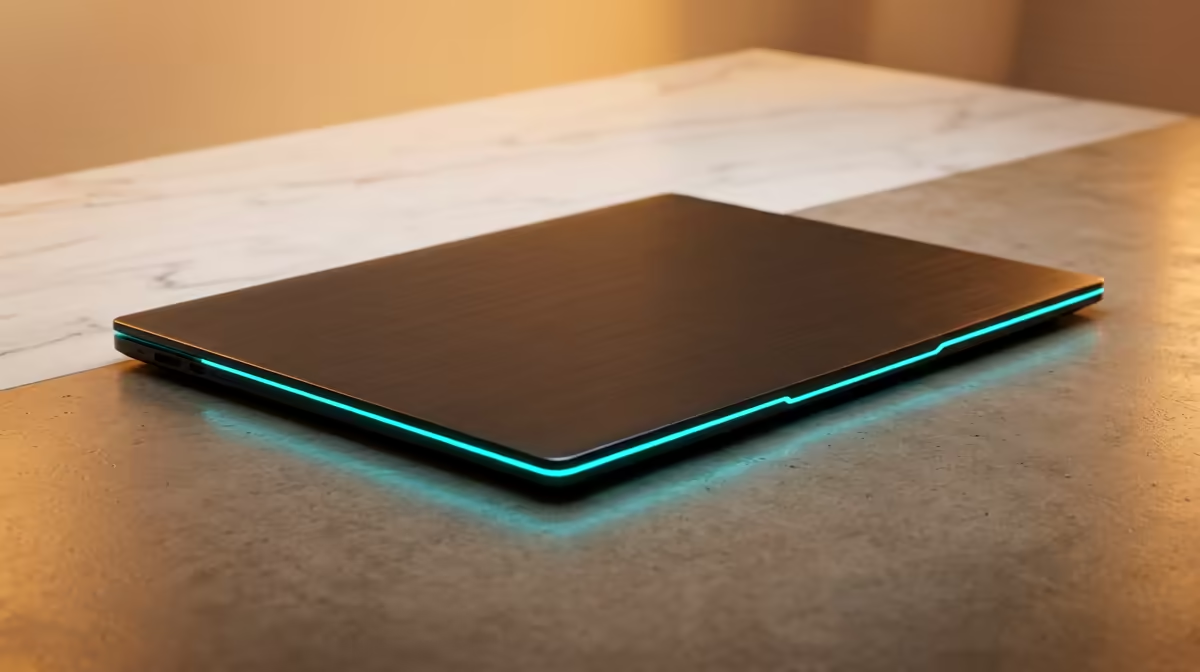
Thin-and-light gaming laptops are popular with SA students because they combine lecture-room portability with real 1080p gaming hardware. The sweet spot is usually a 14-inch to 16-inch laptop around 1.8kg-2.3kg with an RTX 4050 or RTX 4060, 16GB RAM, a 512GB or 1TB SSD, and a cautious R18,000-R35,000 price band.
Why students choose slimmer machines
A student laptop has to survive more than gaming. It moves between campus, digs, group work, family visits and late-night study sessions. A bulky desktop-replacement laptop may perform well, but it is harder to carry and usually needs a larger charger. Slim gaming models make the compromise easier.
Models in the ASUS TUF A14, Lenovo Legion Slim 5 and MSI Stealth-style categories show why this segment works: discrete graphics, high-refresh 1080p or 1600p screens, and enough CPU power for coding, design tools and content work.
The performance trade-off
Thin gaming laptops run tighter power limits than heavy 17-inch machines. An RTX 4060 laptop may be excellent at 1080p high settings, but it will not behave like a full desktop RTX 4060 in every game. Expect esports titles to target 100fps-plus and heavier games to sit closer to 60-90fps depending on settings.
That is still enough for most students. The important checks are cooling noise, screen quality, USB-C charging support, warranty route and whether the laptop has upgradeable RAM or storage.
Budget reality in SA
The cheapest practical laptop level starts around R8,000, but that is not a gaming-laptop target. Students wanting real gaming should plan higher, usually from the mid-teens upward for entry gaming and above R20,000 for stronger thin-and-light options. NSFAS-style device allowances alone will not cover this category.
FAQ
Are thin gaming laptops good for university?
Yes, if battery expectations are realistic. They are easier to carry than desktop replacements and still have enough GPU power for 1080p gaming.
Should students choose RTX 4050 or RTX 4060?
RTX 4050 is the budget choice. RTX 4060 is the better long-term pick if the price gap does not remove budget from RAM, SSD or warranty cover.
What specs matter most for study and games?
Prioritise 16GB RAM, a 1TB SSD where possible, a good screen and a modern GPU. Weight and charger size matter because the machine will move often.
Buyer check
Pick the laptop by weight, screen and GPU together; a fast laptop that is too heavy to carry every day becomes a poor student tool.