For a travel-friendly study setup, AR glasses can replace a bulky portable monitor, and the budget question is whether an entry-level pair is enough. Travel rewards light, simple gear. This guide helps South African students who study on the move decide if affordable AR glasses cover the job without stepping up to premium.
Quick Answer
Yes, entry-level AR glasses (around R8,000, like the Xreal Air 2) are enough for most travel study. A sub-80g pair gives a sharp 1080p-per-eye private screen from a laptop or phone over USB-C, replacing a bulky portable monitor in your bag. Premium only adds a wider field of view and auto-dimming for very bright travel environments.
Entry-Level Covers The Travel Job
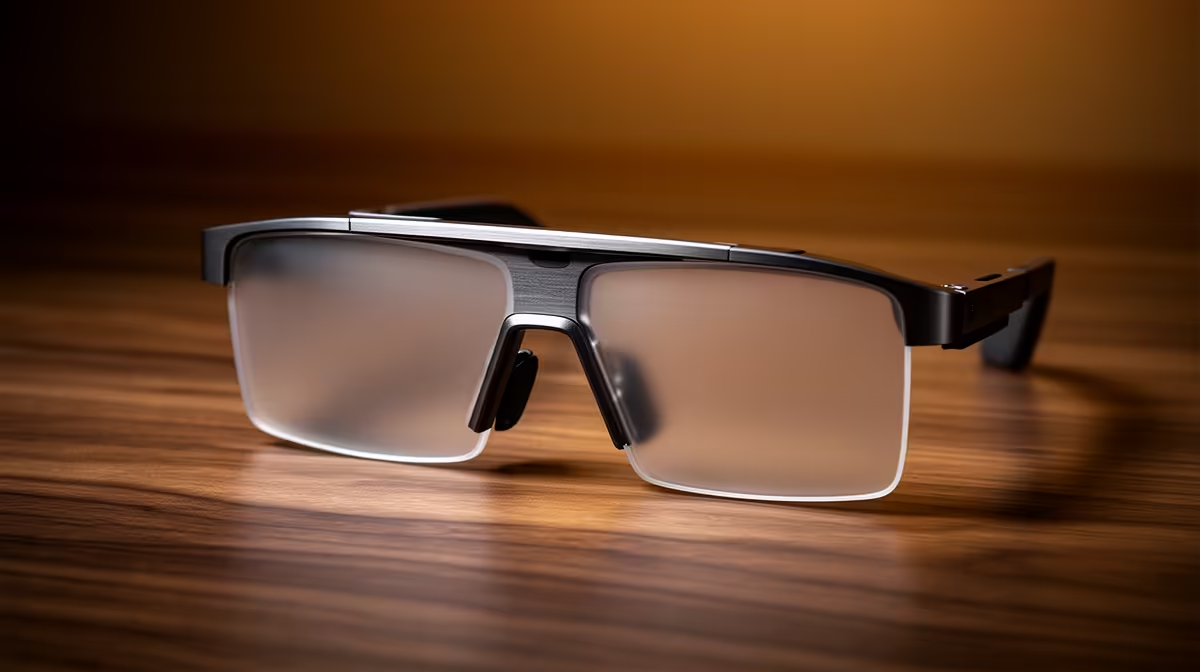
The main reason to pack AR glasses for travel is to replace a heavy portable monitor with a private big screen, and an R8,000 entry pair does exactly that. It projects a sharp 1080p-per-eye virtual display from your laptop over a single USB-C cable, turning any cramped hostel desk or flight tray into a usable workspace. At sub-80g it weighs far less than a second monitor, which is the whole point.
Where The Entry Tier Compromises
Entry glasses use a narrower roughly 40-degree field of view, so a very large document needs slight head movement, and they lack auto-dimming, which means a sun-drenched train or bright common room can wash the image a little. Comfort is good but not top-tier. These are minor trade-offs for travel study; the core benefit of a light, private screen anywhere remains fully intact.
Pack It Right For The Road
Get the best from an entry pair by adding a hard case (R200 to R500) to protect them in a backpack, carrying one short USB-C cable, and using a prescription insert if you wear glasses. Confirm your laptop or phone supports USB-C DisplayPort before a trip. With a case and the right cable, an entry pair travels smaller and lighter than a portable monitor while doing the study job you need.
FAQ
Are entry AR glasses enough for travel study?
Yes, for most students. An R8,000 sub-80g pair gives a sharp private screen from your laptop and replaces a bulky portable monitor; premium only adds a wider view and auto-dimming for bright places.
Do entry AR glasses replace a portable monitor for travel?
Yes. A 1080p-per-eye entry pair projects a large virtual screen over one USB-C cable and packs far smaller and lighter than a second monitor, which is the main reason to bring them.
How should I protect entry AR glasses when travelling?
Use a hard case at R200 to R500 to keep them safe in a backpack, and carry one short USB-C cable plus a small adapter. That keeps the whole travel study kit compact and protected.
For travel study, an R8,000 entry pair from Evetech replaces a portable monitor with a sub-80g private screen; add a hard case and one short USB-C cable, and skip premium unless your trips are very bright.