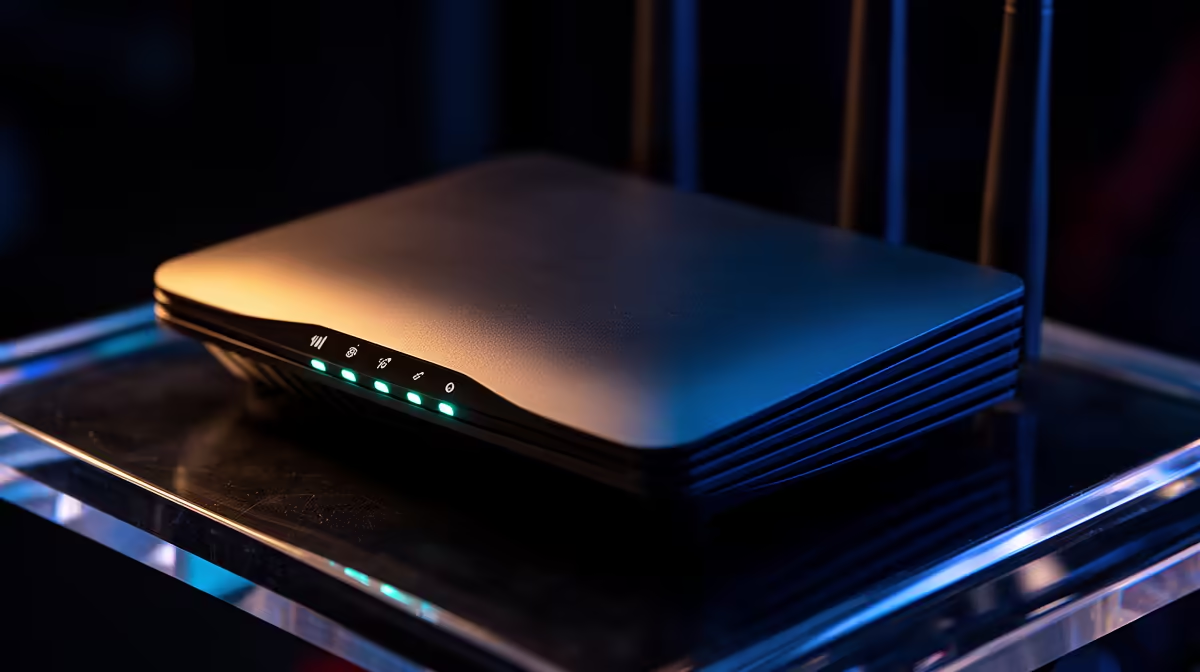
This guide breaks down what actually matters when you buy for shared gaming spaces, with SA pricing and concrete specs so you spend on the right thing rather than the loudest spec sheet.
Quick Answer
A sensible router ladder for shared gaming spaces starts near R1,200 for dual-band coverage, steps to a R2,500 Wi-Fi 6 unit that handles 30ms-stable online play, and tops out around R4,500 for Wi-Fi 6E with full gigabit LAN. Pair the router to your Vumatel or Openserve line speed first.
Pick The Right Tier For Your Line
Buy the router tier your fibre speed and device count need. A R1,200 dual-band unit suits a 50-100 Mbps line and a handful of devices. A R2,500 Wi-Fi 6 router with a 1Gbps WAN port keeps online play near 20-30ms stable on a busy network. Step to a R4,500 Wi-Fi 6E router only for 500Mbps-plus fibre or a device-heavy home. Extra LAN ports matter if you wire a PC, console and NAS straight in for the lowest latency.
Features That Cut Lag And Dead Spots
Quality of Service (QoS) lets you prioritise your game or stream so a download elsewhere in the house does not spike your ping. Multiple gigabit LAN ports let competitive players hard-wire for consistency that Wi-Fi cannot match. Antenna count and band steering decide coverage. For a flat, a single strong router reaches every room; a double-storey home is where a mesh kit starts to beat a lone router.
FAQ
How much should I budget for a router in South Africa?
A solid router starts at around R1,200 at Evetech, with mid-range and premium tiers above that. Decide your real use first, then buy the lowest tier that comfortably covers it rather than overspending on features you will not use.
Do I need Wi-Fi 6 or is Wi-Fi 5 fine?
Wi-Fi 5 is fine for a 50-100 Mbps line and a few devices, but Wi-Fi 6 handles crowded households far better and future-proofs you. Match the standard to your fibre speed and device count rather than buying the highest number.
Will this fix my dead spots?
A single router covers a flat well; a double-storey home or large house usually needs a two-node mesh to clear dead spots. Node placement matters as much as the kit, so keep nodes within line of one wall, not in cupboards.
Compare the current Evetech range by the specs that solve your actual bottleneck, confirm local warranty support, and order the tier that fits your real use.