An XLR microphone earns its place when the whole voice path is planned, from the capsule through the cable to the interface that turns the signal into audio a computer can use. Plugging a balanced microphone into a normal PC port is usually not the answer; the interface, gain setting and cable route determine whether speech arrives cleanly. A neat setup also makes a home desk less vulnerable to buzz, clutter and accidental connector strain.
Quick Answer
An XLR microphone sends analogue audio to an interface, mixer or compatible recorder, which supplies the appropriate input stage before recording. Condenser microphones may need phantom power while many passive dynamic microphones do not, so inspect the exact equipment before enabling it. The microphone shelf spans R149 to R3,199, but the usable system price also includes the interface, stand and balanced lead.
🔌 Map the signal path before ordering
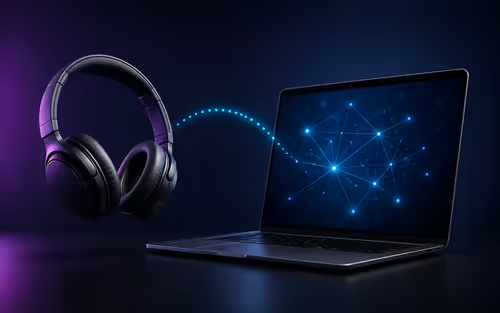
Start at the microphone and trace every required link: XLR lead, interface or mixer, computer connection, monitoring and a stable stand. The microphone range can help narrow the first choice, but the mic alone does not create a recording chain. Confirm that the chosen interface has the right number and type of inputs for the work you expect to do.
For a solo voice setup, simplicity often beats an ambitious pile of equipment. A well-positioned mic, one reliable interface and headphones can reveal room reflections or speaking-distance problems quickly. Adding more components before those basics are understood can make fault-finding slower, not more professional.
✅ Use gain to capture speech, not rescue it
Gain raises the small microphone signal before conversion. Set it high enough that normal speech has a useful level, yet leave headroom for laughter, emphasis or a sudden loud phrase. Pushing a weak source too hard also lifts electronic noise and room sound, while clipping cannot be made clean after the fact.
Distance and direction are part of the gain decision. Move the microphone and speak naturally before reaching for a control. A directional pickup pattern may reduce sound from behind the mic, but a hard, reflective room can still place unwanted ambience in the recording.
🧩 Switch phantom power only with certainty
Phantom power is not a universal setting. Many condenser microphones need it, whereas most passive dynamic microphones do not. Read the mic and connected-device guidance before switching it on, particularly in a shared setup where someone may have changed a cable or device since the last session.
Make changes methodically: lower monitoring level, connect the lead securely, then confirm the equipment state. This approach is less dramatic than chasing a fault while recording, and it protects the session from a loose connection being mistaken for a microphone failure.
🛡 Keep audio and mains routes sensible
South African desks often collect chargers, multi-plugs and 230V adapters beneath the same surface as audio gear. Route balanced XLR lines away from mains adapters where possible and cross unavoidable intersections at right angles. Damaged cables deserve replacement rather than tape or improvised repairs.
The cable solutions selection can help when a lead length or connector is the actual missing piece. For stream layouts that need stands, capture gear or additional peripherals, the streaming essentials range provides useful context without turning the microphone into an isolated purchase.
Frequently Asked Questions
Can an XLR microphone plug directly into a computer?
Usually not in the way it is intended to operate. An audio interface, mixer or compatible recorder normally supplies the balanced input and preamp stage.
Do all XLR microphones require phantom power?
No. Many condenser microphones need it, while most passive dynamic microphones do not. Check the exact microphone and connected equipment first.
What does microphone gain control?
It raises the microphone signal before conversion. Good gain captures normal speech clearly without clipping peaks or amplifying needless noise.
How should I route XLR cables around 230V adapters?
Keep them separate where practical and cross unavoidable power runs at right angles. Replace a damaged lead instead of relying on a temporary repair.
Why is an interface part of an XLR setup?
It gives the microphone the input stage and conversion path it expects, allowing the computer to receive a recordable signal.
Ready to build a voice chain that makes sense?
Choose the microphone, interface and cable route together so every part of the setup has a clear job.