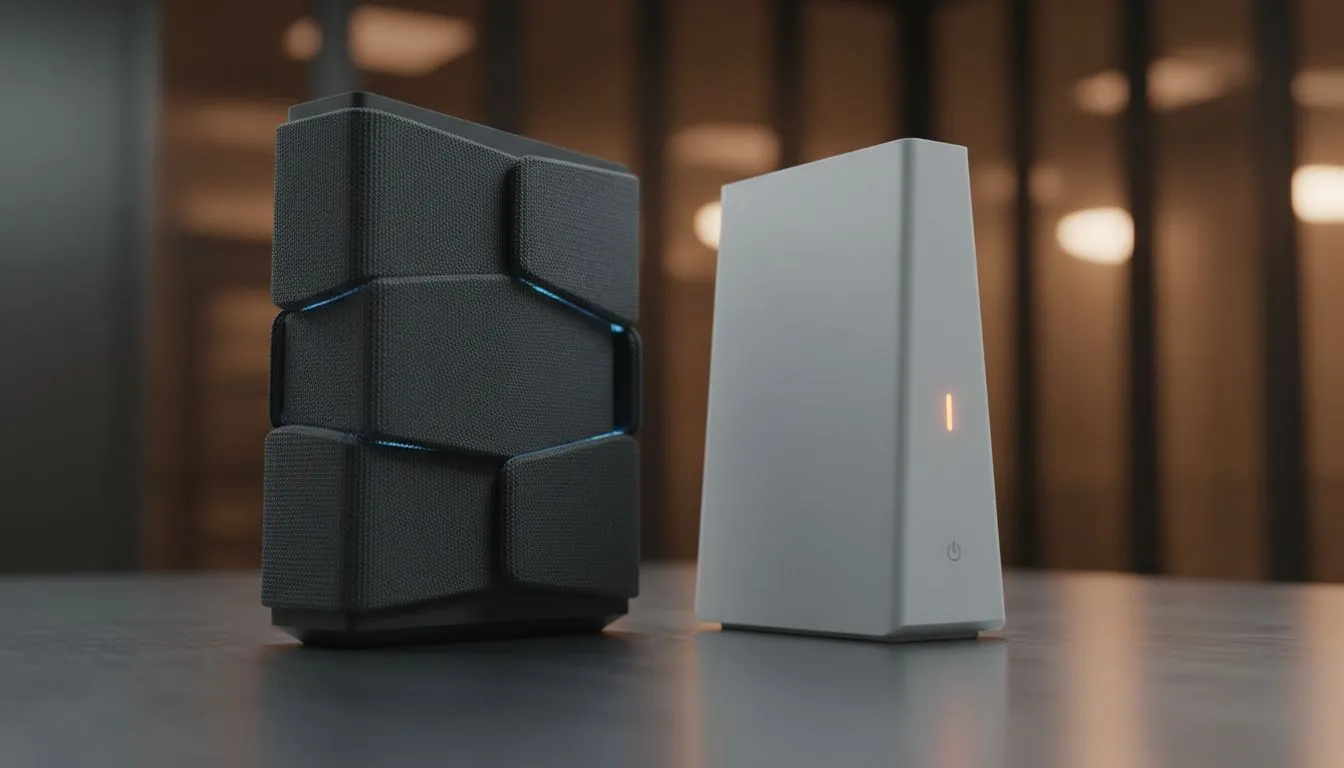
Tired of lag during a clutch Warzone moment in Jozi? Or maybe your Netflix buffer circle is the only thing moving in your Cape Town flat? Choosing between Tri-Band vs Dual-Band Mesh WiFi can make or break your home network. We dive into the tech to see which one is actually worth your hard-earned Rands so you can finally kill those dead zones for good.
Understanding the Basics of Dual-Band Mesh WiFi
Most standard fibre routers provided by ISPs use Dual-Band technology. This means they operate on two distinct frequencies: 2.4GHz and 5GHz. While 2.4GHz travels further through the thick brick walls common in South African homes... it is significantly slower and prone to interference from microwaves and other household electronics.
The 5GHz band is much faster but struggles with range and physical obstacles. In a Dual-Band Mesh setup, the nodes have to share this 5GHz frequency to both talk to your devices and communicate with each other. This "congestion" can lead to a drop in overall speed, especially if you have multiple family members streaming or gaming at once. 🔧
The Performance Leap with Tri-Band Mesh WiFi
When you look at premium wireless routers, you will often see the "Tri-Band" label. As the name suggests, it adds a third frequency... usually a second 5GHz band.
The magic happens when the mesh system uses that third band as a dedicated "backhaul." Think of it as a private highway just for the routers to talk to each other. This leaves the other two bands completely free for your phones, consoles, and laptops. If you are debating Tri-Band vs Dual-Band Mesh WiFi, the extra band is almost always worth it for households with high-speed fibre lines over 100Mbps. ⚡
Gaming Ping Tip ⚡
If you are gaming on a mesh network, try to wire your PC directly into the closest mesh node via Ethernet. Even if the node is connected wirelessly to the main router, the stable physical connection to the node can reduce jitter and local latency significantly.
Why Traditional Extenders Often Fail
Many people try to save money by using wireless range extenders, but these often create separate networks that don't talk to each other. You end up manually switching WiFi signals as you move from the lounge to the bedroom, which is far from ideal.
A proper mesh system, whether dual or tri-band, creates a single "seamless" network. However, the hardware on your receiving end matters too. If your gaming rig is tucked away in a corner, investing in high-quality wireless adapters can help you capture the full potential of your mesh nodes. 🚀
Is the Investment Worth It for You?
Ultimately, the choice of wireless networking depends on your environment. If you live in a smaller cluster home or apartment, a Dual-Band system is likely perfectly fine for your needs. But if you have a large property with many connected devices, the "worth it" factor of Tri-Band becomes clear very quickly. It prevents the dreaded "bottleneck" effect when everyone is online at the same time. ✨
Ready to Find Your Perfect Match?
The Tri-Band vs Dual-Band debate depends on your space, but for a future-proof home in South Africa, a mesh system is the ultimate upgrade. Explore our massive range of wireless networking deals and find the perfect setup to stay connected.