You’re deep in the zone, generating incredible AI art with Stable Diffusion. The images are looking amazing… but your PC sounds like a jet taking off from OR Tambo. That roaring fan noise is the sound of your GPU at full throttle. But what if you could create stunning visuals without the racket? Good news, you can. These pro tips will help you reduce GPU noise with Stable Diffusion and get back to creating in blissful quiet. 🤫
Why Stable Diffusion Turns Your GPU Into a Jet Engine
Before we dive into the fixes, let's quickly understand the problem. AI image generation is one of the most demanding tasks you can throw at a graphics card. It pushes the GPU to 100% utilisation for sustained periods. This intense workload generates a massive amount of heat.
Your GPU's cooling system—the heatsink and fans—has one job: get that heat away from the chip. When the temperature spikes, the fans spin faster to compensate, creating that signature "whoosh" that can kill your creative vibe. The key to quiet AI art is better heat management.
Software Fixes to Tame Your GPU Fan Noise
You can achieve a lot without spending a cent. By tweaking a few settings, you can significantly reduce your GPU's noise during Stable Diffusion tasks. These adjustments focus on making your card run more efficiently, generating less heat in the first place.
Fine-Tune Your Fan Curve
Out of the box, most GPUs have an aggressive fan curve. They prioritise low temperatures over low noise. Using tools like MSI Afterburner (for NVIDIA and AMD cards) or the AMD Software: Adrenalin Edition, you can create a custom fan curve. This lets you set the fan speed to ramp up more gradually, keeping things quieter for longer. You'll find this especially effective on both popular NVIDIA GeForce cards and the latest AMD Radeon GPUs, giving you granular control.
The Magic of Undervolting ⚡
Undervolting is the secret weapon for a quiet and cool PC. It involves slightly reducing the voltage your GPU receives while maintaining the same clock speed. Less voltage means less power consumption and, crucially, less heat. A cooler-running chip doesn't need its fans to spin as fast.
While it sounds technical, modern tools make it relatively safe and easy. A successful undervolt can drop your GPU temperatures by 5-10°C, which translates directly into a much quieter experience when generating AI art.
Don't Forget Airflow! 🔧
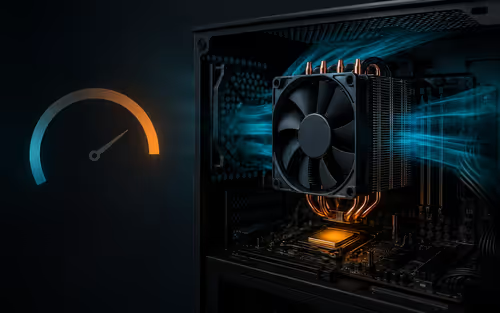
Your PC case is a key part of the cooling equation. Ensure you have clear pathways for air to enter and exit. A case with good ventilation, clean dust filters, and well-placed case fans can dramatically improve your GPU's ability to stay cool, reducing the need for its own fans to work so hard.
When Hardware is the Best Solution
Software tweaks are great, but sometimes the hardware itself is the limiting factor. If you’re consistently running heavy AI workloads, a hardware upgrade might be the most effective long-term solution for reducing GPU noise.
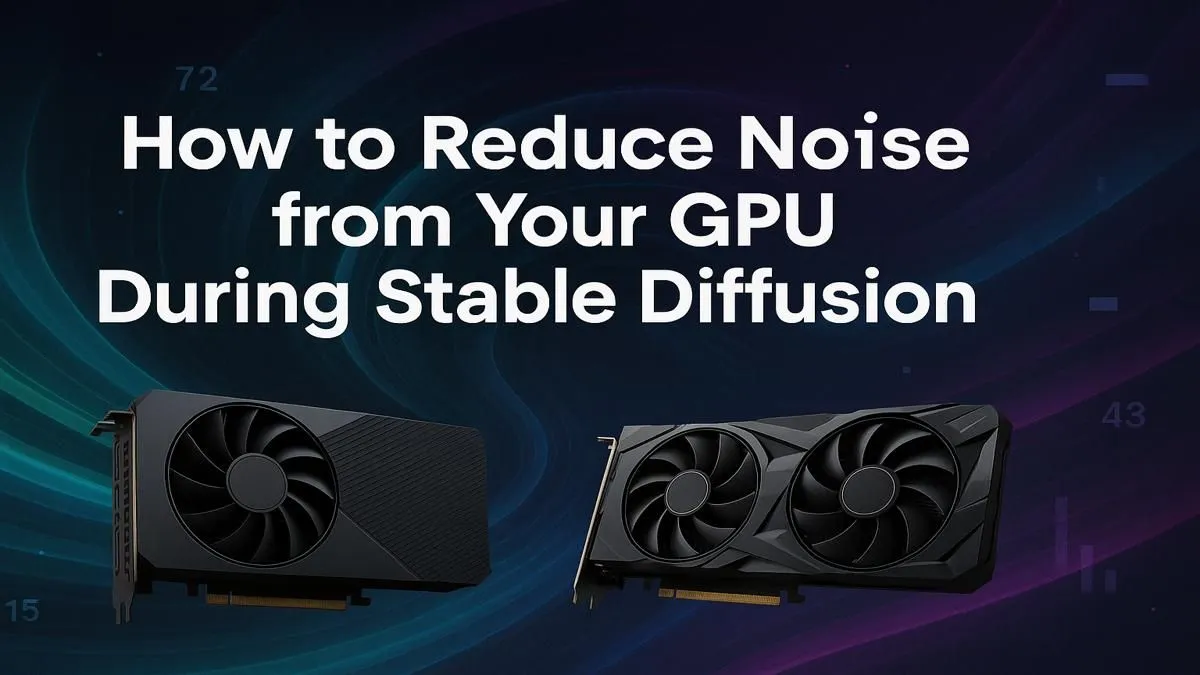
A graphics card with a more robust cooling solution—think bigger heatsinks and three fans instead of two—will naturally run quieter under the same load. The larger surface area dissipates heat more effectively, allowing the fans to spin at a lower, less audible RPM. For those who are serious about AI content creation, investing in high-end or even professional workstation graphics cards can provide not only more power but also superior, quieter cooling designed for sustained workloads. ✨
Ultimately, achieving quiet AI art generation is a balancing act between performance and acoustics. By applying these software tweaks and considering your hardware, you can reclaim your peace and focus on what matters… creating amazing art.
Ready for a Quieter Creative Workflow? A powerful, well-cooled GPU is the heart of a silent AI workstation. If you're ready to upgrade your creative process, we've got the hardware to make it happen. Explore our massive range of graphics cards and find the perfect quiet performer for your rig.