



Fix Dead pixel checks on RX 9070 XT build
Dead pixel on RX 9070 XT build needs careful display-chain checks, not a single-part blame. Test the screen, cable, port, scaling, drivers, and setup context before replacing hardware.
Read more144Hz 1440p setup for video editing in 1080p - what SA needs a balanced, cautious look before buying. Compare fit, budget, workload, warranty support, and upgrade room so the choice makes sense for South African buyers.
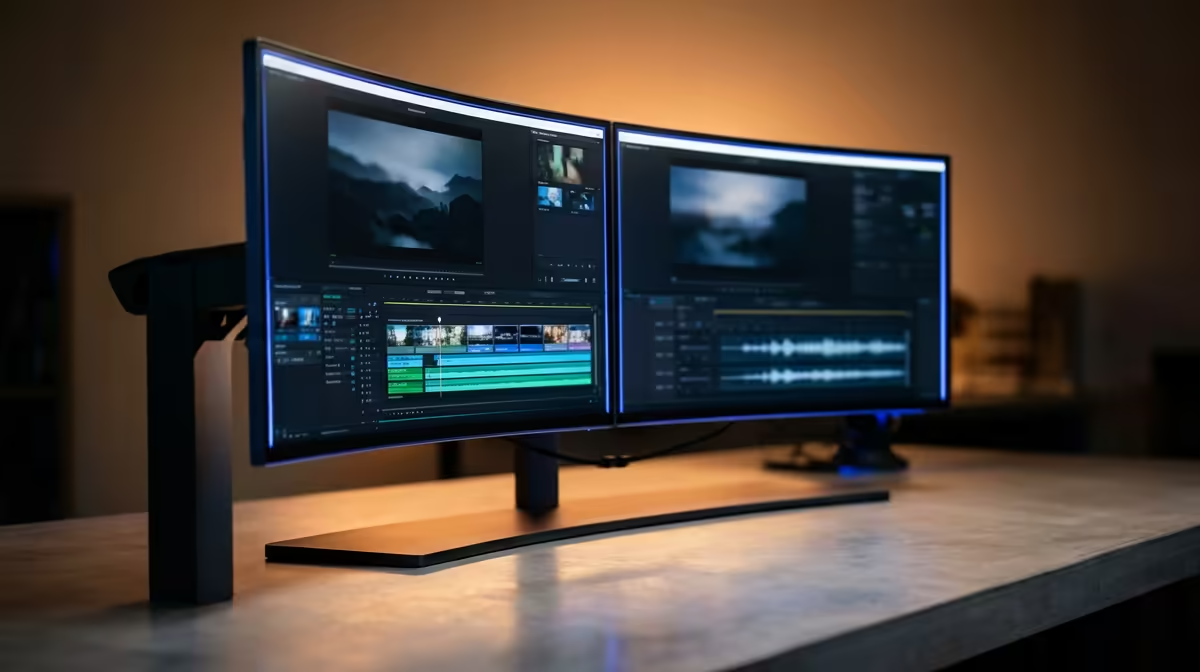
Putting together a 144Hz 1440p machine for 1080p video editing on a the listed budget budget works best when each part is sized to the panel and the games you play, not picked off a generic list.
For a 1440p 144Hz 1080p video editing setup at the listed budget, build around an RTX 5060 Ti or RX 7700 XT-class card with a Ryzen 5 or Core i5, 16-32GB DDR5 and a fast NVMe to land 100-144fps at 1080p, 70-100fps at 1440p. At 1440p 144Hz the goal is 100-144fps in your main titles, which leans more on the GPU than the panel. Match the GPU to the resolution first, then spend what is left on the panel and storage.
1080p editing is gentler than 4K, so a mid build copes well: 32GB DDR5, a 6-core CPU and a GPU with 8GB-plus VRAM scrub HD timelines smoothly. Put money into a fast NVMe scratch drive and a colour-accurate panel rather than the absolute top GPU, since 1080p export is more CPU- and storage-bound.
The panel and the GPU have to agree. A 144Hz 1440p monitor only shows its full speed if the GPU can push those frames, so at this budget the smart move is to size the GPU to the resolution first. Use DisplayPort for high-refresh, enable the adaptive-sync option (FreeSync or G-Sync compatible) to kill tearing, and confirm the cable is rated for the refresh you bought. At the listed budget a panel in the right tier costs roughly a quarter of the budget, with the rest going to the tower.
Order of priority at this budget: GPU, then CPU and RAM, then the panel, then storage and peripherals. A Johannesburg gamer should buy a 16GB DDR5 kit minimum (32GB for editing, streaming or MMOs), a 1TB NVMe, and a quality 650W 80+ PSU that protects the parts and leaves room for a future GPU upgrade. Keep a little back for a surge-protected plug; clean power is cheap insurance for an expensive build.
Expect 100-144fps at 1080p, 70-100fps at 1440p in your main titles with this hardware. Competitive games run higher because they use lighter settings, while AAA games sit at the lower end with high visuals.
Yes, if the GPU can feed it. A 144Hz 1440p panel feels noticeably smoother than 60Hz once your frame rate climbs past about 100fps, which this the listed budget budget targets. Pair it with adaptive sync for the cleanest result.
16GB DDR5 is the floor for pure gaming, but 1080p video editing benefits from 32GB so background tasks and large files do not cause stutter. A 32GB DDR5 6000 kit runs around R2,200 at SA retail.
Set the budget at the listed budget, size the GPU to your 1440p panel first, then fill in the CPU, 32GB RAM and a 1TB NVMe. Shortlist matching parts at Evetech and confirm the monitor cable supports the full 144Hz before you check out.
Dead pixel on RX 9070 XT build needs careful display-chain checks, not a single-part blame. Test the screen, cable, port, scaling, drivers, and setup context before replacing hardware.
Read more
Genshin Impact anti-cheat error on RTX 4090 usually needs service, permissions, overlay, and file integrity checks. Use this SA-focused fix path to isolate launch blockers before reinstalling or changing security settings.
Read more
Mass Effect launch trouble on RX 7800 XT needs focused driver, settings, launcher, and heat checks. Use this SA-friendly guide to isolate the likely cause, protect saves, and return to smoother play without unsupported hardware claims.
Read more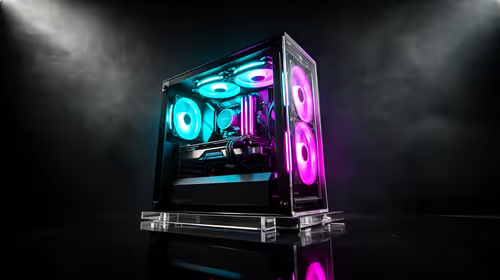
R8,000 gaming PC build in KwaZulu-Natal needs a practical check before you shortlist anything. Compare fit, compatibility, warranty support, timing, and total setup balance for South African buyers.
Read more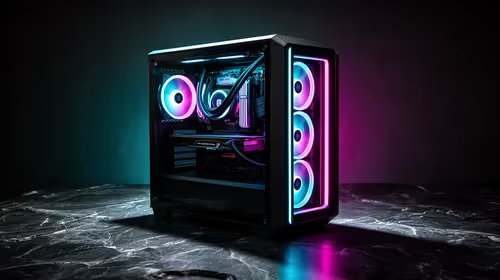
Brits video editing in 4K build under R20,000 needs a balanced parts plan, not a random basket. Map the CPU, GPU, RAM, SSD, cooling, and monitor target to the budget so SA builders know where to spend first.
Read more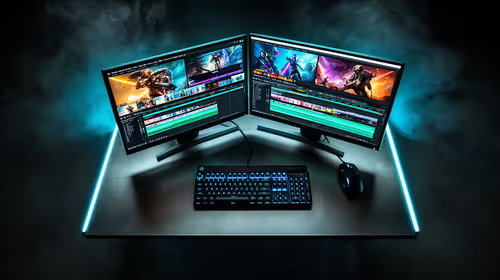
Hardware delivery to Westonaria for video should be shortlisted around the job it must do. South African buyers should compare fit, performance, compatibility, and upgrade room, warranty path, and upgrade room before treating any pick as best.
Read more
Windows never combine taskbar shows separate labelled buttons for open windows. Choose it in Taskbar behaviours, then review space and other-display settings; labels and grouping are linked in the available options.
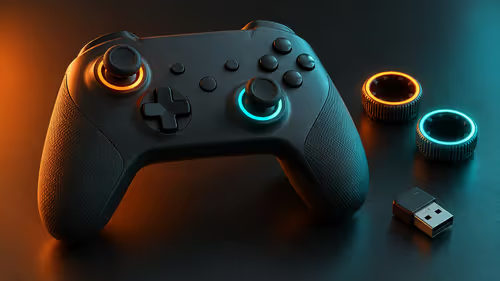
8BitDo Ultimate 3C+ brings adjustable stick tension to the C Series. Windows uses wired USB or the 2.4 GHz adapter; Android uses Bluetooth. Confirm those modes and local pricing before buying.
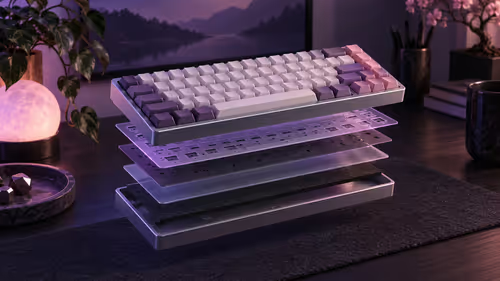
EPOMAKER Galaxy75 previews an aluminium 75% keyboard with wireless modes and HUB/VIA customisation. It is still marked coming soon; final pricing and South African supply are not confirmed.

Windows Delivery Optimisation can share update files with other PCs. Review its activity, choose local-only sharing or turn peer sharing off, and use bandwidth controls; those choices do not disable Windows Update.
Windows never combine taskbar shows separate labelled buttons for open windows. Choose it in Taskbar behaviours, then review space and other-display settings; labels and grouping are linked in the available options.
Windows Delivery Optimisation can share update files with other PCs. Review its activity, choose local-only sharing or turn peer sharing off, and use bandwidth controls; those choices do not disable Windows Update.

Windows touch indicator adds visual feedback where you touch a screen. Change it in Accessibility, Mouse pointer and touch; a feedback circle is different from inaccurate input, ghost touches or a damaged panel.

Windows underline access keys makes supported menu letters easier to see. Enable the keyboard accessibility option, then follow the app's displayed Alt cues; this does not remap keys or create missing app shortcuts.
Windows never combine taskbar shows separate labelled buttons for open windows. Choose it in Taskbar behaviours, then review space and other-display settings; labels and grouping are linked in the available options.
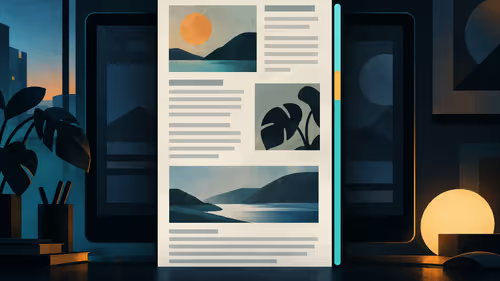
Windows always show scrollbars keeps supported interface scrollbars visible. Enable it in Accessibility and test Settings first; an app can use its own scrollbar behaviour and may need a separate preference.
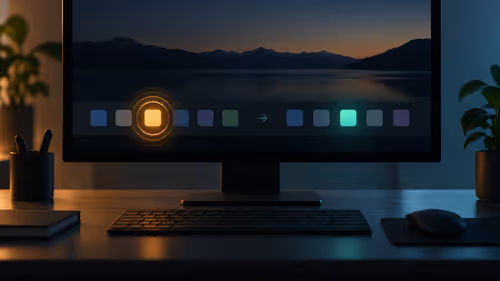
Windows taskbar flashing can be disabled in Taskbar behaviours. Focus can also suppress flashing temporarily. Choose permanent or timed behaviour, then check notifications separately so useful messages remain visible.
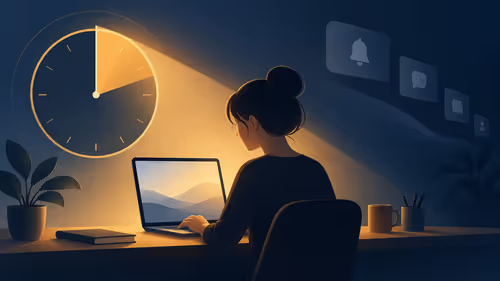
Windows focus sessions combine a timed work period with optional suppression of taskbar badges, flashing and notifications. Review the options and the Clock app before assuming every interruption will stop.