Quick Answer
The best parts for a work-from-home PC build in South Africa centre on a Ryzen 5 or Core i5 CPU, 32GB DDR5 RAM, a 1TB NVMe SSD, integrated or entry GPU, and a quiet 650W PSU paired with a small UPS. Budget around R15,000 to R22,000 for a build that handles Teams, Excel, Photoshop and the occasional Steam break without breaking a sweat.
Start with the CPU: where work-from-home builds live or die
For productivity-first builds, the AMD Ryzen 5 7600 and Intel Core i5-14400 are the sweet-spot picks for SA buyers in 2026. Both handle 30 Chrome tabs, MS Teams, Excel with massive datasets, and Outlook running simultaneously without the fans whining. If you do video calls all day plus light creative work, step up to the Ryzen 7 7700 or Core i7-14700 for the extra cores when Premiere or DaVinci Resolve is in the mix. Avoid older quad-core chips, modern collaboration apps eat threads for lunch.
RAM, storage and the boring kit that actually matters
32GB of DDR5-5600 is the new baseline for serious WFH setups. 16GB still works for basic admin but starts choking when you have Slack, Zoom, Excel and 20 browser tabs open. Pair it with a 1TB Gen 4 NVMe SSD like the WD Black SN770 or Crucial P3 Plus for snappy boot and app launches. Add a 2TB SATA SSD for project archives and you've got a setup that won't make you wait. Skip the spinning hard drive in 2026, the price difference doesn't justify the performance hit.
Graphics, motherboard and the case that hides under your desk
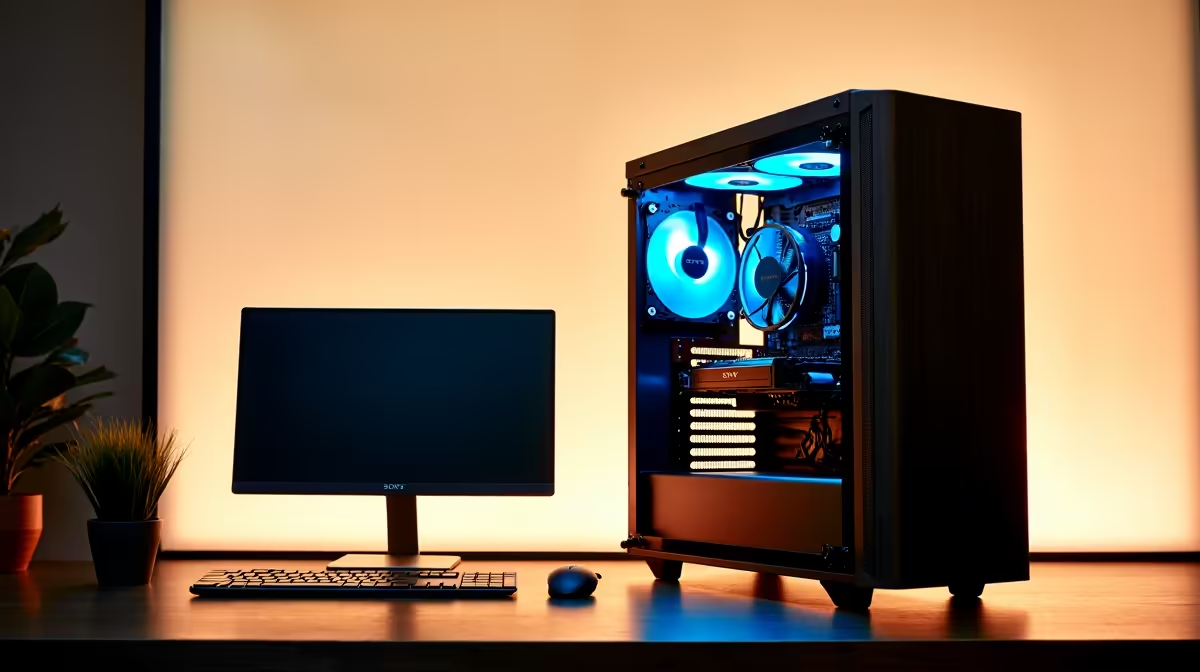
Integrated graphics on the 7600 or 14400 handle dual 1440p monitors fine for office work. Add a Radeon RX 6600 or RTX 4060 only if you do CAD, 3D design, light gaming, or video editing. The motherboard should be a B650 (AM5) or B760 (LGA 1700) board around R3,500 to R4,500 with decent VRMs and at least one extra M.2 slot. For the case, a quiet mid-tower like the Corsair 4000D Airflow or Fractal Design Pop Air keeps thermals tame and noise low for video calls.
Power Protection and Reliability
A Corsair RM650e or Cooler Master MWE Gold 650W gives you headroom and 80+ Gold efficiency, which matters when Eskom tariffs keep climbing. The real WFH game-changer is a 1500VA line-interactive UPS for around R3,500 that buffers a Stage 4 slot long enough to save your work and shut down cleanly. Pair that with a fibre router on the same UPS and you can stay on a Teams call right through a load drop, which is genuinely career-changing in SA. A small inverter trolley extends runtime if your client meetings cannot be missed.
Peripherals: the WFH details people skip
A decent webcam (Logitech C920 or better), a USB condenser mic, and a pair of closed-back headphones turn you from "laggy person on the call" into someone people actually take seriously. A 27-inch 1440p IPS monitor with USB-C delivery cleans up cable clutter and gives you proper screen real estate for spreadsheets. A good mechanical keyboard and a real ergonomic mouse pay you back in fewer wrist aches by month three.
Budget vs premium tiers
Around R15,000 you get a Ryzen 5 7600, 16GB DDR5, 1TB NVMe, B650 board, 650W PSU and a clean case. Stretch to R22,000 and you double the RAM, jump to a 7700 or 14700, add an entry GPU and a UPS. Beyond R30,000 you're into creator territory with a 4070 or RX 7800 XT and 64GB of RAM for serious workloads. Avoid spending big on RGB and skip premium AIO coolers for a pure productivity build, a good R900 air cooler is plenty.
Frequently Asked Questions
Can I build a WFH PC without a discrete GPU?
Absolutely, modern Ryzen and Intel iGPUs handle multi-monitor productivity work brilliantly. Save the GPU budget for more RAM, a better SSD or a bigger monitor unless you specifically need GPU acceleration for creative software.
Is a prebuilt better than a custom build for work-from-home?
For most SA buyers, a custom build gets you 15 to 25% more performance per rand because you control the parts. Prebuilds win on warranty simplicity and same-day delivery. If you're not comfortable assembling, a configured prebuilt with full SA support is the smart move.
What's the most underrated part of a WFH build?
The UPS. People obsess over CPU and GPU, then lose three hours of unsaved work to a single load drop. A R3,500 UPS pays itself off the first time it saves your spreadsheet during a client call.