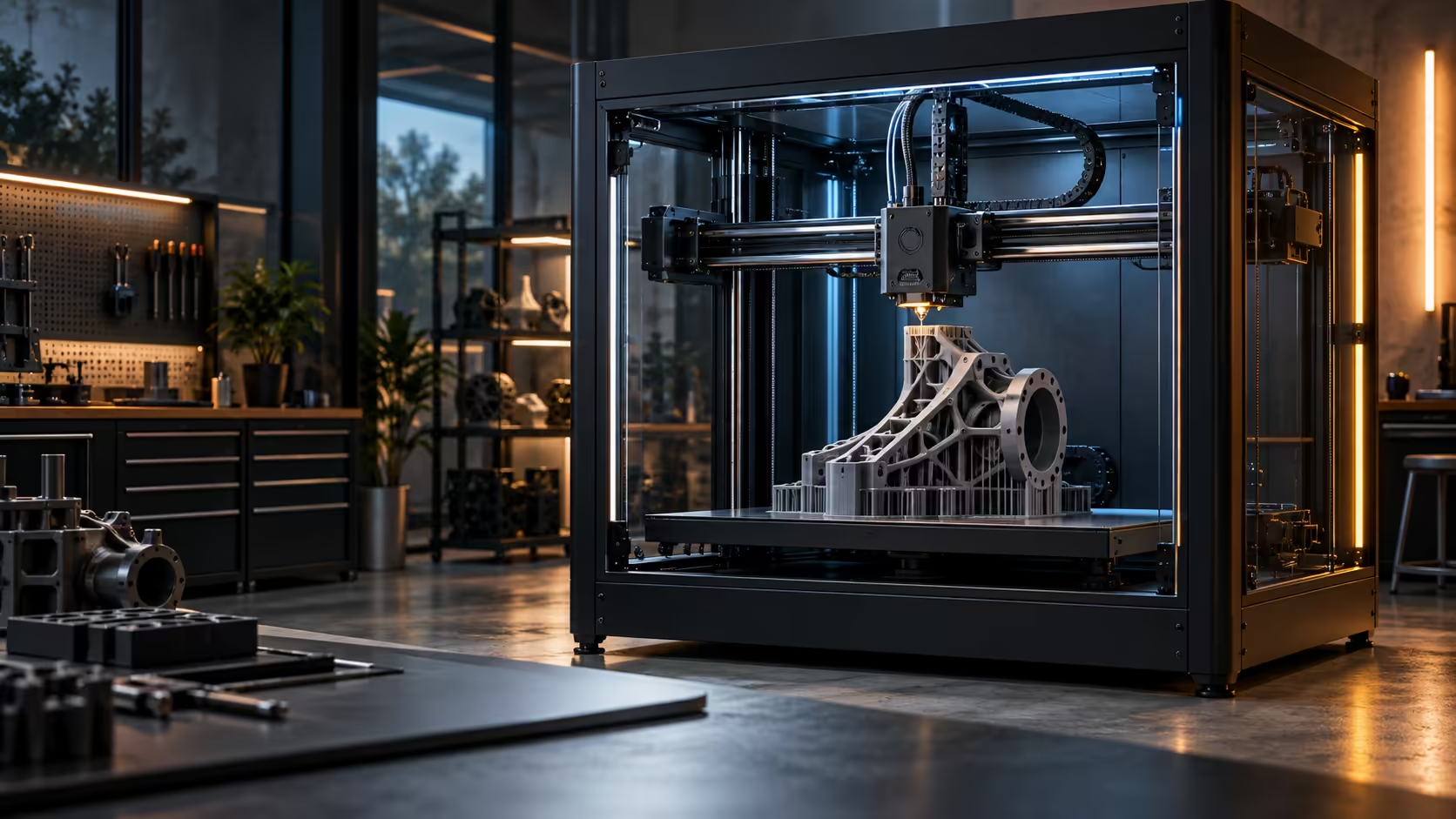
Most guides to 3D printer ventilation quietly assume a dedicated workshop with a door that shuts and a window that opens straight onto open air. South African indoor 3D printing usually means neither, and the setup advice needs to start from that instead of pretending otherwise.
Quick Answer
Put the printer in a room you can actually ventilate, print ABS and similar materials only with filtration running, and keep it out of a bedroom entirely. Most South African homes have no spare workshop, so the machine lands in a home office, a study or a small flat, and that is exactly the situation the built-in purifier on the R13,999 Creality K1 Max is designed for.
🏠 Working with the room you actually have
A dedicated workshop is a luxury most people printing at home do not have, and pretending otherwise leads to bad advice. The realistic options are a home office, a spare room, or a corner of a lounge or flat, and each one changes what is safe to print there.
A home office with a window that opens is the best of the realistic options, since it gives you both filtration and a way to clear the room entirely between long prints. A closed flat with no opening window, common in a Johannesburg or Durban complex where security means windows stay locked overnight, is the hardest case, and it is where filtration stops being optional.
🚫 Why a bedroom is off the list regardless of the printer
Printing overnight in a bedroom means breathing whatever the print gives off for 8 hours while asleep, and no filter changes that equation enough to make it a good idea. This holds regardless of which material is loaded or which printer is running; a bedroom is simply the wrong room for a machine that emits anything while you sleep next to it.
Move the printer to any other room in the home before running long or overnight jobs, even if that room is small, because a small room you are not sleeping in beats a bedroom you are.
🌬️ Filtration for materials that actually need it
PLA is the gentlest material to run indoors and needs the least fuss. ABS and similar materials give off more, and that is where an enclosed printer with a built-in purifier earns its place, trapping most of what the plastic releases inside the chamber before it ever reaches the rest of the room.
Run filtration for the whole print, not just the first layer, since the emissions do not stop once the print gets going. Stock up on a mix of filament suited to whichever material you are comfortable running in your space, and pair the printer with other smart home appliances, an air quality monitor being the obvious one, if the room in question has no natural ventilation at all.
🔑 Renters and shared housing need their own checklist
Renting adds its own restrictions on top of the general room-choice advice above. Check a lease carefully before drilling into any wall for a vent or fixed extraction unit, since most standard rental agreements treat that as a structural alteration needing the landlord's written permission first, and a built-in purifier avoids that whole conversation entirely by needing no installation at all.
Shared housing raises a different issue entirely: other people's schedules and sensitivities. A flatmate who works night shifts and sleeps during the day changes when a long ABS print is actually acceptable to run, regardless of which room it physically sits in, so a quick conversation about timing is worth having before the first overnight print rather than after a complaint lands. Check the 3D printer range for enclosed, filtered options specifically if a shared home is the setting, since that combination does the most, of anything within a hobbyist's control, to keep a personal project from quietly turning into a source of ongoing household friction.
Frequently Asked Questions
Is a home office safe for 3D printing in South Africa?
Yes, especially one with an openable window nearby; it is one of the more realistic and genuinely safer rooms compared to a closed bedroom or an open lounge corner.
Do I need filtration for PLA prints?
Less critically than for ABS, since PLA gives off less while printing, but running an enclosed machine with a purifier does no harm either way.
Can I print overnight safely in a small flat?
Yes, provided the printer is kept well out of the room you actually sleep in and filtration is running for whichever material needs it that night.
Does an open window replace the need for a purifier?
It helps, but a purifier still earns its place on days when opening a window is not practical, such as during a Highveld cold snap or a dusty afternoon.
Setting up your first printer in a South African home?
Choose the room carefully, run filtration where it matters, and keep it out of the bedroom.