The right switch for a mixed PC must survive more than a short gaming demo. Choosing mechanical switches for games and work means testing repeated inputs, long typing, force, feedback and sound in the room where the keyboard will be used.
Quick Answer
Linear switches offer smooth travel, tactile switches add a physical bump and clicky switches add audible feedback. Choose by the pattern you control accurately through both a full game session and a realistic work block, because force and travel still vary within each category.
🎮 Map the gaming input pattern
List the keys and actions used most. FPS play may emphasise held movement and rapid direction changes, while MOBA or MMO sessions can involve repeated ability clusters, modifiers and communication controls.
Test holds, double taps, fast releases and neighbouring combinations. A smooth linear design can appeal for repetition, yet another player may rely on tactile feedback to avoid accidental activation.
Do not assign one category to an entire genre. Personal technique, switch force, keycap shape and game bindings alter the result.
Use an input view before a match to confirm reliable presses, releases and combinations. Physical preference should be judged only after the mechanism registers correctly.
Record accidental inputs as well as misses. A light switch may support rapid movement for one player and create stray commands for another.
Check key release during quick direction changes. Return behaviour can affect control even when the initial downstroke feels ideal.
Compare candidate boards in Evetech's Logitech gaming-keyboard range.
⌨️ Extend the test through a workday
Type a representative document, enter shortcuts and use the weaker fingers on modifiers. A switch that feels effortless under the index finger can become tiring on Shift or Control.
Listen from the normal room position. Clicky sound may suit a private office and conflict with calls, colleagues, family or an open microphone.
Watch for bottoming out. Heavy impact can change fatigue and sound independently of the feedback category, so compare ordinary technique rather than forcing identical strokes.
Pay attention to hand tension. A switch that encourages hovering stiffly above the actuation point may be less comfortable than a slightly heavier option used with a relaxed technique.
Test for more than a few minutes. Spring force and bump shape become clearer after sustained work, when novelty no longer dominates.
Repeat the work block on another day. Fatigue, mood and posture can influence a single session, so a durable preference should survive more than one trial.
Use Evetech's broader gaming-keyboard listings with gaming and work notes side by side.
🧪 Compare without mixing variables
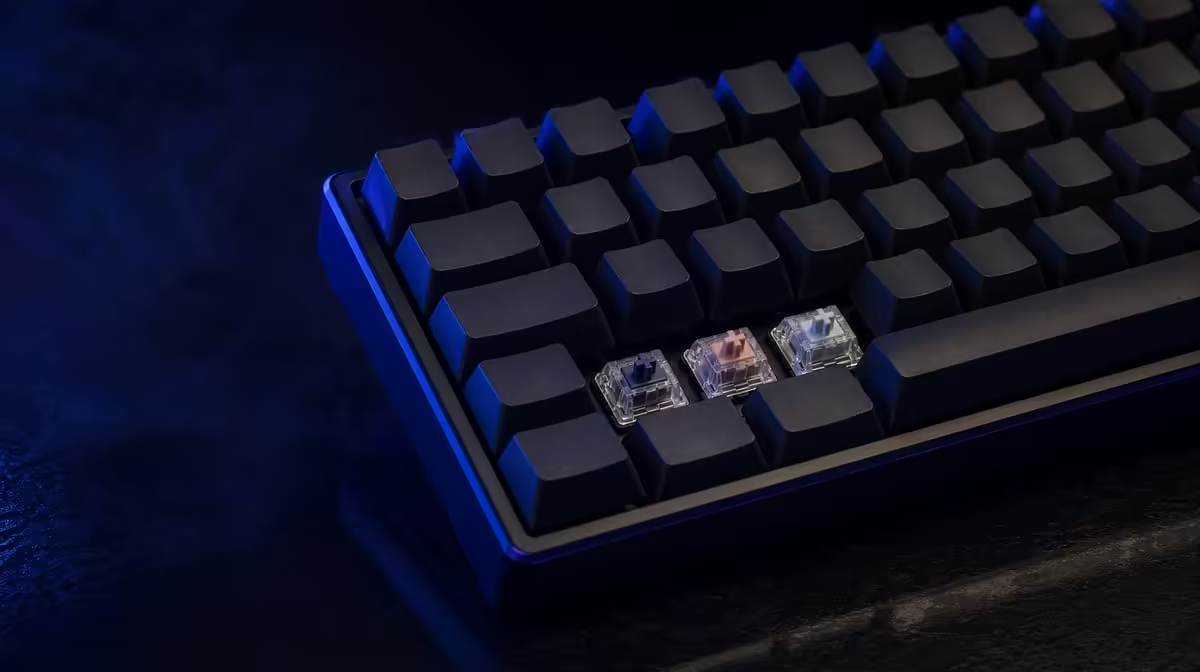
Keep keycaps, layout and board construction as similar as practical. A loose sampler reveals broad feedback but cannot reproduce the plate, case or stabilisers.
If a compatible hot-swap board is used, change a small group and label positions. Compare equivalent keys over several days, then restore the original set before the next test.
Record errors, comfort, noise and control rather than asking only which switch feels faster. A dependable choice supports consistent input.
Use the same desk, keycap profile and keyboard angle for each test. Moving the board or changing caps can alter reach and impact enough to obscure the switch difference.
Do not compare one loose sampler key with a complete board as though the conditions match. A sampler narrows categories; mounted testing settles the practical choice.
Ask another person to assess noise from across the room or through a call. The user under a headset may not hear what the microphone captures.
Choose the complete keyboard after switch preference is clear. Layout, software, cap quality and support still affect long-term value.
Confirm the exact switch offered in the shortlisted board. Similar colour names across brands or families do not guarantee identical force, travel or feedback.
Keep a note of why an option was rejected. "Too tiring after typing", "unclear release" or "too loud for calls" is useful when later products use different names for similar behaviour.
🧭 Balance one keyboard across two roles
Weight gaming and work by actual hours. A keyboard used for eight hours of typing and two hours of play should not be selected from the shorter activity alone.
Decide which compromises are reversible. Keycaps may be replaceable, and compatible hot-swap sockets can allow switch changes; an unsuitable layout is harder to transform.
Build a pass/fail list: required keys, acceptable sound, reliable combinations, no sustained finger pain and software support for essential profiles. Optional preferences come after those gates.
Try the candidate through a full weekly pattern where a return or demonstration arrangement permits. Short tests reward novelty, while real use reveals concentration, fatigue and room noise.
If two switches perform similarly, choose based on the complete board's fit and service path. A marginal feel preference should not force a keyboard that clashes with the desk.
Preserve default controls before adding macros or layers. Software customisation can improve workflow, but it should not disguise a physical mechanism that the user cannot control confidently.
The final choice should support a plain explanation: which game actions feel consistent, why typing remains comfortable and whether the sound suits the room.
See Evetech's accessories best sellers once the mechanism shortlist is stable and check current availability.
Frequently Asked Questions
Why do some FPS players prefer linear switches?
They may like the uninterrupted travel for held movement and rapid repeated presses.
What can tactile feedback add to productivity?
A physical bump can help some typists recognise a press without striking the bottom on every key.
When might clicky switches suit a user?
They can work in a private or sound-tolerant space for someone who values audible confirmation.
What matters to MMO players beyond switch type?
Layout, reachable ability keys, modifier comfort, rollover and dependable software assignments can all matter.
Why should actuation force be tested over time?
A force that feels fine briefly may cause fatigue or accidental presses during longer gaming and work.
Can a switch sampler settle the decision?
It can narrow feedback choices, but the final keyboard's plate, caps and case alter the complete feel.
How does hot-swap support change experimentation?
Compatible sockets allow careful switch comparisons without soldering, making the decision more reversible.
Choosing one switch feel for games and work?
Compare Evetech gaming keyboards after a sustained control, typing and sound test rather than a handful of presses.