A new monitor deserves five quiet minutes before the stand, cables and packaging disappear into storage. Clean the screen, fill it with one solid colour at a time and look from your normal distance. A dead pixel check is easier on day one, when you still know every mark came out of the box with the panel.
Quick Answer
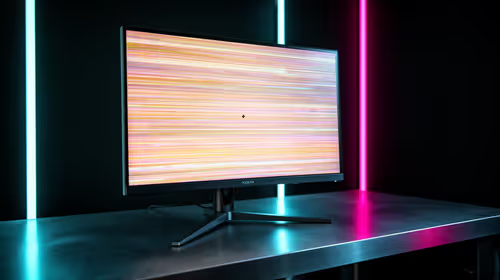
Open full-screen red, green, blue, white and black images at native resolution. A dead pixel remains dark; a stuck subpixel stays lit in one colour. Photograph the location without pressing the panel and read the exact pixel policy for your model. Evetech's July 2026 listing put the 22-inch Dahua LM22-A200X 100Hz screen at R1,349, which shows why even an entry display deserves the same arrival check.
🧽 Clean the surface before counting pixels
Switch the monitor off and let it cool. Use a clean microfibre cloth to remove dust. If a mark remains, dampen the cloth with the screen-cleaning method approved for the panel; never spray liquid onto the bezel.
Turn the monitor on, select its native resolution and reset scaling or sharpness if those controls distort the pixel grid. Sit at your normal distance first, then move closer to inspect a suspicious point.
Disable screen savers, night light and HDR for the colour cycle. Those modes can tint a white field or dim the test while you are moving between colours. Return them after the pixel check; the goal is one plain, predictable signal.
Evetech's PC monitor category gives you the model and resolution details to confirm before the test.
🎨 Cycle five solid colours
Use a trusted offline test image set or a browser page you can place in full screen. Show red, green and blue to test the subpixels, then white for dark defects and black for pixels stuck bright.
Move a plain window around if browser controls cover an edge. Check the centre and then trace each border. A speck that moves with your gaze or wipes away belongs to the surface, not the pixel matrix.
Repeat the colours from another source if the same point appears only inside one browser. A screenshot viewed on a second device can also show whether the mark exists in the image. A physical pixel defect stays on the monitor while a rendered artefact travels with the screenshot.
🔍 Record the defect without touching it
Place a small removable note on the bezel beside the location. Take one photo of the whole screen and one close view with the solid colour visible. Note whether the point changes colour or stays black.
Do not press, rub or tap the panel. Pixel-exercise videos may cycle colours around a stuck pixel, but physical pressure can damage nearby pixels and make an assessment harder.
Give a colour-cycling tool a short, supervised run if you choose to try one. Stop if the flashing pattern causes discomfort and keep the browser window away from anyone sensitive to rapid light changes. Recheck the point with the five solid colours afterward.
📋 Check the policy for the exact pattern
Pixel policies can distinguish bright, dark and clustered defects, and thresholds may vary by panel class. Read the monitor maker's terms plus the retailer's return process. Keep the box, protective material and proof of purchase until the screen passes your checks.
Test basic uniformity while the solid screens are open. Large colour shifts, lines or half-screen brightness changes belong in the same arrival record, though they are different faults from a dead pixel. One photo of each symptom saves you from trying to describe it over the phone.
A single dark pixel near an edge may bother one person less than a bright green point in the centre. Explain the position and type when you ask for an assessment. Evetech's monitor best-sellers provide alternatives if the policy and return route lead to a replacement choice.
Frequently Asked Questions
How do you check a new monitor for dead pixels?
Show full-screen red, green, blue, white and black images at native resolution and inspect each part of the panel.
What is the difference between a stuck and dead pixel?
A dead pixel stays dark. A stuck subpixel remains lit or shows the wrong colour on some test screens.
Can a stuck pixel be fixed at home?
A colour-cycling tool may clear some stuck subpixels. Avoid pressing or rubbing the panel.
How many dead pixels justify a return?
The threshold depends on the maker and seller policy, defect type and panel class. Read the terms for the exact model.
Should you test pixels after unboxing?
Yes. Early testing gives you clear timing and lets you keep all packaging while you assess the screen.
Do online dead-pixel tools work?
Yes, when the browser displays true full-screen solid colours at the monitor's native resolution.
Unboxing a new monitor for your setup?
Compare panel options at Evetech, then keep the packaging intact until the screen passes its colour, pixel and refresh-rate checks.