A high-end gaming and creation kit must satisfy two workload profiles without consuming the budget needed for graphics and storage. Choose a high-end gaming and creation upgrade kit by testing processor limits, memory pressure, platform connections and cooling as separate rows. The R38,999 AMD bundle is a strong candidate when all four fixed parts see regular use.
Quick Answer
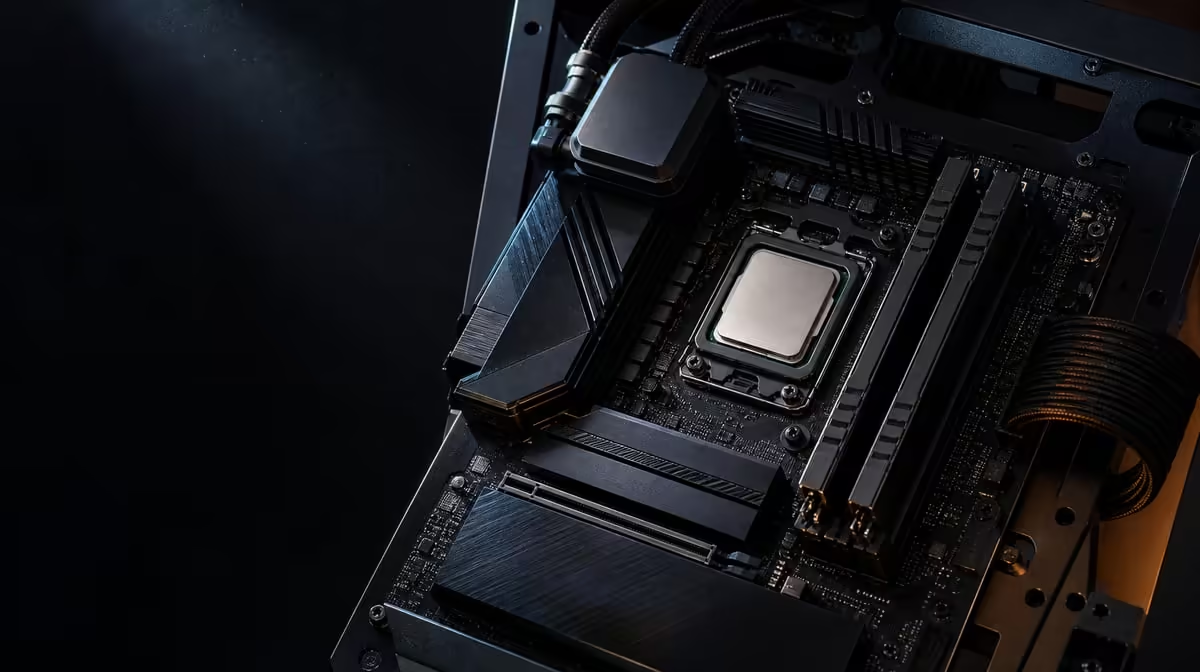
For R38,999, the kit combines a 144MB-cache 9950X3D, KLEVV 48GB DDR5-7200, ASUS's X870E Dark Hero and a DeepCool LQ360. It can suit cache-sensitive gaming and demanding creation, but it does not include graphics, storage, power or chassis. Choose it only when the complete system still funds those components appropriately and representative applications support the premium platform.
🎮 Describe the gaming side precisely
List the games, resolution, visual settings and frame-rate goal. High-refresh CPU-sensitive play can value the 9950X3D differently from graphically demanding 4K gaming. A single gaming label cannot capture both.
The processor's 144MB GameCache can keep more selected data near the cores. Some engines respond strongly; others remain limited by graphics or different CPU work. Use title-specific evidence and repeated scenes.
Up to 5.7GHz is a peak specification influenced by workload, active cores, temperature and power. Do not expect the LQ360 to turn it into a sustained clock.
Use Evetech's AMD CPU range for processor alternatives around the same game target.
🎬 Map creation resources separately
Creation software can stress CPU throughput, graphics acceleration, memory capacity or storage. Choose representative project files and identify where the current machine waits.
The 48GB KLEVV pool can help when large working data and several applications approach a smaller capacity. Its 7200MHz rating adds a high speed target, but a stable configuration matters more than the printed number.
The kit does not include the graphics hardware required by some creation tools. Storage for media, cache files and project archives also remains separate. Keep both rows beside the R38,999 platform.
Test game and creation tasks in sequence when the workflow crosses between them. This can reveal memory and thermal behaviour that isolated tests miss.
🧱 Validate platform and cooling
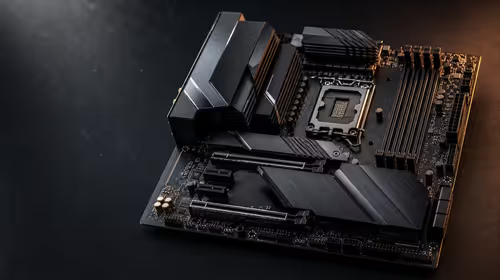
The Dark Hero is the exact board, allowing the buyer to check planned storage, graphics, external devices and case connections. Do not rely on the X870E name to infer details.
The LQ360 must fit the chosen chassis and be mounted according to its instructions. Pump, fans, airflow and representative temperatures should be verified before tuning.
Memory stability belongs in the same platform gate. Confirm all 48GB at baseline, apply documented settings and test real applications. An unstable build cannot serve professional work reliably.
Compare named boards through Evetech's AMD motherboard category.
💵 Decide from the complete system
Score the CPU, memory, board and cooler against frequent tasks. Mark critical failures before optional benefits. A premium part used rarely should not cancel an inadequate GPU or storage plan.
Create a lower-cost comparison using the same graphics and storage outcomes. If it meets every gaming and creation target, the R38,999 package may offer more headroom than needed. If it misses recurring work, the high-end core has a clearer role.
Review coordinated alternatives in Evetech's AMD upgrade kit selection. Avoid comparing one isolated sale part with an entire package.
After assembly, establish stable memory and cooling, then benchmark the real games and projects. Record completion time, responsiveness, frame consistency and errors. Check current availability only once the evidence and remaining budget support the chosen core.
Keep the final decision sentence specific: this platform is selected because named games use the CPU, named projects use the memory or compute, the Dark Hero meets the connection map and the LQ360 fits the enclosure. If that sentence cannot be written, compare again.
Run a capacity audit before committing. Open the normal creative project, background tools and communication software, then record peak memory use and any storage activity caused by pressure. This reveals whether 48GB addresses a real working-set need or mainly provides unused room.
Create a processor audit separately. In the target game, observe whether the GPU has headroom when frame rate falls. In the creation application, time a repeatable task and note CPU utilisation without assuming it explains every delay. Cache, compute, graphics and storage should not be blended into one result.
Test platform practicality on paper. Map every required external device, drive and expansion item to the exact Dark Hero documentation. Then place the board, LQ360 and intended GPU in the chosen case layout. A premium component that cannot be integrated cleanly has failed before performance is measured.
Compare the bundle with a complete alternative that keeps the same graphics and storage. The difference should identify which game, project or connection improves. If the answer is only more premium, the alternative deserves stronger consideration.
After assembly, establish a baseline and keep it. Confirm memory recognition, cooler operation and ordinary workload stability before changing firmware controls. Repeat the game and creation audits after several weeks. The evidence will show whether the high-end core is performing the jobs assigned to it or whether another part of the system needs attention.
Add a transition test for the crossover workflow. Complete a creation task, launch the intended game, capture a short session and return to the project. Watch memory use, storage activity, temperature and responsiveness. This sequence can reveal pressure that isolated benchmarks miss.
Give errors more weight than small performance gains. A higher memory setting that slightly improves one test but interrupts a project is unsuitable. A cooler profile that lowers temperature but creates unacceptable noise may also fail the owner's complete requirement.
Keep the GPU plan beside every CPU result. The processor can prepare frames and handle application work, but the graphics card renders the game and may accelerate professional software. Underfunding it after choosing the premium platform can make both halves of the system less balanced.
The final comparison should list one reason each fixed item stays: a game or application for the 9950X3D, measured capacity need for 48GB, a connection or layout need for the Dark Hero, and a compatible thermal plan for the LQ360. Four specific reasons form a stronger purchase case than the phrase high-end.
Review those reasons after the first month. Any feature that remains unused should inform the next platform decision without invalidating the parts that continue to solve frequent work.
Frequently Asked Questions
Why is no kit best for every buyer?
Games, creation applications, graphics plans, memory demand and budgets differ.
What makes this package high-end?
R38,999 combines the 9950X3D with an ASUS Dark Hero, a 48GB DDR5-7200 set and the LQ360.
How does the CPU serve gaming?
Its 144MB GameCache can help cache-sensitive titles, subject to the wider system bottleneck.
Why can the memory suit creation?
Forty-eight gigabytes can provide working headroom for demanding projects and concurrent applications.
What does the motherboard settle?
It fixes the exact X870E platform model used for graphics, storage, cooling controls and connections.
Does the bundle complete a workstation?
No. Graphics, storage, power, chassis and other application requirements remain separate.
What should buyers compare?
Compare complete systems using the same games, projects, connection needs and cost ceiling.
Ready to make gaming and creation justify the same high-end platform?
Explore Evetech AMD upgrade kits and test the R38,999 core against both halves of your real workload.