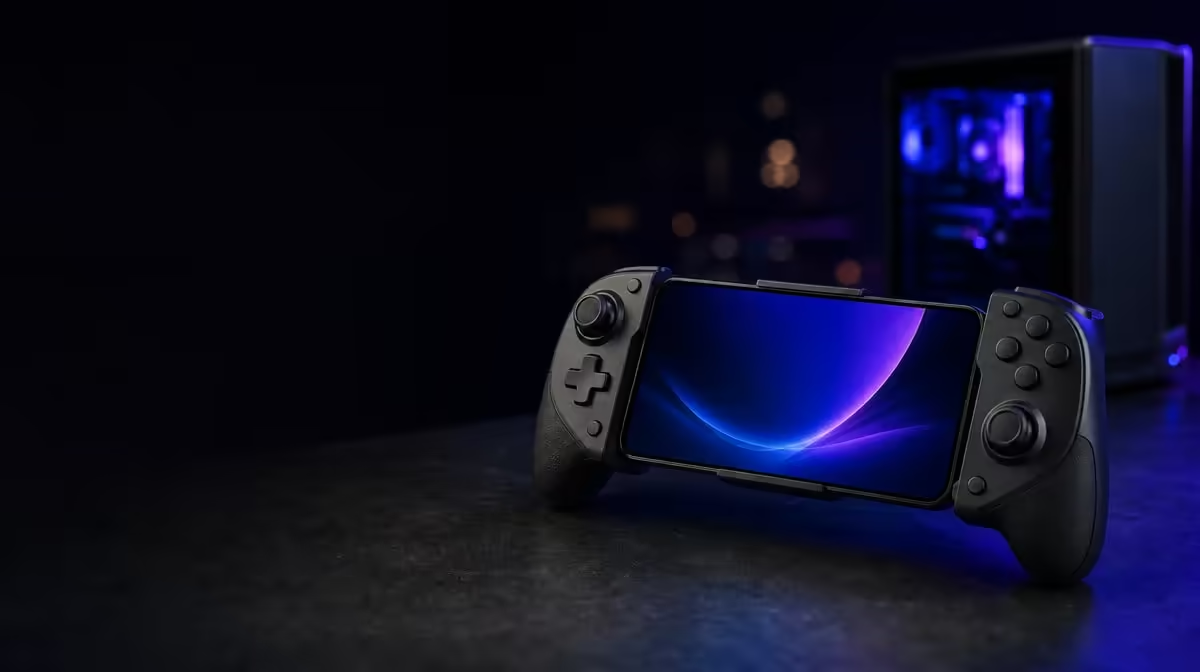
Weight, battery and fit answer different questions, so they should never be collapsed into one quality score. To choose a Bluetooth controller by weight, battery and fit, decide how it will be carried, how power will be managed and whether the phone sits securely. The R599 GameSir Pocket Taco gives a concrete comparison point at 62.2g with a 600mAh battery.
Quick Answer
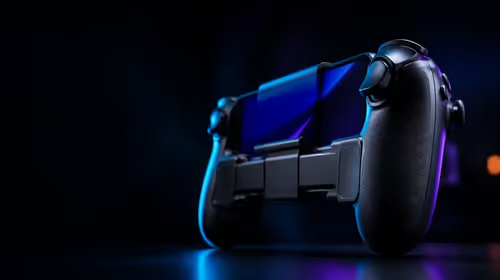
Check phone fit first because an incompatible mount ends the decision. Then judge 62.2g against the full phone-and-controller load and 600mAh as capacity rather than promised runtime. The Bluetooth Pocket Taco costs R599 at Evetech and suits portable vertical phone play.
📐 Fit is a pass or fail gate
Use the phone and case that will appear in normal play. Check width, thickness, raised camera protection and side-button placement. A mount that works only with the case removed creates a different ownership routine.
Soft phone-contact pads on the Pocket Taco protect the meeting surfaces and steady a properly seated device. Clean them and the matching case areas before testing because dust or oils can weaken the useful grip.
Centre the handset so its mass does not pull towards one hand. Test above a bed or desk mat, apply normal input pressure and watch for movement. Do not squeeze harder to compensate for a poor fit.
Repeat after removing and refitting the phone. Consistent seating matters to a portable controller because installation happens often. One lucky position is not enough.
Evetech's gaming controller range provides alternative mounts and body shapes when the Pocket Taco does not fit.
⚖️ Weight must include the handset
The Pocket Taco itself weighs 62.2g, making it easy to carry. During play, the phone and case add most of the combined mass. A low controller figure is therefore a travel benefit and only part of the comfort picture.
Balance determines how that mass feels. An off-centre phone makes one hand stabilise the setup continuously. Good alignment can make 62.2g useful; poor alignment can erase the advantage.
Compare session length and location. A student carrying the controller daily can value every saved gram. A home player may prefer a heavier full-size pad because broad grips distribute contact across the palms.
Test posture with the actual game. Keep wrists near neutral, support elbows where practical and bring the screen towards a comfortable viewing line. Portrait and landscape titles may lead to different controller choices.
Packed shape matters beside weight. A light object can still be awkward if controls are exposed or the body occupies the wrong compartment. Rehearse the complete bag setup before calling it portable.
Other gaming accessories can change the weight decision by adding a stand or allowing the phone to sit separately.
🔋 Battery capacity needs usage context
The 600mAh rating describes stored charge. It cannot be converted into exact hours without the controller's power draw and test conditions. Bluetooth activity, electronics, battery condition and repeated wake-ups affect endurance.
The controller's automated power logic limits avoidable consumption when play pauses. This efficiency does not enlarge the cell, so charge before important travel.
Create a power routine that matches the location. A commuter may charge beside the phone every evening and protect the controller's controls inside a bag. A home player may check charge before a planned long session.
If drain seems unusual, test one full charge with one phone and game. End the session consistently, store the controller untouched and repeat. Change one factor at a time rather than resetting the whole setup.
Do not compare phone battery percentage with controller capacity. The handset powers its display, game and network connection separately. Both devices need preparation for a successful mobile session.
Battery indicators should guide the routine without being turned into precise measurement. Learn how the controller reports charge and keep a margin before travel.
Run three battery scenarios on paper. The commute scenario needs charge before departure and protected idle storage. The home scenario needs enough active time for a planned session and easy charging afterwards. The occasional-use scenario needs a check after longer storage.
The same 600mAh figure can feel different across those patterns. A good choice aligns charging access with the pattern rather than assuming capacity solves every one.
Do not allow automated power language to hide basic preparation. The user still ends sessions, protects the controls and reconnects intentionally even when the controller can govern suitable pauses.
🧭 Combine the three checks in the right order
Use a decision sheet with fit, carried weight, handheld balance, charging routine and software support. Mark each result as passed, failed or unknown. Unknowns remain risks.
Give each row evidence. Fit evidence is a stable cased-phone test. Weight evidence is a session and packing rehearsal. Battery evidence is a repeatable charge and idle cycle. Bluetooth evidence is a successful reconnect plus game input.
Then rank the rows by consequence. Failed fit risks the phone, failed compatibility prevents play, poor balance causes strain and inconvenient charging causes missed sessions. This ranking keeps easy numbers from overpowering more important behaviour.
Use the matrix again after a week. Early excitement can disguise a mount that becomes annoying or a charging habit that never happens. Repeated use provides the final score.
Fit comes first because no weight or battery advantage can rescue an unsafe mount. Compatibility with the operating system and games sits beside it as another essential gate.
Weight comes next as a routine choice. Decide whether low mass improves daily carry or whether a broader grip matters more. Battery follows as a management question: can the controller be charged and stored predictably for the way it is used?
At R599, the Pocket Taco presents a coherent answer for a centred compatible phone, vertical games and Bluetooth travel. It is not a universal score winner merely because 62.2g and 600mAh are easy to compare.
Check current availability and price before purchase. Evetech's popular accessories page can help account for the rest of the mobile kit.
Retest after changing the phone or case. Fit and balance can change even though controller weight and battery capacity remain the same. The decision should follow the current setup.
A new game can change it too. Portrait software may favour the Pocket Taco's vertical shape, while landscape play can shift value towards a full-size pad. Controller choice follows the dominant use, not the original purchase story.
Keep the categories independent during comparison. A 62.2g result cannot compensate for unknown game support, and a 600mAh label cannot correct a raised case edge. Only products that pass essentials should be ranked on refinements.
The final statement should be specific: "This controller fits my phone, adds little to my bag and can be charged within my routine." That is more useful than calling a model light, powerful or good in general.
Frequently Asked Questions
Which of the three checks should come first?
Start with phone fit. An unstable or incompatible mount ends the decision before controller weight or battery capacity becomes relevant.
Does 62.2g describe the full handheld load?
No. It is the controller's mass. The phone and case add most of the weight supported during actual play.
Can 600mAh predict exact playtime?
No. Runtime also depends on power draw, Bluetooth activity, battery condition, idle behaviour and the way sessions are used.
Does Bluetooth guarantee game support?
No. It establishes a local connection. Android or the PC and each game must still recognise the inputs.
When should a heavier controller win?
A heavier full-size model may be better when broad grips suit the hands, play stays at home or the phone sits on a separate stand.
Ready to compare weight, battery and fit without mixing their jobs?
Check Evetech's current controller options and pass the phone, comfort and power tests in that order.