A R20,000 Gauteng 4K video editing build needs strong multi-core CPU performance, plenty of RAM and fast storage, with the GPU helping timeline playback and export.
Quick Answer
For R20,000 4K editing, build around a Ryzen 7 7700 with an RTX 4060, 32GB DDR5 and a 1TB NVMe SSD. That handles 4K timelines in DaVinci Resolve and Premiere Pro with smooth playback and exports a 4K clip noticeably faster than an 8-core-only system.
The R20,000 Editing Build
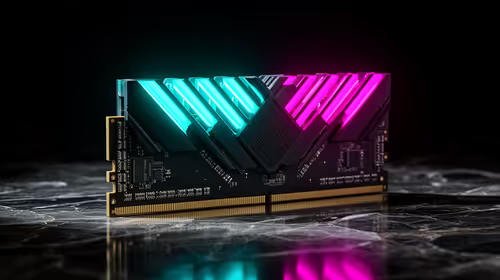
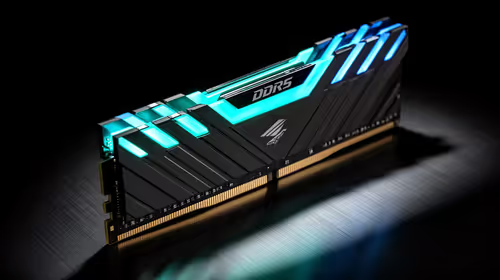
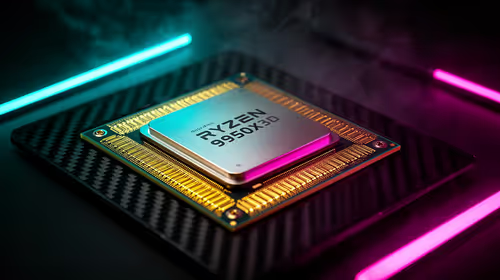
Put around R6,000 into a Ryzen 7 7700 (8 cores), R6,000 into an RTX 4060 for hardware encoding and GPU effects, then 32GB DDR5, a 1TB Gen4 NVMe SSD for the OS and cache, a B650 board and a 650W PSU. 32GB RAM is the real requirement for 4K timelines.
Why These Parts For 4K Editing
The Ryzen 7 7700's 8 cores accelerate rendering, while the RTX 4060's NVENC encoder speeds H.264 and H.265 exports. 32GB RAM stops Resolve and Premiere stalling on 4K footage, and the NVMe SSD keeps scrubbing responsive. Add a second SSD later for media if your projects grow.
Practical Gauteng Notes
Confirm part stock before ordering and route delivery to an address you can receive at. For colour-critical work, budget separately for a 1440p IPS monitor; this build's strength is the CPU, GPU and RAM that drive the timeline.
FAQ
How much RAM do I need for 4K editing?
32GB. 4K timelines, multiple effects and background rendering exhaust 16GB quickly, causing dropped frames and stalls in Resolve and Premiere.
Does the GPU matter for video editing?
Yes. The RTX 4060's NVENC encoder accelerates exports and its CUDA cores speed up effects and timeline playback, especially in DaVinci Resolve.
Can R20,000 really edit 4K?
Yes, comfortably for most creators. A Ryzen 7 7700, RTX 4060 and 32GB DDR5 handle 4K timelines and faster exports than an entry editing PC.
DDR5 and a fast NVMe SSD for cache; for 4K editing these stop timeline stalls more than any single other upgrade at this budget.