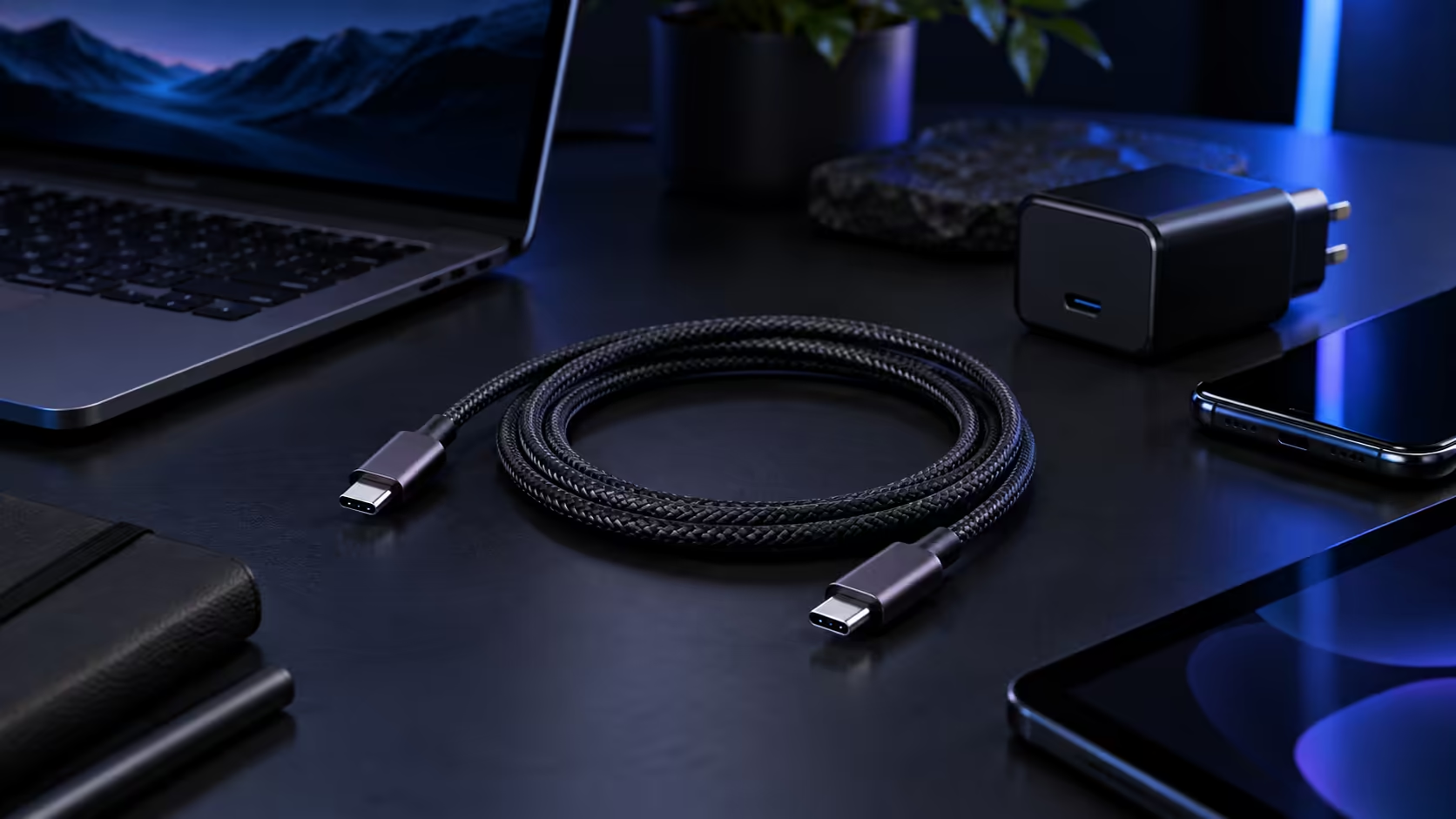
Spending on a genuine 140W USB-C cable here should feel less like buying a simple accessory and more like buying a small piece of electronics in its own right, since a real e-marker chip and properly sized conductors both add cost that a bargain-bin price tag simply cannot cover.
Quick Answer
Budget around R400 for a certified 5A cable and treat anything far under that as a 60W cable in disguise. In South Africa the Anker 544 is R399 for 1.8m and R229 for 0.9m, and buying here keeps the warranty local rather than an overseas postage exercise.
💰 Why R400 is the number to expect
A cable printed with "140W" but missing a stated amp figure or a certification mark is telling you almost nothing verifiable, and pricing tells the rest of the story: a chip that actually reports 5A honestly, plus conductors sized to carry that current safely, cost the manufacturer money that a R100 no-name cable was never going to spend. Roughly R400 is where that honest cost lands locally for a 1.8m run, and treating anything well under that figure with suspicion is a fair instinct rather than snobbery.
🇿🇦 Picking a length without overpaying for reach you don't need
Locally, the Anker 544 splits into two options: 1.8m at R399 for a desk or lounge socket sitting a genuine distance away, and a shorter 0.9m at R229 for a bag or a dock where the plug is already close by. Paying for the longer reach you never actually use is the easiest way to overspend on this specific purchase, so measure first and buy to that number rather than defaulting to whichever length looks more substantial on a shelf.
🏬 Why the same product costs different amounts in different places
The same certified 5A cable can carry a slightly different price depending on where it is sold locally, driven by each seller's own margin and overheads rather than any difference in the product itself. This is normal and worth expecting, so a small gap between two listings of the identical Anker 544 says nothing about which one is more genuine, only about where each seller has chosen to set their own price.
🧮 What that R400 actually buys you
Break the figure down and it stops looking arbitrary: a certified e-marker chip, conductors thick enough to carry 5A without excess heat, a braid that survives daily handling, and testing by an outside body to confirm all of it. None of those four things are visible from the outside, which is exactly why the price, rather than appearance, is often the more honest signal of whether they are actually present in a specific cable.
🛒 The two checks that settle it before you pay
Confirm an amp rating and a certification mark are both stated somewhere on the comprehensive cable range, since either one missing is reason enough to look elsewhere. Then pick the length that matches your own charger's socket. A cable clearing both checks around the R400 mark for 1.8m is priced honestly, not padded and not suspiciously cheap, and browsing our accessories range makes sense if a few other desk items are getting replaced alongside it.
Frequently Asked Questions
Does R399 make sense to pay for a genuine 140W cable locally?
Yes, that price sits right where a properly certified, 5A-rated 1.8m cable should land locally, without being padded for extras or suspiciously cheap for what it claims.
Why is the 0.9m option so much cheaper than the 1.8m one?
Roughly half the copper and braid go into the shorter length, and that lower material cost is reflected directly in the R229 price against the longer run's R399.
Can an unbranded cheap import ever match a certified local option at the same wattage?
Rarely, since a mismatch between the printed wattage and the actual internal build is exactly the risk certification exists to rule out, and cheap imports skip that testing most often.
Does spending well above R400 buy anything beyond the basics?
Mostly durability extras like a stronger bend rating or a nicer braid finish, none of which change the underlying charging performance a certified R400 cable already delivers on its own.
Is it normal for local prices to shift slightly between sellers for the same cable?
Yes, small variations are common, so comparing the stated amp rating and certification across a couple of sellers before buying is worth the extra few minutes it takes.
Does a cable's price ever drop meaningfully during a sale period?
Occasionally, though the amp rating and certification should still be checked at the sale price, since a discount does not change what the underlying build is actually capable of doing.
Is it worth buying two cables at once to save on delivery costs?
If both are genuinely needed, yes, combining a desk cable and a travel cable into one order is a sensible way to spread a single delivery fee across two useful purchases rather than paying it twice separately.
Ready to spend the right amount on a cable that actually performs?
Expect roughly R400 for a genuine 1.8m certified option, and question anything far below it.